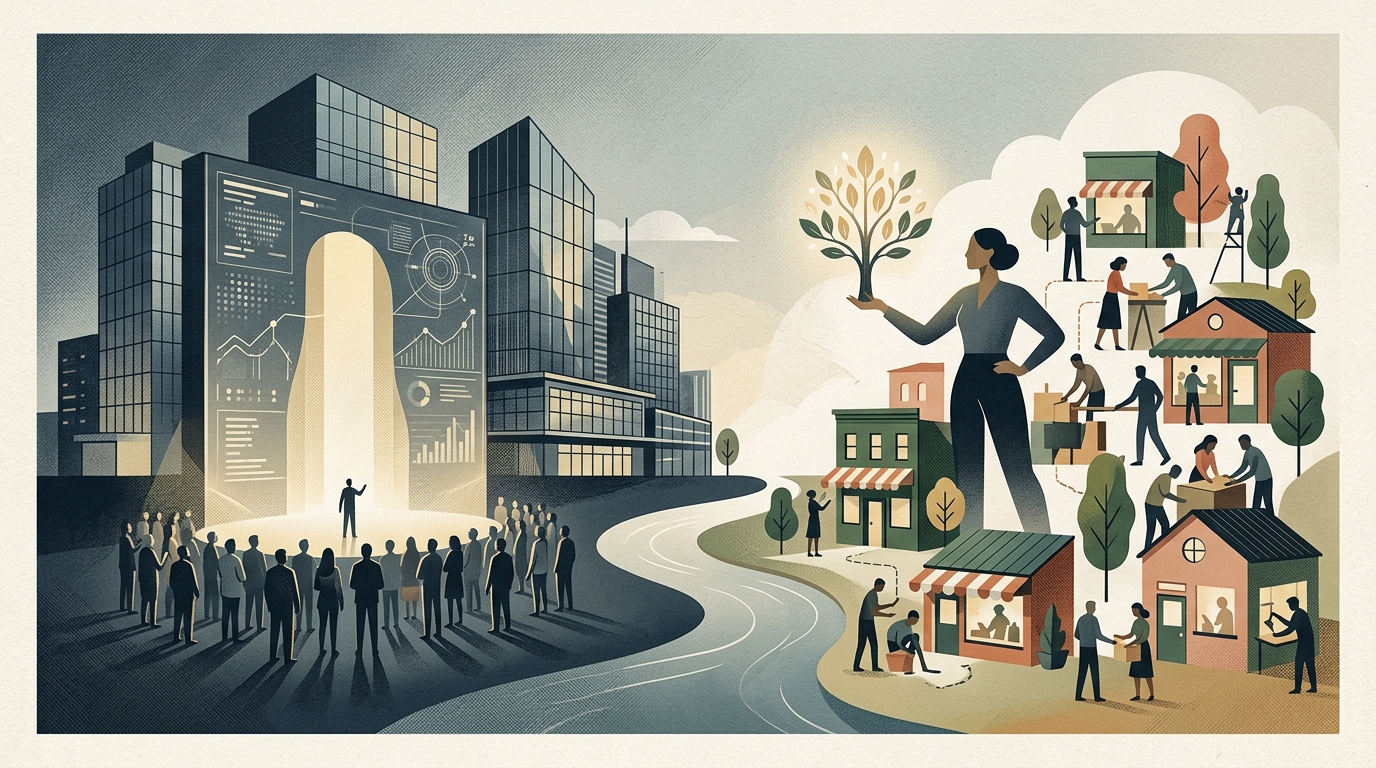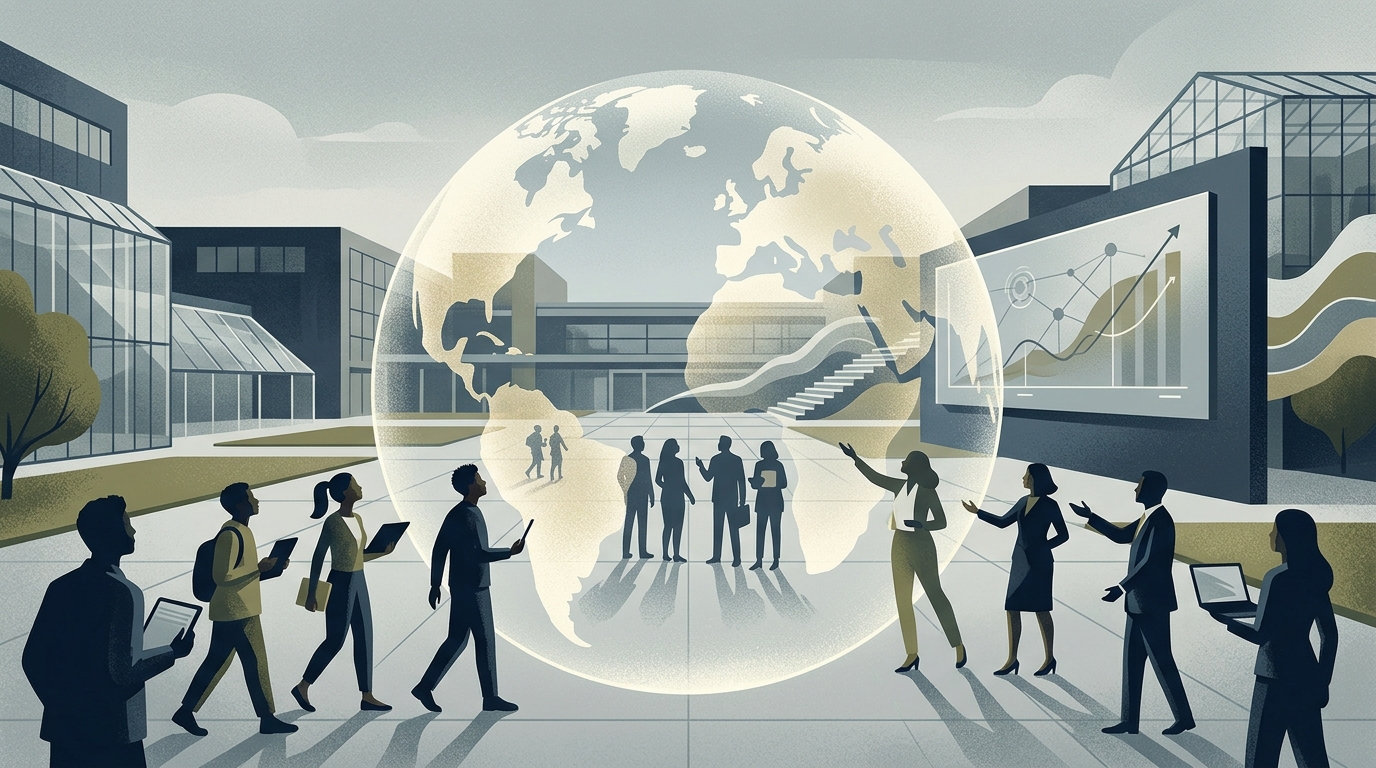
In an era where the global economy stands at the precipice of a structural transformation, Jensen Huang, the visionary CEO of NVIDIA, has emerged as the preeminent herald of a new digital reality. Through his recent pronouncements, Huang goes beyond merely unveiling new processors; he analyzes how Artificial Intelligence (AI) is set to redefine the very concept of opportunity for the next generation. For Huang, AI is not just an automation tool, but the "great equalizer" that will enable every young person, regardless of background, to become a creator and an innovator.
The End of the "Coding Gap"
One of Huang's most radical positions is that the traditional necessity of learning complex programming languages is waning. In the past, accessing technological creation required years of specialization in languages like C++ or Python. Today, Huang argues that "the new programming language is human language." Thanks to Large Language Models (LLMs), the distance between an idea and its implementation has been virtually eliminated.
- Democratization of Creativity: Anyone can instruct a computer to generate software.
- Focus on Problem Solving: Value is shifting from technical execution to strategic thinking.
- Lower Barriers to Entry: Startups can scale with minimal initial resources.
This evolution is particularly significant for the younger generation in countries where access to elite technical education might be limited. The ability to "speak" to software opens doors that were previously bolted shut for those without a computer science degree.
The New Industrial Revolution and "AI Factories"
Huang likens the current era to the first Industrial Revolution. Just as steam engines transformed the production of physical goods, today's data centers are evolving into "AI Factories." In these factories, the raw material is data, and the final product is intelligence. For the next generation, this means the labor market will no longer seek mere machine operators, but architects of intelligence.
"We are at the beginning of a new era, where computing power is no longer a resource we consume, but a force that generates knowledge," Huang frequently states.
This transition is creating new job categories that were unthinkable five years ago. From prompt engineers to AI ethics analysts and digital twin curators, the employment landscape is expanding. Huang's advice to the youth is clear: "Run, don't walk." The speed of adaptation to these new realities will be the defining factor for success.
Resilience and the Philosophy of "Suffering"
Beyond technology, Huang often shares life lessons derived from his own journey. NVIDIA's success was not predestined; it weathered periods on the brink of bankruptcy. He emphasizes that the younger generation must develop a "high pain tolerance" and resilience. In a world moving at the speed of AI, failures will be frequent, and the ability to learn from them is indispensable.
AI, according to Huang, will not replace humans, but humans using AI will replace those who do not. This message is simultaneously a warning and an invitation. The next generation is called to embrace uncertainty and view technology as a co-pilot that enhances human capabilities rather than negating them.
The Future of Work and Social Responsibility
In conclusion, Huang's analysis touches upon the social contract. As AI boosts productivity, the question arises as to how this wealth will be distributed. Huang believes the technology will lead to an explosion of prosperity, but he acknowledges that education must undergo a radical overhaul. Schools and universities must move away from rote memorization and focus on critical thinking and creativity—the only skills that AI cannot—yet—fully replicate.
The next generation holds the most powerful technology ever created in its hands. Whether they use it to solve the climate crisis, cure diseases, or create new forms of art depends on their vision and courage. Jensen Huang assures us that the tools are here; the inspiration must come from the youth themselves.