In the expansive plains of the Texas Panhandle, a new monument to the digital age is rising. Google’s latest announcement regarding the Meitner Energy Center in Gray and Roberts Counties, developed in partnership with Intersect Power, marks a pivotal moment in the intersection of Big Tech and infrastructure. This is not merely an expansion of server racks; it is a multi-billion dollar bet on the energy-intensive future of Artificial Intelligence. With a total investment footprint in Texas now reaching $16 billion, Google is attempting to solve the most pressing paradox of the silicon era: how to fuel the exponential growth of AI while meeting ambitious net-zero climate goals.
The Strategic Blueprint of Meitner Energy Center
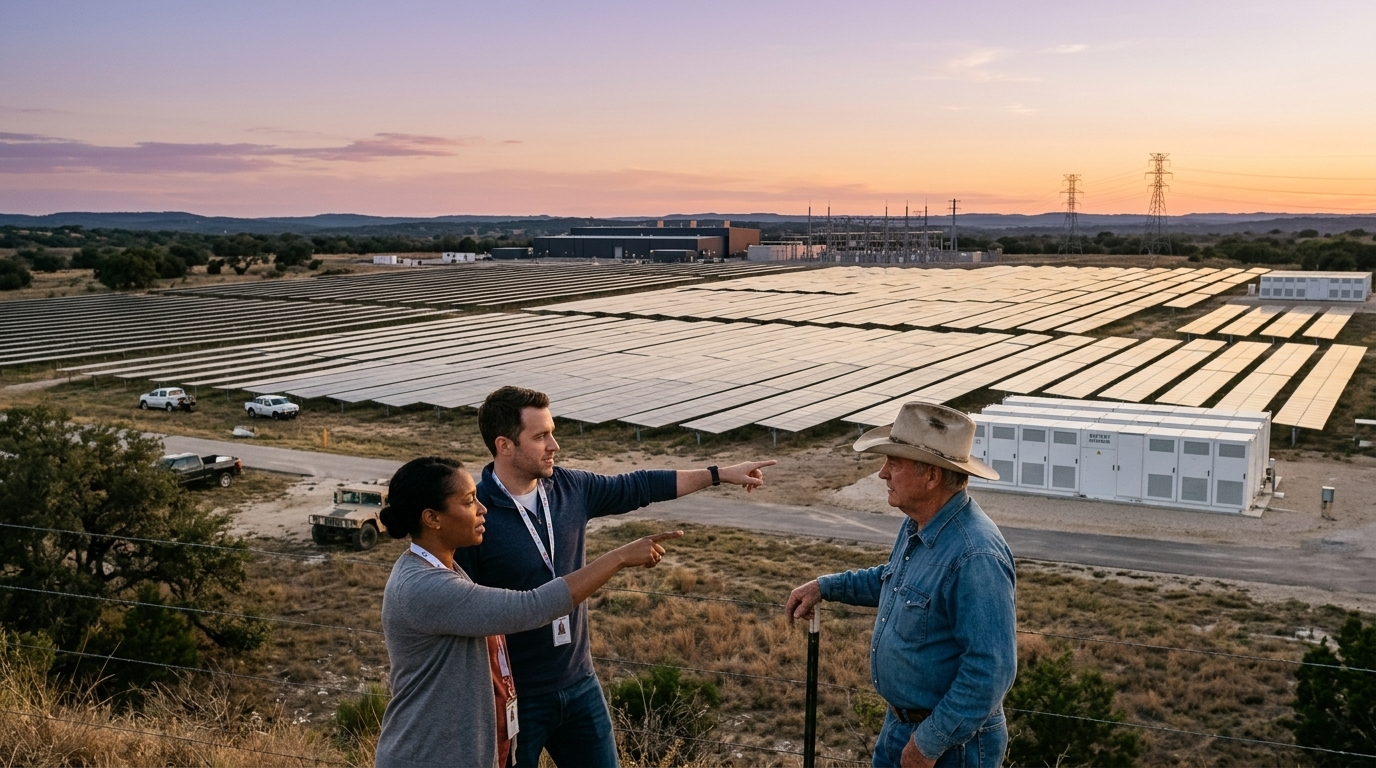
Named after the pioneering physicist Lise Meitner—who co-discovered nuclear fission—the Meitner Energy Center is designed to be a cornerstone of Google’s carbon-free energy (CFE) strategy. The project involves a massive deployment of solar generation coupled with advanced battery energy storage systems (BESS). This combination is critical. Unlike traditional data centers that could rely on the grid's mixed bag of fossil fuels and renewables, the AI-driven data centers of tomorrow require a constant, steady stream of power that doesn't fluctuate when the sun goes down.
Texas offers a unique laboratory for this experiment. The state’s independent power grid, managed by ERCOT, and its deregulated market allow companies like Google to act as both major consumers and significant producers. By investing in the Meitner project, Google is effectively injecting new renewable capacity into a grid that has often struggled with reliability during extreme weather events. This "additionality"—adding new green energy rather than just buying existing credits—is central to Google’s 24/7 CFE goal by 2030.
Feeding the AI Beast: Why Energy Matters Now
The transition from traditional cloud computing to generative AI has fundamentally altered the power equation. A single query to a model like Gemini consumes significantly more electricity than a standard Google Search. As these models scale to trillions of parameters, the underlying hardware—specifically Google’s custom Tensor Processing Units (TPUs)—requires unprecedented levels of power and sophisticated cooling solutions. The new data centers in Gray and Roberts Counties are being built specifically to house this high-density compute infrastructure.
- Infrastructure Scaling: Google is moving into rural Texas counties, bringing high-tech infrastructure to regions traditionally dominated by ranching and oil.
- Energy Storage Innovation: The Meitner project’s focus on storage addresses the intermittency of solar power, a key hurdle for round-the-clock operations.
- Local Economic Impact: Beyond the technology, the project is expected to create thousands of construction jobs and long-term technical roles, stimulating the Panhandle economy.
The Grid Dilemma and Sustainability Challenges
Despite the optimistic narrative, the path forward is fraught with systemic challenges. Google’s 2024 Environmental Report highlighted a sobering reality: the company’s total greenhouse gas emissions have actually risen due to the massive energy demands of AI data centers. While projects like Meitner are impressive, they are racing against an accelerating curve of consumption. There is also the issue of water usage; data centers in arid regions like Texas require millions of gallons for cooling, a resource that is increasingly scarce.
"We are witnessing a decoupling of digital growth from traditional resource constraints, but the physical reality of the power grid remains the ultimate bottleneck," notes a senior energy analyst.
To mitigate these risks, Google is diversifying its portfolio, exploring everything from enhanced geothermal systems to small modular nuclear reactors (SMRs). In Texas, however, the focus remains on the synergy between solar and storage. The Meitner Energy Center represents a sophisticated attempt to harmonize the virtual world of AI with the physical realities of energy production. As the project breaks ground, it serves as a blueprint for how the tech industry must evolve from a passive consumer of electricity to an active architect of the energy transition.