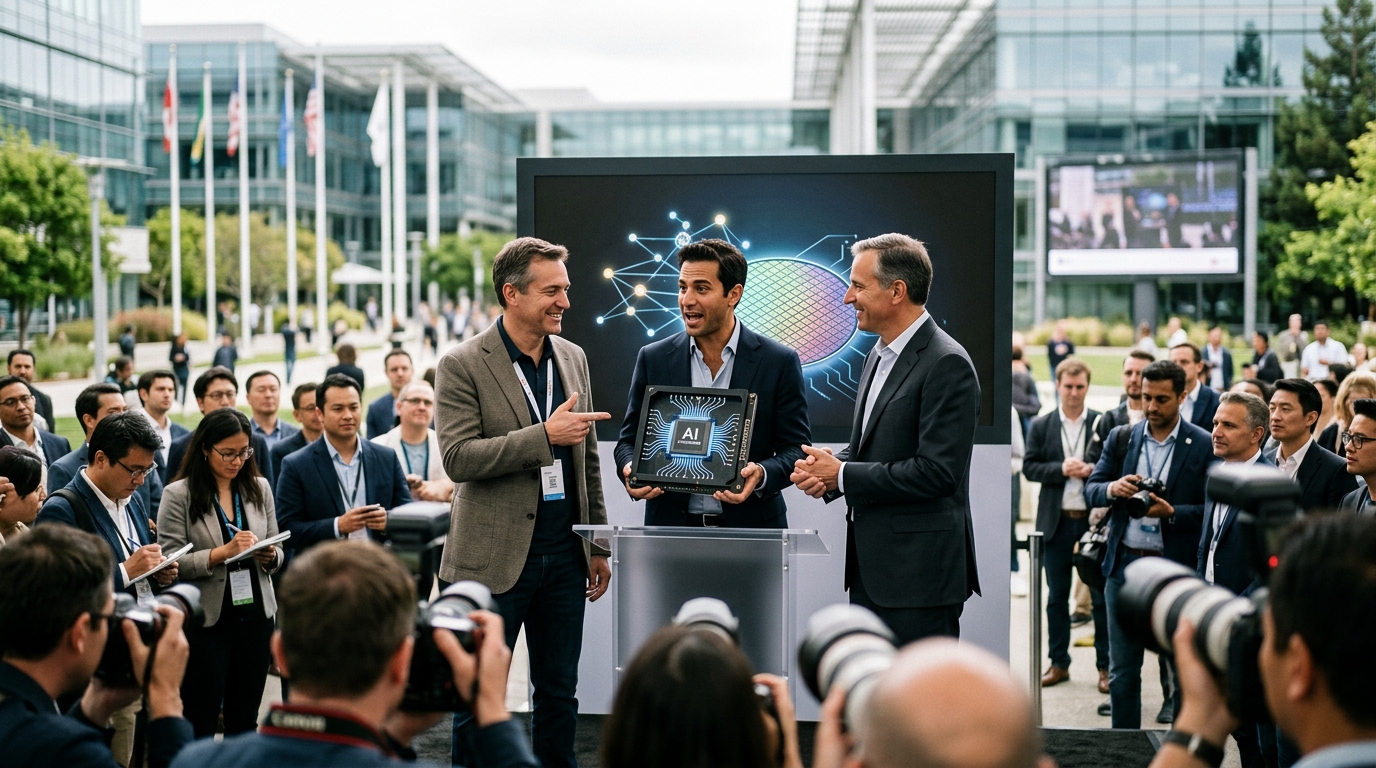
In an era where semiconductor power has become the new 'digital oil,' news of advanced discussions between Google (Alphabet Inc.) and Marvell Technology to develop specialized Artificial Intelligence (AI) chips is more than just a business headline; it is a geopolitical and technological shift. This move signals the determination of tech giants to break free from third-party vendor lock-in, primarily targeting the near-monopoly held by Nvidia.
The Strategy of Autonomy and the Cost of Silicon
For Google, developing its own hardware is not a novel concept. The company's Tensor Processing Units (TPUs) are already in their fifth generation, providing the essential computational muscle for Google Cloud and the Gemini models. However, the sheer scale of the Generative AI revolution requires more than incremental improvement: it demands a radical restructuring of the supply chain.
Marvell Technology, a leading player in the design of custom Application-Specific Integrated Circuits (ASICs), is emerging as the ideal partner. Unlike Nvidia, which sells off-the-shelf products at premium prices, Marvell offers the expertise to create chips tailored specifically to the needs of Google's algorithms. This allows for:
- Reduced Energy Footprint: Specialized chips are far more efficient than general-purpose processors for specific workloads.
- Cost Optimization: Bypassing Nvidia’s massive profit margins could save billions over the long term.
- Training Speed: Tight integration between software and hardware accelerates the development of new AI models.
Marvell and the Battle of the Hyperscalers
Marvell is no stranger to such high-stakes deals. It has already established itself as a key partner for Amazon (AWS) and Microsoft (Azure). Adding Google to its roster for high-performance AI chips places Marvell at the epicenter of global data infrastructure. Market analysts expect the Custom ASIC market to explode in the coming years as every major cloud provider seeks to differentiate its offerings.
"The battle for AI supremacy will not be decided solely by algorithms, but by who can produce the most efficient silicon at scale," a semiconductor industry executive noted.
This partnership also highlights a shift in the 'fabless' model. While Google designs and Marvell facilitates the implementation, the actual manufacturing will likely remain in the hands of TSMC in Taiwan, maintaining the region's status as the most critical node in global technological security.
Impact on Competition and Global Dynamics
As American giants fortify their positions, Europe watches from a distance, attempting to bridge the gap through the European Chips Act. Google’s move reinforces the argument that digital sovereignty is inextricably linked to the ownership of infrastructure. For global businesses, this means that access to AI power will increasingly be controlled by a select group of companies that own the entire technology stack, from the silicon to the chatbot.
In conclusion, the Google-Marvell alliance is a statement of intent. Google does not merely want to be a player in the AI market; it wants to own the stadium where the game is played. Marvell, in turn, is transforming from a component supplier into the architect of the new digital empire. The implications for Nvidia and the broader market are profound, as the 'democratization' of AI hardware begins to take a back seat to corporate vertical integration.