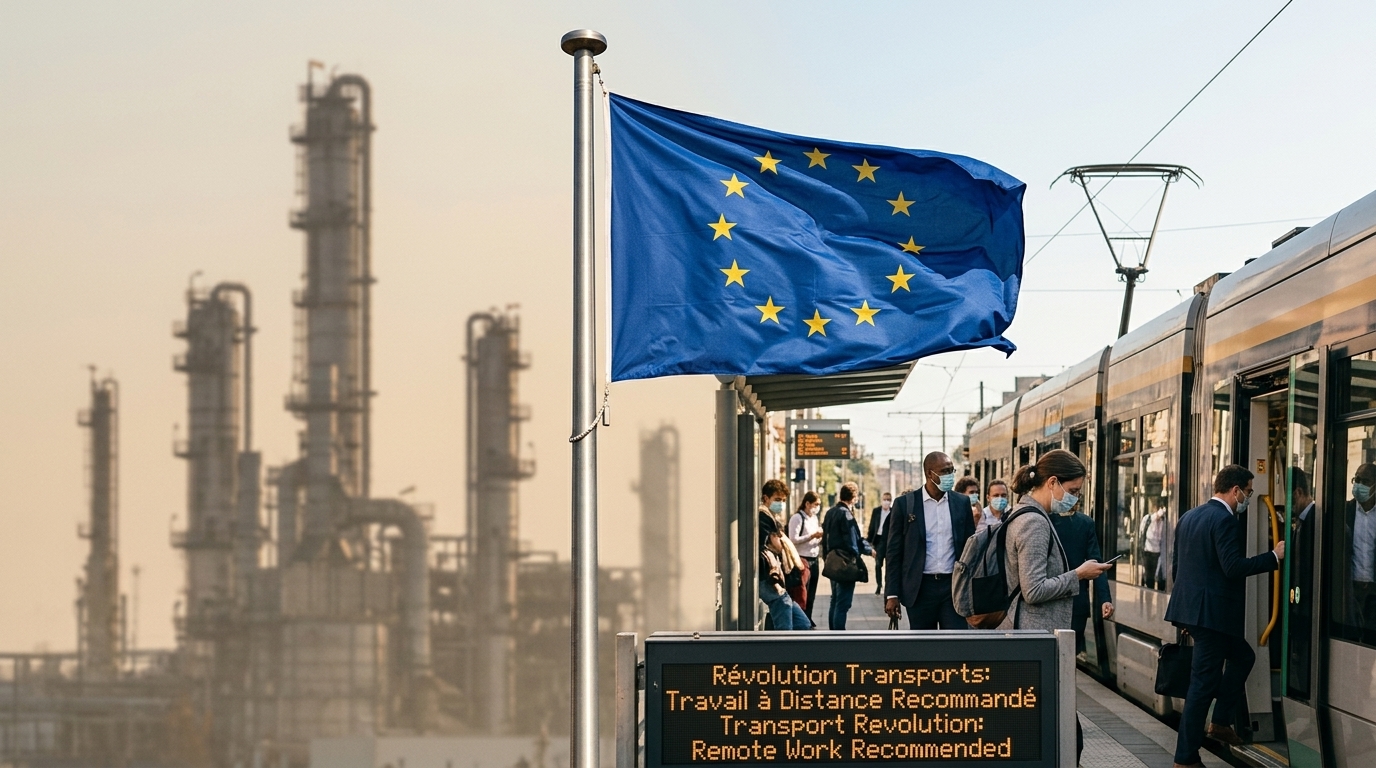
In an era where the energy security of the Old Continent hangs by a thread, the European Commission is no longer limiting itself to mere recommendations but is proceeding with a strategic redesign of citizens' daily lives. The recent package of proposals, which includes mandatory teleworking and a drastic reduction in the cost of public transport, is not just a response to a temporary crisis, but an attempt at a structural change of the European economic model. The philosophy behind these moves is clear: energy saving is no longer just a matter of ecological conscience, but a top geopolitical necessity.
The Strategic Pivot: Energy Efficiency as Sovereignty
The Commission's proposal to adopt teleworking as a means of saving energy is based on data showing that commuting by private vehicles is one of the largest consumers of oil in Europe. According to analyses by the International Energy Agency (IEA), implementing teleworking for three days a week could save approximately 500,000 barrels of oil per day globally. For the European Union, this translates into a significant reduction in dependence on imported fossil fuels, strengthening the resilience of member states against fluctuations in international prices.
However, the plan does not stop there. The Commission urges member states to reduce speed limits on highways and implement "car-free Sundays" in major cities. These measures, which would once have been considered extreme or "war-style," are now seen as essential tools for ensuring energy adequacy. This transition marks the end of the era of unlimited mobility and the beginning of a period where efficiency is the new currency of the economy.
The Teleworking Mandate: Efficiency vs. Infrastructure
While teleworking reduces fuel consumption for commuting, it raises serious questions about the shift of energy costs from businesses to employees. During winter, heating homes for eight extra hours a day can wipe out the savings from not using a car. The Commission must balance the need for national savings with the protection of households from energy poverty. Critics of the measure point out that without accompanying measures to subsidize household bills, mandatory teleworking risks becoming an indirect tax on workers.
Furthermore, the impact on urban centers is incalculable. The emptying of office spaces implies a crisis in the commercial real estate sector and for small businesses that survive on workers (catering, retail). Europe is called upon to redefine the function of its cities, turning business centers into mixed-use zones to avoid the economic decline of traditional metropolitan centers. This requires a rethink of zoning laws and urban planning that has remained stagnant for decades.
Revitalizing Public Transit: Beyond Subsidies
The second part of the plan concerns the strengthening of public transport through the reduction of fares. Examples such as the "9-euro ticket" in Germany showed that demand for mass transit is price-elastic, but at the same time revealed the weaknesses of existing infrastructure. The Commission encourages governments to invest in the quality and frequency of services, making the bus and train not just a cheaper but a more reliable alternative.
The challenge here is twofold: financial and technical. Subsidies for cheap tickets require massive funds from national budgets, at a time when the public debt of many countries is already at marginal levels. At the same time, the increase in passenger traffic requires immediate investment in rolling stock and personnel, something that cannot be implemented overnight. The European Commission proposes the use of resources from the Recovery and Resilience Facility for this purpose, linking the green transition with social cohesion.
Geopolitical Implications and the Future of Urban Life
The implementation of these measures is not just a technocratic exercise, but a deeply political act. Mandatory teleworking and restrictions on vehicle movement test the limits of individual freedom and state intervention. In countries with a strong tradition of motoring, such as Germany or Italy, reactions are already intense. The Commission must convince citizens that these sacrifices are necessary for maintaining European sovereignty and avoiding deeper economic shocks in the future.
"Energy efficiency is the first fuel we should consider. It is the cheapest, cleanest, and most secure way to meet our energy needs,"
In conclusion, the Commission's plan is a roadmap for a Europe trying to adapt to a world of permanent energy instability. Its success will depend on the ability of governments to offer realistic alternatives to citizens, ensuring that the transition does not leave behind the most vulnerable social groups. Teleworking and transport are only the beginning of a broader discussion about how we want to live, work, and move in the 21st century. The geopolitical chessboard has moved into our living rooms and our commute, and the stakes have never been higher.