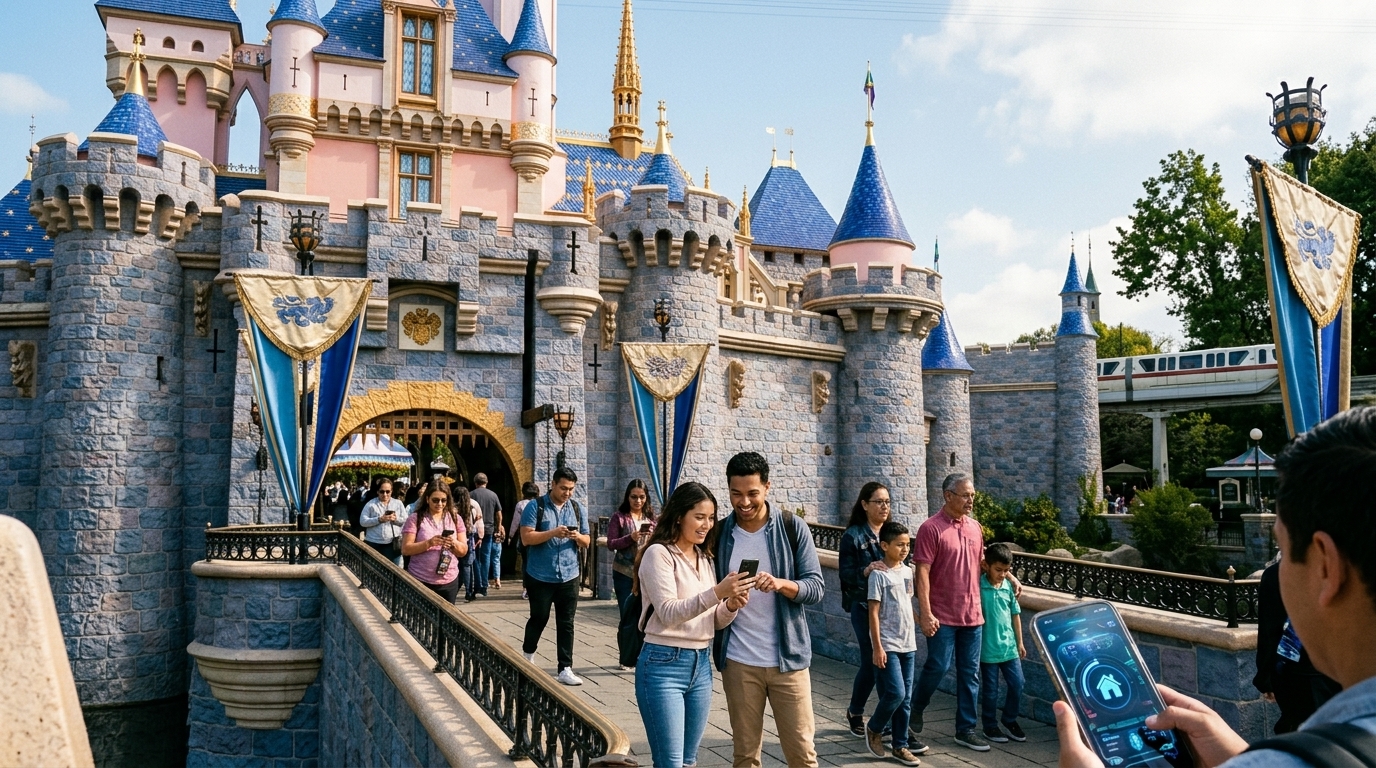
In a move that signals the complete digital metamorphosis of the entertainment giant, Disney’s new CEO, Josh D’Amaro, has unveiled plans to create a “super app.” This ambitious venture aims to dissolve the boundaries between digital content and physical experiences, creating a unified ecosystem where Disney+, theme park tickets, cruise reservations, and e-commerce coexist under a single digital roof.
The Strategy of ‘Total Convergence’
For decades, Disney operated as a conglomerate with distinct divisions: film, television, parks, and consumer products. However, in the digital landscape of 2026, this fragmented approach is increasingly viewed as archaic. D’Amaro’s vision is simple yet radical: if you are watching “The Mandalorian” on Disney+, the app should know if you have a scheduled visit to Galaxy’s Edge at Disneyland and suggest relevant experiences or merchandise in real-time.
The integration of the Disneyland Resort, Disney World, Disney Cruise Line Navigator, and Disney+ apps is not merely a matter of user convenience. It is an unprecedented data-mining strategy. With a single sign-on, Disney will be able to track the consumer journey from the living room sofa to the queue for Space Mountain. This enables “hyper-personalization,” where offers and recommendations are tailored to each individual user, significantly increasing the likelihood of conversion.
The End of Digital Silos
Until now, a visitor to Disney World had to use My Disney Experience for bookings, another app for shopping, and Disney+ for entertainment. These “digital silos” created friction in the guest experience. The new platform promises to act as a digital concierge that anticipates user needs. For example, if the app detects a family is aboard a Disney Cruise Line ship, the interface will automatically shift to highlight deck activities while offering access to movies themed around their destination.
However, the technical challenge is immense. Disney must unify decades of legacy systems used in the parks with the modern cloud infrastructure of its streaming services. Furthermore, there is the critical issue of cybersecurity and data protection, particularly concerning minors, who represent the company’s core audience.
The Attention Economy and the ‘Walled Garden’
This move places Disney in direct competition with tech titans like Amazon and Apple, who are also striving to lock users into their own “walled gardens.” By creating a super app, Disney aims to maximize its “share of wallet” among fans. If a user never needs to leave the Disney ecosystem to book a vacation, watch a movie, or buy a toy, the company ensures a continuous revenue stream and, most importantly, the consumer’s undivided attention.
“We aren’t just building an app; we are building the fabric that connects every moment of a fan’s relationship with Disney,” said a company executive involved in the project.
The challenge for D’Amaro will be to maintain the “magic” in an environment that risks appearing overly commodified and monitored. The fine line between service and surveillance is one Disney must walk carefully, as 2026 consumers are more sensitive than ever to digital privacy issues.
Conclusion: The Future of Entertainment is Unified
Disney’s super app experiment will serve as a roadmap for the entire entertainment industry. If successful, we can expect other conglomerates (such as Warner Bros. Discovery or Universal) to follow suit. The era where content was king is ending; now, the ecosystem is king. Disney is betting that the public's love for its characters will outweigh any hesitation regarding the surrender of personal data to a single, all-powerful platform.