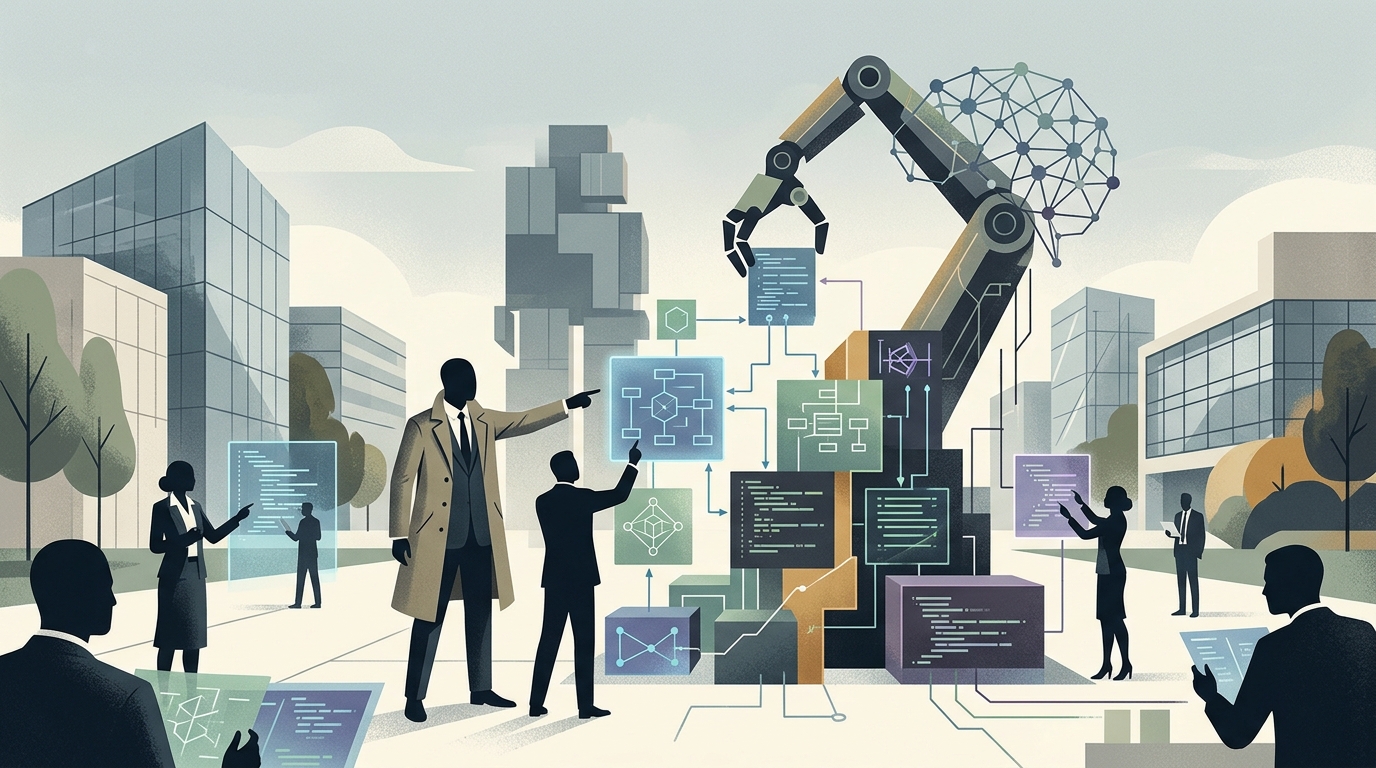
In the high-stakes theater of global artificial intelligence, the spotlight has long been monopolized by Silicon Valley’s elite. However, DeepSeek, the Hangzhou-based underdog that recently sent shockwaves through the industry with its V3 and R1 models, is preparing for its next major offensive. Sources close to the company reveal that DeepSeek is assembling a specialized unit dubbed the 'Harness' team. Their mission? To build a suite of autonomous coding agents designed to challenge Anthropic’s Claude Code and the growing dominance of Western software engineering AI.
From Chatbots to Autonomous Engineers
The move represents a fundamental shift in AI product evolution. While large language models (LLMs) have proven their worth in generating snippets of code or explaining complex logic, the industry is moving toward 'agentic' workflows. Unlike a standard chatbot, a coding agent can interact with a terminal, run tests, navigate complex file directories, and self-correct based on error messages. By establishing the Harness team, DeepSeek is signaling that it is no longer content with being an infrastructure provider; it wants to own the developer’s desktop.
Coding is the ultimate proving ground for AI reasoning. It is a domain where logic is binary, and the feedback loop is immediate. DeepSeek’s R1 model, which utilizes reinforcement learning to 'think' through problems before answering, provides the perfect foundation for this. If the Harness team can successfully translate R1’s reasoning capabilities into a seamless agentic experience, they could potentially disrupt the current market leaders who rely on much more expensive computational frameworks.
The Geopolitics of Algorithmic Efficiency
DeepSeek’s emergence is particularly significant given the current geopolitical climate. Faced with stringent US export controls on high-end GPUs like Nvidia’s H100s, Chinese labs have been forced to innovate through algorithmic efficiency rather than brute-force compute. DeepSeek’s success with Multi-head Latent Attention (MLA) and efficient Mixture-of-Experts (MoE) architectures has proven that intelligence can be 'distilled' and optimized.
The Harness team is a strategic response to this hardware bottleneck. By creating agents that can automate the most tedious parts of software development, DeepSeek is effectively building a force multiplier for the Chinese tech sector. In a world where software is the backbone of every industry, the ability to produce it faster and cheaper than the competition is a massive economic advantage. Anthropic’s Claude 3.5 Sonnet is currently regarded as the gold standard for coding, but DeepSeek’s track record suggests they are more than capable of closing the gap.
The Impact on the Global Developer Ecosystem
The entry of a formidable Chinese competitor into the coding agent space (currently dominated by GitHub Copilot, Cursor, and Anthropic) is a net positive for the democratization of technology. Competition inevitably drives down costs and accelerates feature releases. However, it also introduces a new layer of complexity regarding data privacy, code sovereignty, and cross-border security standards.
- Autonomy: Future agents from the Harness team will likely handle end-to-end feature implementation with minimal human intervention.
- Economic Disruption: DeepSeek’s aggressive pricing model could force Western counterparts to reconsider their subscription and API costs.
- Reasoning-First Design: Unlike older models that 'predict' the next token, these agents will 'reason' through the architecture of a codebase.
Ultimately, the battle for the 'digital engineer' is the next frontier of the AI war. DeepSeek isn't just building a tool; they are attempting to redefine the software development lifecycle. If the Harness team can deliver on the promise of R1’s logic in an agentic package, the global hierarchy of AI power may be due for another radical reshuffle.