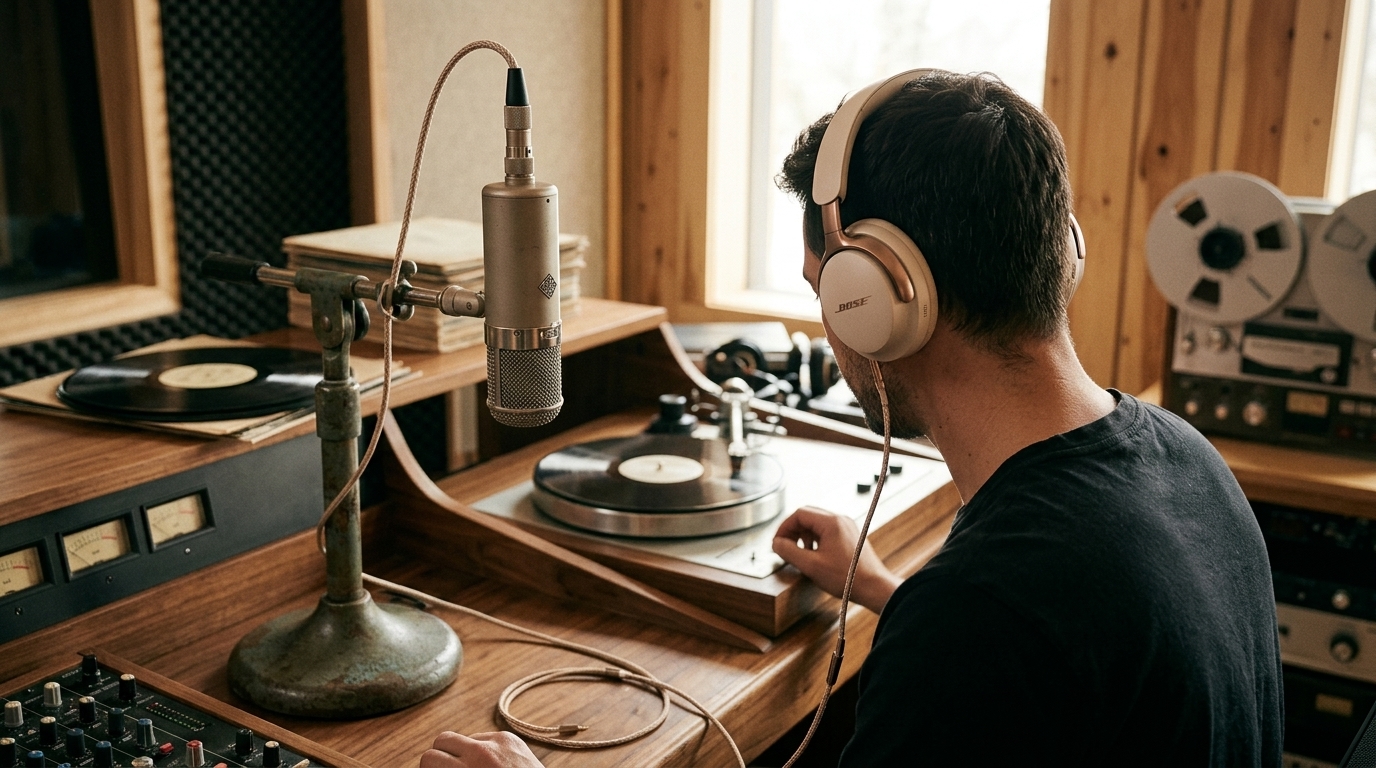
In the annals of technology history, the line between hardware and content has always been porous, but few companies have managed to cross it without losing their footing. Bose, a name synonymous with noise cancellation and high-fidelity audio, recently announced the launch of Bose Studios. This isn't merely a beefed-up marketing department; it is a full-scale pivot toward content creation, essentially functioning as a record label and media production house. This move raises a critical question: can an organization built on the precision of engineering embrace the chaotic, unpredictable nature of pop culture?
The Red Bull Model and the Search for Identity
Bose makes no secret of its ambitions. It is looking toward Red Bull, the energy drink giant that successfully transformed into one of the world's most significant producers of sports and cultural content. However, the gap between the two is vast. Red Bull started with a product that lacked technical complexity, allowing it to invest everything in lifestyle branding. Bose, conversely, carries a heavy legacy of technical excellence. For decades, consumers bought Bose because they wanted the best sound, not because they wanted to belong to a specific artistic tribe.
The strategy for Bose Studios appears to center on discovering new talent and championing "Spatial Audio" technology. In an era where headphones have become a commodity and competition from the likes of Apple and Sony is cutthroat, Bose is attempting to build its own ecosystem. If you own the content that sounds best on your specific hardware, you have an unassailable advantage. But history is littered with the corpses of corporate labels, like Microsoft’s Zune, which failed spectacularly to understand what makes music authentic.
The Spatial Audio Challenge and Artistic Freedom
A primary pillar of this new endeavor is the promotion of immersive sound. Bose believes the future of music isn't stereo, but three-dimensional. By creating its own content, it can control the experience from recording to playback. However, this places the company in a strange position of power over artists. Creators are often wary of hardware companies that view them as "demo material" used to sell more gadgets.
- Bose Studios aims for exclusive collaborations that highlight Immersive Audio technology.
- The company intends to invest in documentaries and short films centered around music culture.
- There is a significant risk that the "corporate" ethos will stifle genuine artistic creativity.
"We aren't just making ads. We are making culture," Bose executives claim.However, culture cannot be manufactured in a laboratory in Massachusetts. It requires risk, failure, and a connection to the streets that multinationals rarely possess. Bose will have to prove it can be more than a "sponsor" and become a true partner for musicians.
Financial Implications and the Future of Branding
From a financial perspective, this move is an attempt to escape the price wars of the hardware market. When Chinese brands offer similar noise-canceling technology at a third of the price, Bose must sell something that cannot be easily replicated: emotion. If Bose Studios can link the brand to the next big musical movement, the company's brand equity will skyrocket. If, however, they end up producing merely "polished" content that no one actually watches, it will be a costly distraction that might decouple the company from its core engineering strengths.
In conclusion, Bose stands at a crossroads. The transition from hardware to media production is the most ambitious bet in its history. In a world saturated with content, Bose doesn't just need to sound good; it needs to have something interesting to say. Time will tell if its engineers can learn to dance to the rhythm of the music industry or if they will be left watching from the sidelines with their noise-canceling headphones firmly on.