In the shifting landscape of social media in 2026, the concept of "influence" is undergoing a radical transformation. While brands once scrambled to find authenticity in the "girl next door," they are now increasingly turning to creations made of code and pixels. AI-generated influencers are no longer a laboratory experiment; they are a dominant force in the global advertising market, upending the foundations of the Creator Economy.
The Economy of Perfection and Absolute Control
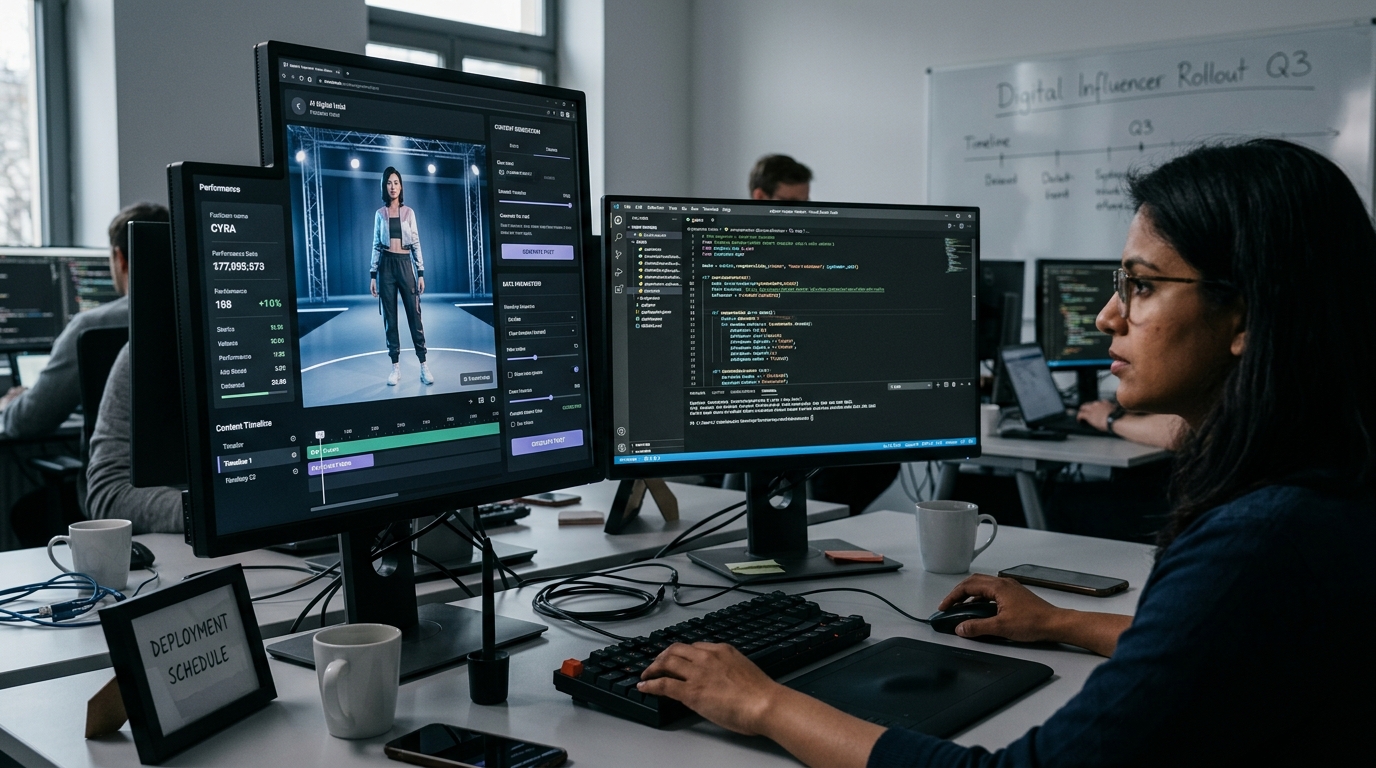
Why would a fashion or tech giant prefer a digital model over a human with millions of followers? The answer lies in three words: control, cost, and consistency. Human influencers are unpredictable. They can get embroiled in scandals, express controversial views, or simply age. In contrast, an AI persona like Aitana Lopez or Lil Miquela remains eternally young, disciplined, and fully controlled by the marketing team that manages her.
According to recent analyses, the cost of producing content with AI influencers has dropped by 70% compared to 2024. There are no travel expenses, no demands for luxury hotels, and most importantly, no delays. An AI influencer can be "photographed" in Paris in the morning and Tokyo in the afternoon, wearing clothes that haven't even been manufactured in physical form yet.
"We aren't just buying an ad; we are buying a guarantee that our message will never be tarnished by human instability," says a senior executive at a leading advertising agency.
The Ethics of Illusion and the Regulatory Framework
However, this new reality does not come without a cost to social cohesion. The European Union, through the AI Act, has already begun to enforce strict labeling rules. Every image or video depicting an AI influencer must carry a clear label stating it is "synthetic content." Despite regulations, the psychological impact, especially on younger generations, is concerning.
- Beauty Standards: AI influencers often possess features that are anatomically impossible or flawless, exacerbating body dysmorphia and anxiety.
- Transparency: Many followers, despite the labels, develop parasocial relationships with these idols, perceiving them as "real" entities with feelings.
- Job Displacement: Thousands of models, photographers, and stylists are seeing their livelihoods shrink as algorithms take the lead.
The challenge for 2026 is balancing innovation with consumer protection. Brands that use AI influencers without transparency risk a severe backlash, as audiences begin to develop an "immunity" to artificial perfection, seeking out the real, the flawed, and the human once again.
The Future: From Image to Interaction
The next step in the evolution of AI influencers is the integration of Large Language Models (LLMs) for real-time interaction. We are no longer talking about static photos, but digital entities that can chat with thousands of users simultaneously in DMs, host live streams, and answer questions with a pre-defined personality. This "personalized scale" is the Holy Grail of marketing, allowing a brand to have a one-on-one relationship with every customer through a digital ambassador.
In conclusion, the rise of AI influencers is not just a fad but a structural shift in how we consume content and trust brands. The challenge for us as a society is to maintain the ability to distinguish the artificial from the biological without losing the magic of creativity that technology can offer.