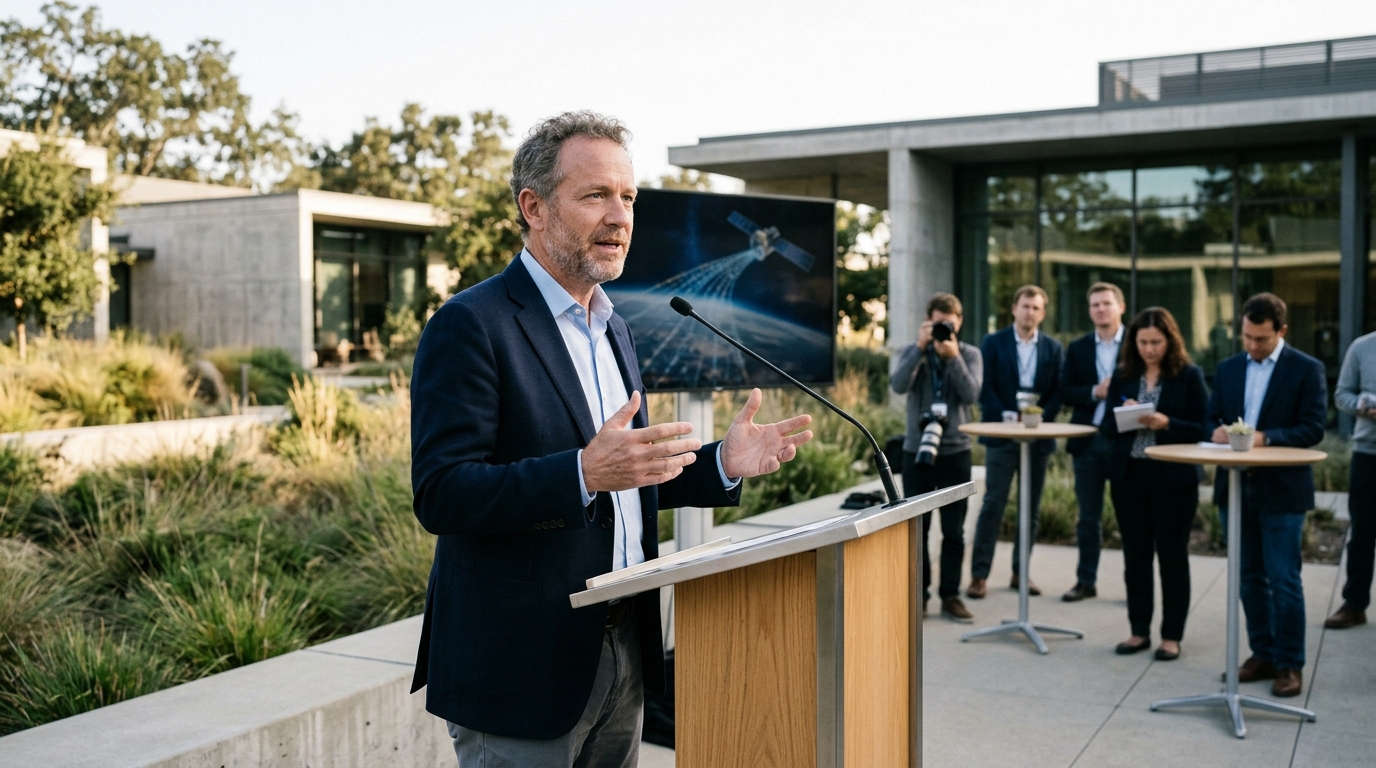
The artificial intelligence industry is witnessing a seismic shift as Anthropic, the creator of the Claude models and a primary rival to OpenAI, announced it is on the verge of its first profitable quarterly results. The news, initially reported by Reuters, is accompanied by a staggering revelation: a strategic agreement with Elon Musk’s SpaceX, valued at $1.25 billion per month, for the provision of specialized computing power. This move is not merely financial news; it signals the birth of a new "AI-Space complex" that threatens the dominance of traditional cloud providers like Amazon and Google.
Strategic Decoupling from Big Tech Clouds
Until recently, Anthropic relied heavily on infrastructure and investment from Amazon (AWS) and Google. However, the cost of training and operating next-generation models has skyrocketed to levels where traditional cloud solutions are becoming economically unviable or technically restrictive. The deal with SpaceX, which reportedly involves leveraging Starlink’s global connectivity and new solar-powered data centers currently under construction by Musk’s firm, offers Anthropic an alternative path.
SpaceX is no longer just a rocket company. With the development of Starship, the company’s ability to launch massive payloads into orbit has enabled experimental orbital data processing nodes. While the majority of the compute Anthropic is purchasing remains terrestrial, the utilization of SpaceX’s advanced cooling technologies and energy independence provides Anthropic with a cost advantage that competitors are struggling to match. The $1.25 billion monthly spend translates to $15 billion annually—a figure that exceeds the R&D budgets of many sovereign nations.
The Path to Profitability: Subscriptions and Enterprise Solutions
Achieving profitability for an AI lab was, until recently, considered a "holy grail." Anthropic appears to be reaching this milestone through aggressive expansion into the enterprise sector. Claude 4, released earlier this year, has seen massive adoption in the financial and pharmaceutical sectors due to the company's focus on "Constitutional AI." Its emphasis on safety and reduced propensity for hallucinations has made Claude the preferred tool for critical infrastructure.
- 300% year-over-year revenue growth from enterprise licensing.
- Reduced cost-per-query thanks to specialized SpaceX chip architecture.
- Strategic focus on markets requiring high ethical compliance and data sovereignty.
This profitability comes at a time when OpenAI is facing increased scrutiny over its burn rate and its complex relationship with Microsoft. By diversifying its infrastructure providers, Anthropic gains a strategic autonomy that allows it to negotiate from a position of strength with its investors.
Ethical Dimensions and the Musk Alliance
The partnership with SpaceX raises questions within the AI community. Anthropic was founded by former OpenAI executives who left due to concerns over commercialization and safety. Elon Musk, conversely, is a polarizing figure. Anthropic’s decision to funnel billions into Musk’s empire suggests that in the race for technological supremacy, the practical need for raw compute often outweighs ideological differences.
"We aren't just buying server time; we are buying the future of computing infrastructure," said a source close to the Anthropic board.
In conclusion, this move reshapes the balance of power in the tech sector. If Anthropic can maintain profitability while paying such astronomical sums to SpaceX, it will prove that the "responsible AI" model is not only ethically sound but also highly lucrative. The question remains: will other players follow suit, abandoning traditional clouds for more exotic, vertically integrated solutions?