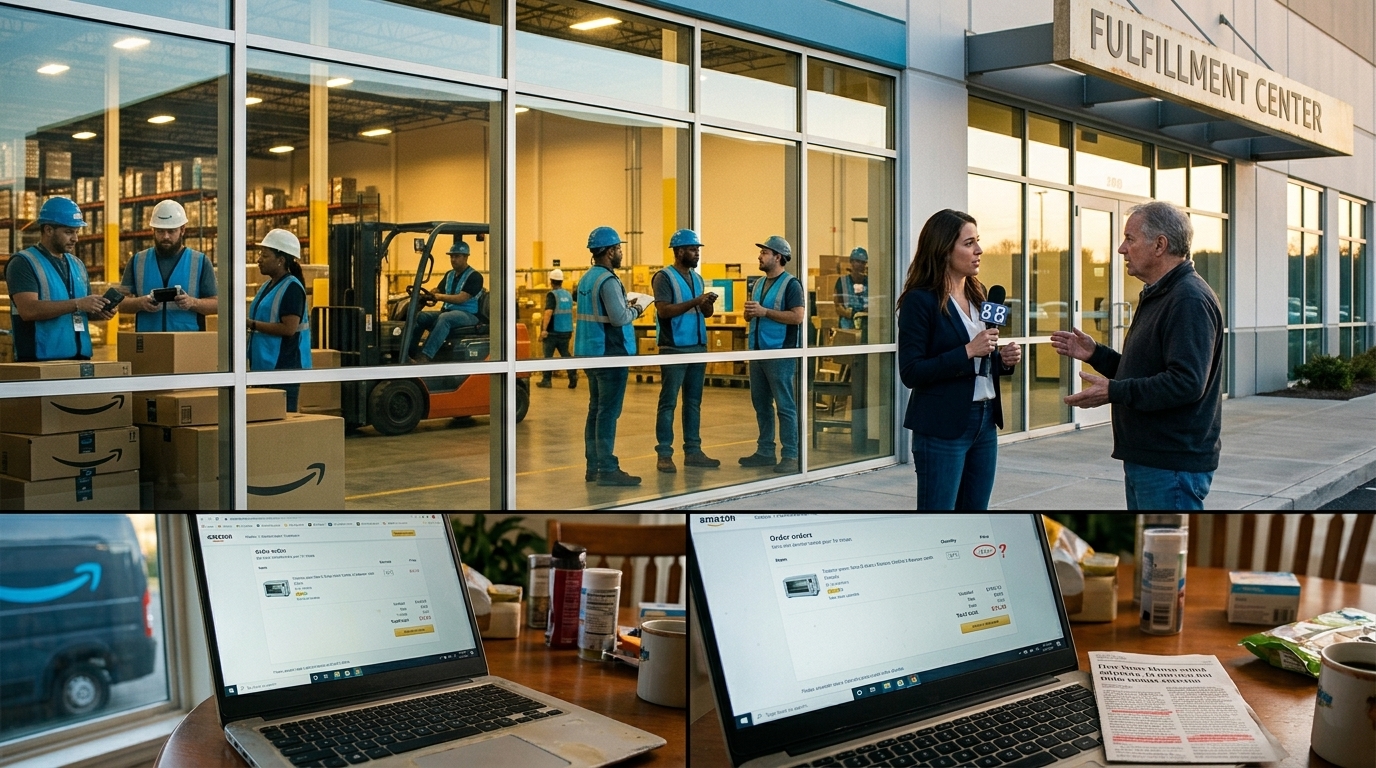
Amazon, the undisputed titan of global e-commerce, finds itself in the crosshairs of the American judicial system once again. A new class action lawsuit, filed in federal court, alleges that Jeff Bezos's empire exploited tariffs imposed by the Trump administration on Chinese imports to hike prices far beyond the actual cost of the duties, leading to what many analysts term "greedflation."
The case, emerging at a critical juncture for market regulation in 2026, contends that Amazon did not merely pass on the cost of tariffs to consumers but used the complexity of trade rules as a smokescreen to broaden its profit margins. According to the complaint, price increases on thousands of product categories were disproportionate to the economic burden caused by Section 301 tariffs, hitting millions of households that rely on the platform for daily essentials.
The Anatomy of Deception: Tariffs as an Alibi
The central argument of the plaintiffs focuses on how Amazon managed its pricing policy during the period of heightened trade tensions between the US and China. While the company's official rhetoric cited "necessary adjustments due to increased import costs," data presented in the lawsuit paints a different picture. In many instances, products not directly affected by the tariffs saw their prices rise, while in others, the retail price increase was several times the actual tariff liability.
Lawyers representing the consumers argue that Amazon utilized its pricing algorithms to test customer resilience. Under the guise of "political instability" and "international trade pressures," the company allegedly created an artificial sense of necessity for the hikes. The result was the accumulation of billions of dollars in excess profits, which the lawsuit characterizes as "unjust enrichment" at the expense of the American public.
The Political Weight of Trump Tariffs and the Legal Challenge
The tariffs imposed during Donald Trump's tenure remain one of the most controversial economic policy tools in recent history. While intended to protect domestic manufacturing, they functioned in practice as an indirect consumption tax. The class action argues that these tariffs were "illegal" or at least applied in a manner that violated fair competition rules, providing giants like Amazon the opportunity to manipulate the market.
Amazon, for its part, rejects the allegations, stating that its prices are determined by dynamic competition and supply chain costs, which include much more than simple tariffs. However, the timing of the lawsuit is particularly damaging, as regulators in both the US and the EU are already scrutinizing the company's monopolistic practices. If the lawsuit proceeds, it could pave the way for massive settlements and a radical shift in how retailers announce and justify price increases.
Implications for the Future of E-commerce
The outcome of this legal battle will define the boundaries of corporate responsibility in the era of a globalized economy. If it is proven that Amazon used state trade policy as a tool to boost its margins, the consequences will be seismic. Already, consumer advocacy groups are calling for greater transparency in pricing algorithms to make it clear which portion of a price hike is due to real costs and which to profitability strategies.
Furthermore, the case highlights the danger of over-reliance on a single provider. When one company controls such a vast market share, its pricing decisions affect the entire economy and inflation rates. The "tariff war" is no longer just a state-to-state dispute but a clash between corporate power and the rights of citizens to access fair pricing.
- The lawsuit covers a five-year period, from 2019 to 2024.
- Plaintiffs are seeking damages that could exceed $5 billion.
- Amazon is accused of violating consumer protection laws in multiple states.
- The case may force the company to reveal sensitive data about its algorithms.