At a time when e-commerce in China stands at a critical crossroads, Alibaba Group Holding Ltd. is making a bold move to reclaim its dominance. The integration of generative artificial intelligence (AI) into Taobao, the company's flagship retail platform, is not merely a technical upgrade but a radical overhaul of the consumer experience. Under the leadership of new CEO Eddie Wu, Alibaba is adopting an "AI-first" strategy, seeking to transform a traditional marketplace into an intelligent, interactive ecosystem.
The Merchant Revolution and Productivity Gains
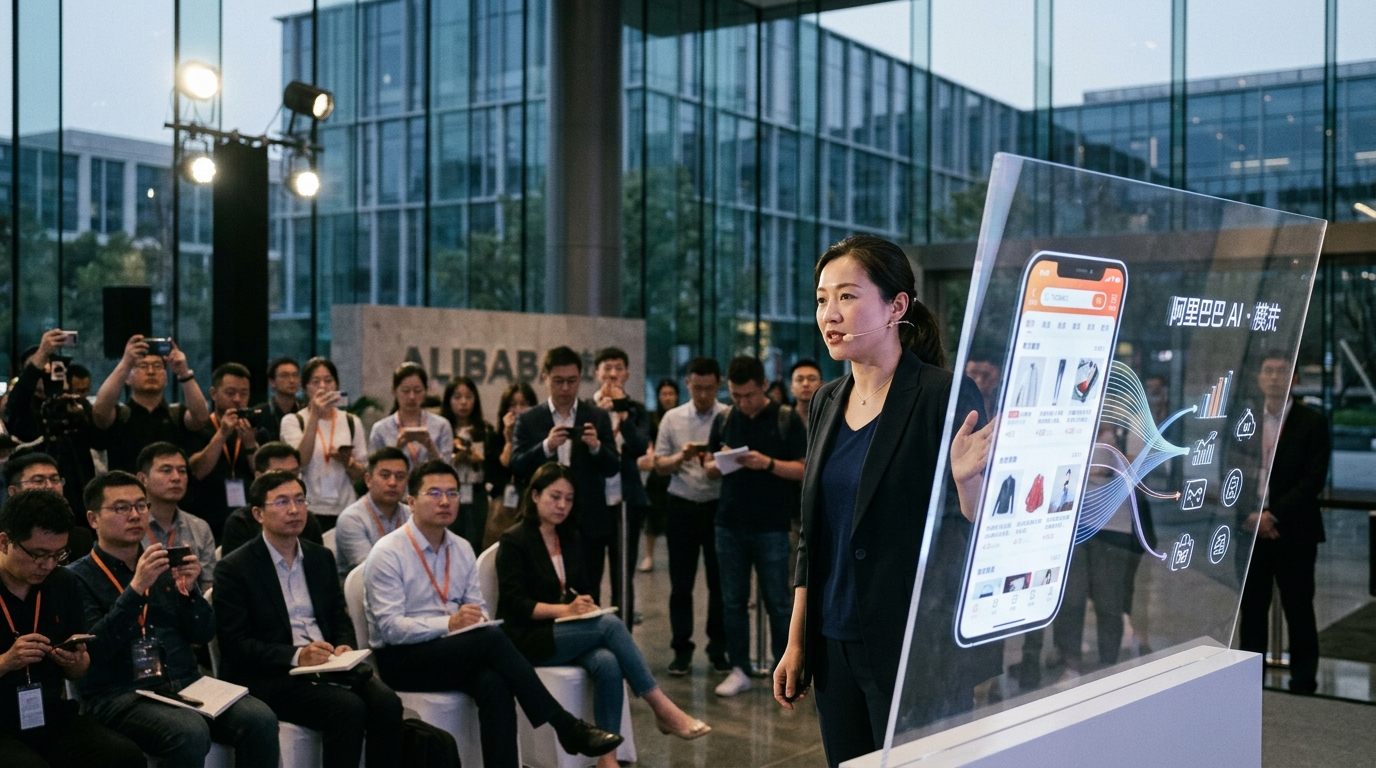
One of the most significant aspects of this transition is the empowerment of the millions of merchants operating on Taobao and Tmall. Alibaba has launched a suite of AI tools that allow sellers to create high-quality content at a minimal cost. For instance, merchants can now produce realistic product photos and promotional videos using only a basic description, eliminating the need for expensive photoshoots. Furthermore, new customer service tools based on Large Language Models (LLMs) can handle complex user queries naturally, increasing conversion rates and reducing operational costs.
- Automated generation of product descriptions based on market trends.
- Intelligent data analysis for demand forecasting and inventory management.
- AI tools for optimizing advertising spend in real-time.
According to market analysts, this move is essential for Alibaba to remain competitive against rising players like Pinduoduo (PDD Holdings) and ByteDance's Douyin. These platforms have gained ground using aggressive algorithms and low prices, forcing Alibaba to invest in technological superiority to differentiate itself.
The Wenwen Digital Assistant and Personalized Experience
For the end consumer, the most visible change is the introduction of "Wenwen," a digital assistant powered by Alibaba's Tongyi Qianwen model. Instead of users simply typing keywords into a search bar, they can now engage in a conversation. Wenwen can suggest gifts for specific occasions, compare technical product specifications, or even help plan a trip by purchasing all the necessary items. This shift toward "conversational commerce" aims to reduce decision-making time and increase customer satisfaction.
"Artificial intelligence is not just an optimization tool, but the driving force that will define the next decade of global trade," an Alibaba executive recently stated during a conference in Hangzhou.
Geopolitical Challenges and Technical Constraints
Despite its ambition, Alibaba faces significant hurdles. US restrictions on the export of advanced semiconductors to China pose a major obstacle to training even more powerful AI models. The company is forced to seek alternatives, investing in domestic chip production and optimizing its existing resources. Meanwhile, the regulatory landscape in China remains stringent, with the government requiring tech companies to ensure that AI-generated content aligns with national values.
In conclusion, the integration of AI into Taobao is a high-stakes gamble for Alibaba. If successful, it will set the standard for the future of retail globally. If it fails to convince users of the value of these tools, it risks losing further market share in an already saturated and highly competitive market. The battle for dominance in the digital age is no longer fought solely on price, but on algorithms.