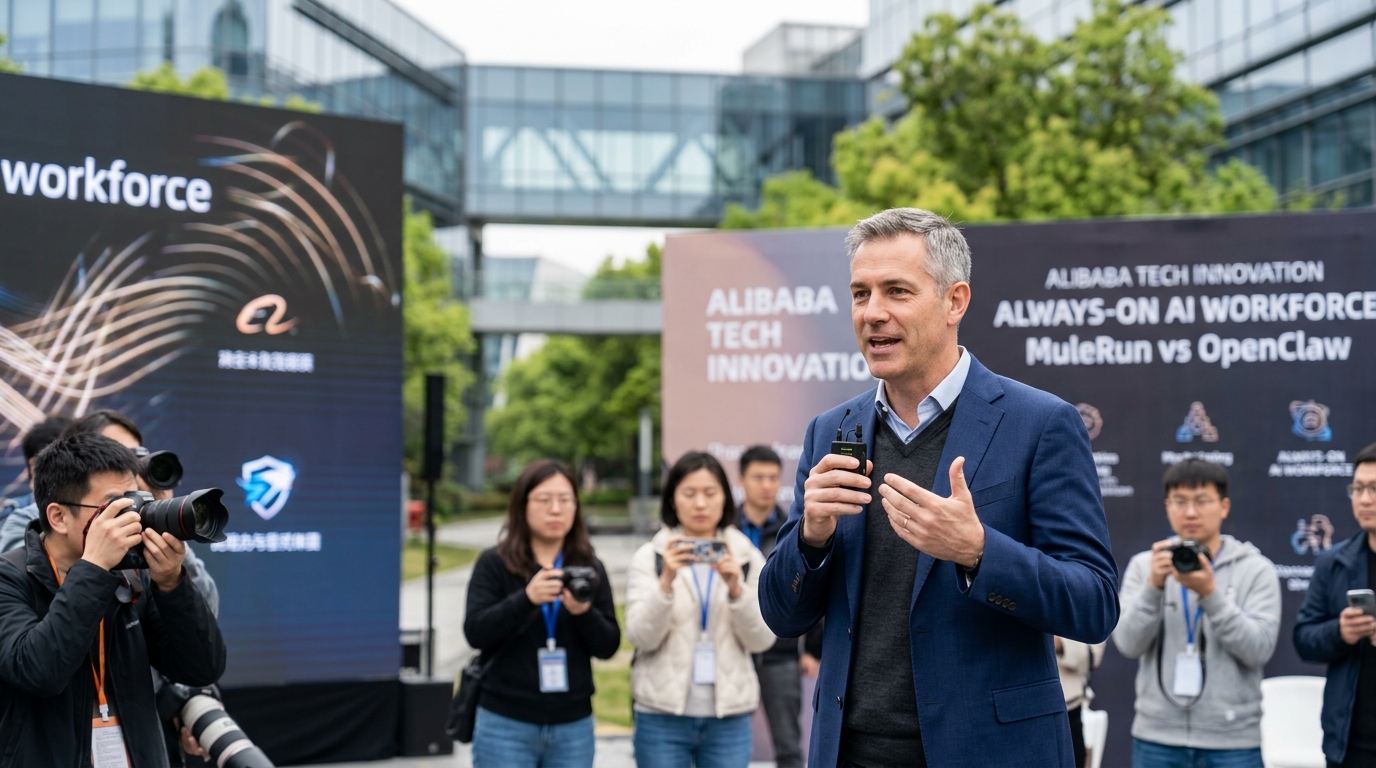
The global race for Artificial Intelligence supremacy is entering a new, more pragmatic phase. While previous years were dominated by Large Language Models (LLMs) capable of conversation, 2026 finds tech giants pivoting toward "AI Agents"—systems that don’t just provide information but execute complex tasks autonomously. At the heart of this evolution is Alibaba, which, through reports in the South China Morning Post, has unveiled MuleRun, its latest weapon in the escalating rivalry with OpenClaw.
The Architecture of Autonomy: What is MuleRun?
MuleRun is not merely a software update; it is a fundamental redesign of how AI interacts with business processes. Unlike OpenClaw, which relies on a more linear and reactive approach (input-output), MuleRun is built to be "always-on." This means agents based on this architecture can monitor real-time data streams, make decisions, and execute actions without the need for human intervention or specific prompts.
According to sources within Alibaba Cloud, MuleRun utilizes a technique called "Iterative Task Refinement." Instead of an agent attempting to solve a problem on the first try, MuleRun runs multiple simulations in the background, selecting the most efficient path before execution. This drastically reduces errors and operational costs, making it ideal for sectors such as supply chain management and large-scale customer service.
The Rivalry with OpenClaw and the Geopolitical Context
OpenClaw, which gained traction as a more flexible and open platform, is now under significant pressure. Alibaba is betting that the vertical integration of MuleRun within its ecosystem (Cloud, Logistics, E-commerce) will provide a speed that no independent platform can match. This clash is not just technical but economic. China, facing demographic shrinkage and the urgent need for productivity gains, views the "always-on AI workforce" as the solution to maintaining its global competitiveness.
"We are not just building tools; we are building a digital infrastructure that never sleeps. MuleRun is the connective tissue between strategic thought and operational execution," says a senior Alibaba executive.
The 'Always-On' Workforce and the Labor Market
The promise of a workforce that operates 24/7, 365 days a year, without fatigue or the need for breaks, evokes both awe and skepticism. In the e-commerce sector, MuleRun agents can simultaneously manage thousands of product returns, negotiate with suppliers, and adjust prices in real-time based on demand. However, the social dimension remains a burning issue. While Alibaba argues that AI will liberate humans from repetitive tasks, the speed of the transition threatens to outpace the ability of workers to retrain.
The Future: From Chatbots to Digital Colleagues
Alibaba’s strategy with MuleRun marks the end of the era of "passive AI." In the near future, businesses will not just buy software subscriptions but "digital labor hours." MuleRun’s ability to learn from its environment and improve autonomously places it at the forefront of the fifth industrial revolution. The remaining question is whether OpenClaw and other market players can offer an equally powerful alternative that ensures transparency and human oversight in this new, autonomous landscape.