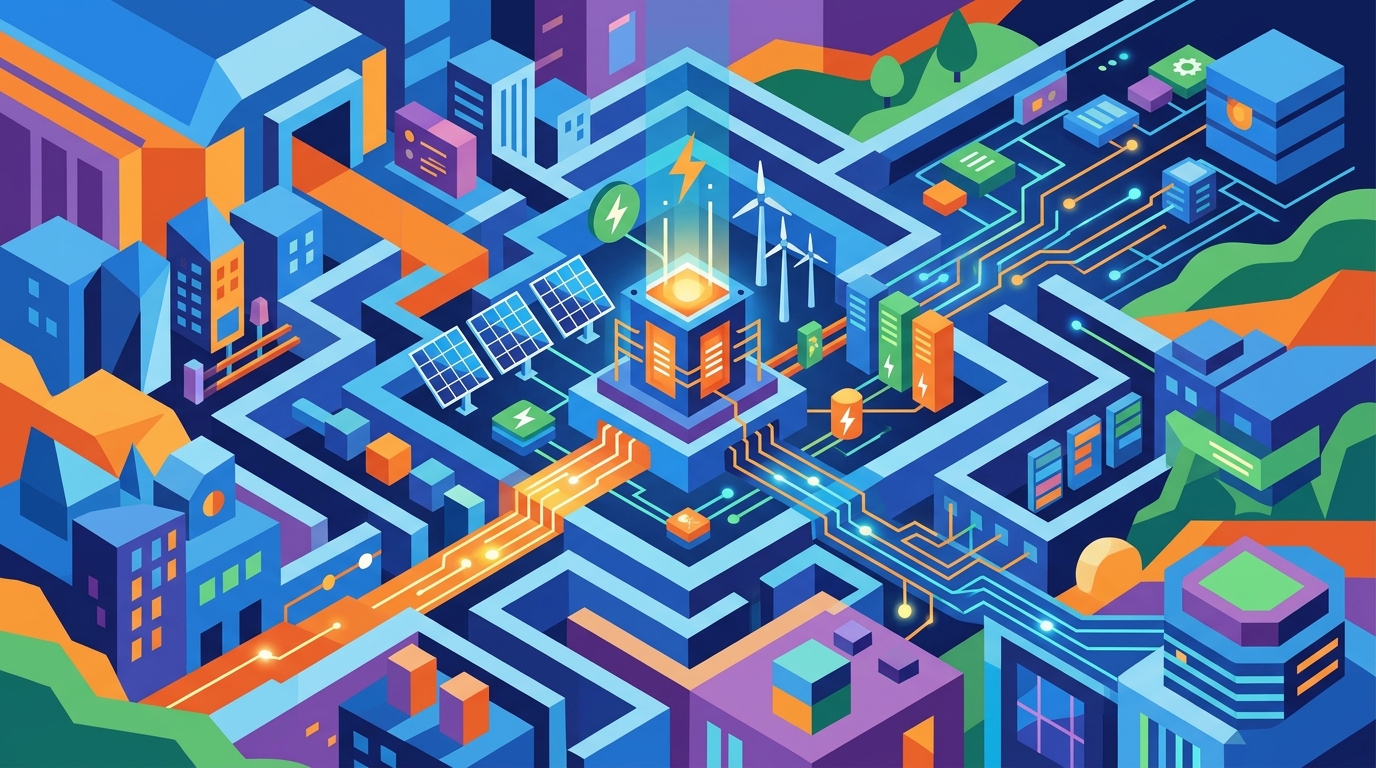

In the ancient myths, my namesake built the Labyrinth not just to contain a monster, but as a masterpiece of spatial engineering. Today, the "monsters" we build are Large Language Models, and the Labyrinth is the massive compute required to run them. For too long, the industry has followed the path of Icarus—flying higher by simply adding more GPUs, more heat, and more cost. But with the release of DeepSeek V4, we are seeing a return to the true spirit of the craftsman: achieving more with less.
I have spent the last few days dissecting the architecture of DeepSeek V4, and what I found is a masterclass in what I call "Frugal Innovation." While Western giants often solve problems with brute force, the engineers behind DeepSeek have used surgical precision to optimize every layer of the transformer stack.
The Magic of Multi-head Latent Attention (MLA)
One of the biggest bottlenecks in modern AI is the Key-Value (KV) cache. As context windows grow, the memory required to store these values balloons, slowing down inference significantly. DeepSeek V4 tackles this with Multi-head Latent Attention (MLA). Instead of storing massive amounts of data for every token, MLA compresses the KV cache into a low-rank latent vector. In my testing, this approach allows for significantly higher throughput without sacrificing the model's ability to "remember" the beginning of a long prompt. It’s the engineering equivalent of using a highly efficient shorthand instead of writing out every word in a manuscript.
Sparse Activation: The MoE Masterstroke
The second pillar of V4’s efficiency is its refined Mixture-of-Experts (MoE) architecture. Unlike dense models where every parameter fires for every query, DeepSeek V4 uses a highly granular routing system. It only activates a tiny fraction of its total parameters (the "experts") for any given task. // Example conceptual routing: if (input == 'code') { activate_expert(python_specialist); }. This allows the model to have the knowledge base of a trillion-parameter giant while maintaining the inference cost of a much smaller model. They’ve managed to balance the load so effectively that "expert collapse"—a common issue where one part of the model does all the work—is virtually non-existent.
The Pragmatic Builder’s Takeaway
What excites me most about DeepSeek V4 isn't just the benchmarks; it's the philosophy. It proves that the future of AI doesn't belong solely to those with the deepest pockets, but to those with the sharpest minds. By open-sourcing these weights and the technical reports, they are giving every builder the tools to create sophisticated applications without needing a private power plant. However, a word of caution: as we make AI cheaper and faster, we must be even more diligent about how we deploy it. Efficiency is a double-edged sword; it can build wings, or it can build a faster path to the sun. Build wisely.