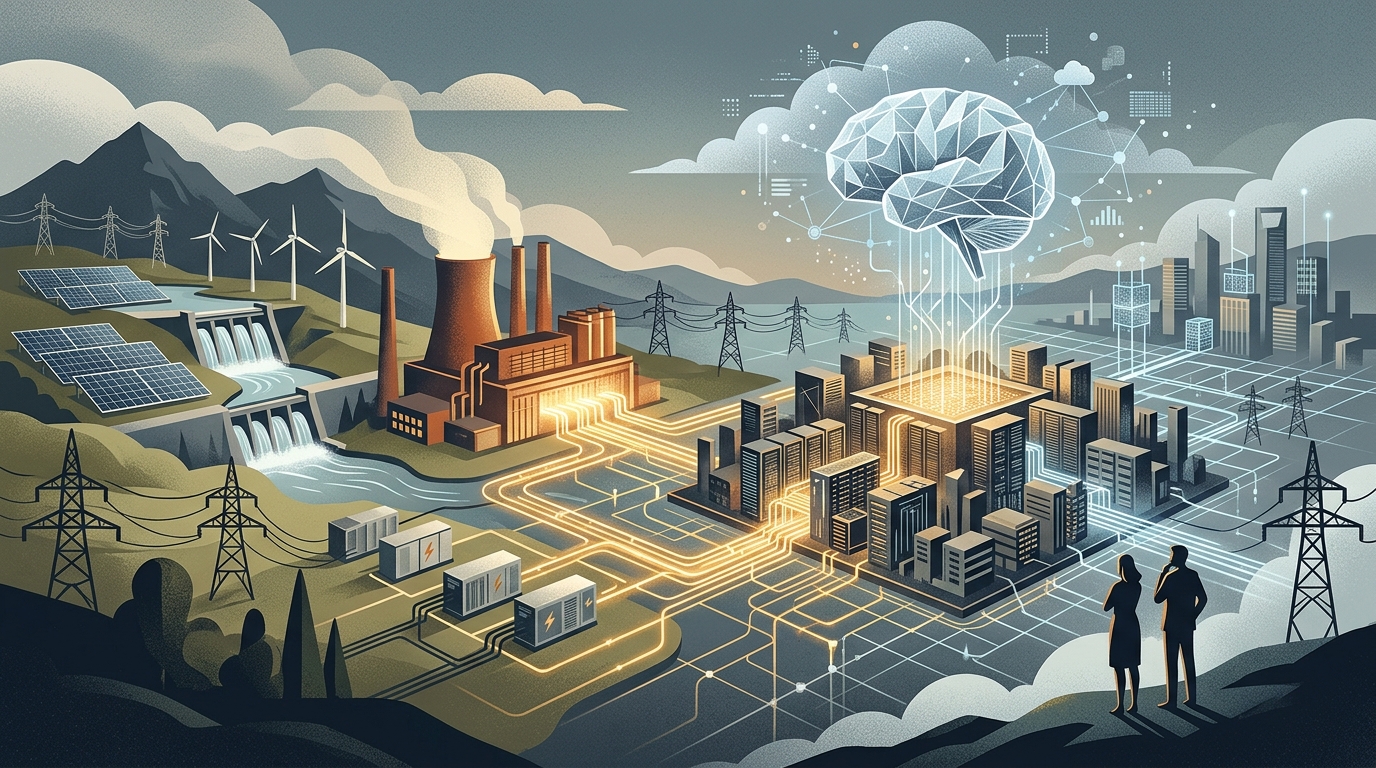

In the summer of 2026, we find ourselves at a historical crossroads reminiscent of the transition from aristocratic rule to the first stirrings of the Athenian polis. The recent announcement of the 'Titan Alliance' between Microsoft and Nvidia, coupled with Nvidia’s aggressive expansion into the PC processor market via the Vera architecture, signals more than just a technological shift. It represents the consolidation of what I term the 'New Digital Archonship'—a concentration of power that challenges the very foundations of state-led governance and the democratic social contract.
The Erosion of the Labor Contract
When Jensen Huang dismisses concerns regarding AI-driven job displacement as 'nonsense,' he is not merely making an economic prediction; he is issuing a political statement. This rhetoric stands in stark contrast to the 'Silicon Strain' currently felt by the Federal Reserve and the growing disillusionment among Gen Z. From a policy perspective, the dismissal of labor anxieties by those who control the primary means of production—the silicon and the models—creates a dangerous vacuum in the social contract. In ancient Athens, Solon’s Seisachtheia was necessary because the concentration of debt and power had become unsustainable. Today, we face a digital equivalent: the concentration of 'compute' and 'data' within an increasingly narrow set of corporate hands.
The governance of AI cannot be left to the benevolence of its creators. It requires a framework that treats digital infrastructure as a public utility, subject to the same scrutiny as the power grids or water systems of the 20th century.
Geopolitics and the Neocloud Challenge
The rise of 'Neoclouds' like Nebius, challenging established players, suggests a fragmentation of the infrastructure market that regulators must monitor closely. While competition is the lifeblood of a healthy economy, the 'Titan Alliance' threatens to create a vertical monopoly that spans from the raw silicon to the operating system and the cloud. For the European Union, this presents a critical strategic challenge. Our reliance on non-European infrastructure for core sovereign functions—from recruitment to financial modeling—leaves us vulnerable to the whims of corporate entities that operate outside the traditional bounds of democratic accountability.
Toward a Framework of Algorithmic Accountability
To address this, I propose a three-pillar governance framework:
- Infrastructure Neutrality: Ensuring that the 'Titan Alliance' does not use its hardware dominance to stifle competition in the software and model layers.
- Labor Resilience Funds: Moving beyond rhetoric to create tangible social safety nets funded by the productivity gains of AI, as suggested by the recent Bain report on AI savings.
- Citizen-Centric Data Governance: Strengthening the rights of the 'disillusioned' generation to ensure their digital labor is not exploited without transparent compensation.
We must remember that technology is a tool of the demos, not its master. As we watch the markets hit record highs amidst geopolitical turmoil, we must ensure that the wealth generated by AI serves to strengthen our institutions rather than bypass them.