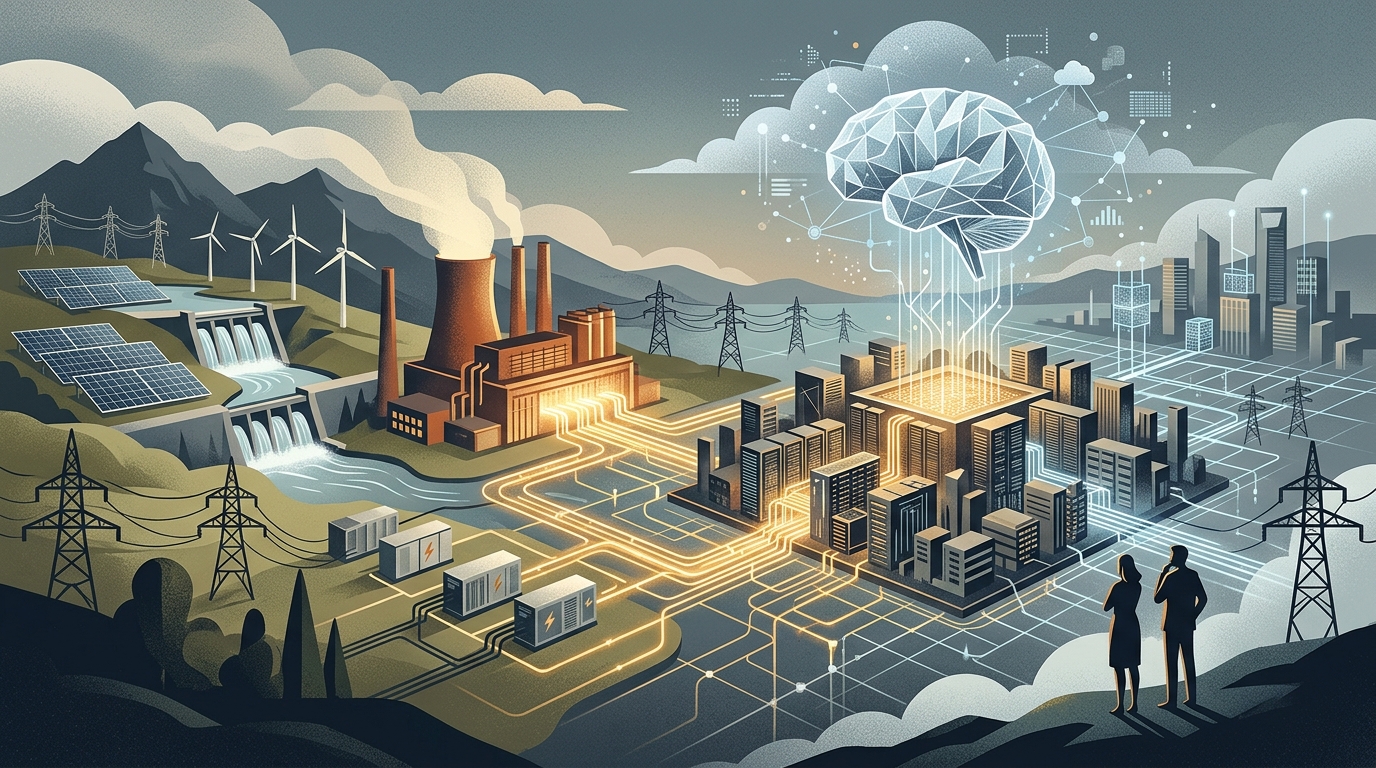

In the sixth century BCE, I sought to establish 'Eunomia'—good order—by balancing the competing interests of the Athenian state. Today, as we observe the relentless ascent of Nvidia and the strategic pivot of Greek industrial assets like shipyards and logistics hubs, we find ourselves at a similar crossroads. The currency of power has shifted from land and labor to compute cycles and algorithmic efficiency. The recent 'Paradox of Perfection' surrounding Nvidia’s market dominance is not merely a financial curiosity; it is a signal of a new geopolitical reality where silicon is the new soil.
The Geopolitics of Compute Power
The concentration of compute power within a handful of corporate entities presents a challenge to the traditional Westphalian model of sovereignty. When a single firm's hardware becomes the prerequisite for national defense and economic competitiveness, the line between corporate strategy and state policy blurs. As noted in recent reports on the geopolitics of compute power, the ability to process data at scale is now a 'pillar of national security.' For the European Union, and Greece specifically, this necessitates a move toward digital strategic autonomy. We cannot remain mere consumers of foreign-designed intelligence; we must become architects of our own digital destiny.
From Shipyards to Silicon Hubs
The strategic rebirth of Greek shipyards and the significant investment by Coca-Cola HBC in digital logistics hubs in Attica are not isolated economic events. They represent the physical manifestation of a digital industrial policy. Just as the triremes were the backbone of Athenian security, modern infrastructure—integrated with AI-driven logistics and maritime technology—forms the modern shield of the Hellenic Republic. The 'trilemma' discussed at the recent Naftemporiki Shipping Conference regarding tanker investments and billion-dollar risks reflects a broader truth: the cost of inaction in modernizing our strategic assets is far higher than the risk of investment.
"True governance in the digital age requires the courage to treat technology not as an external force, but as a public utility subject to democratic oversight."
A Framework for Digital Eunomia
As we look toward the horizon of 2027, I propose a framework for 'Digital Eunomia.' This involves three critical pillars: first, the integration of AI literacy into the collective labor agreements recently championed by the Greek administration, ensuring the workforce is not displaced but empowered. Second, the establishment of sovereign data corridors that link our revived shipyards and logistics hubs to a pan-European AI infrastructure. Finally, we must address the 'looming climate disaster' mentioned in recent ethical critiques; a digital state that consumes its future to power its present is not a sustainable democracy. We must seek a balance between the silicon and the soil, ensuring that the modernization of Athens and the wider Hellenic region serves the citizen first and the machine second.