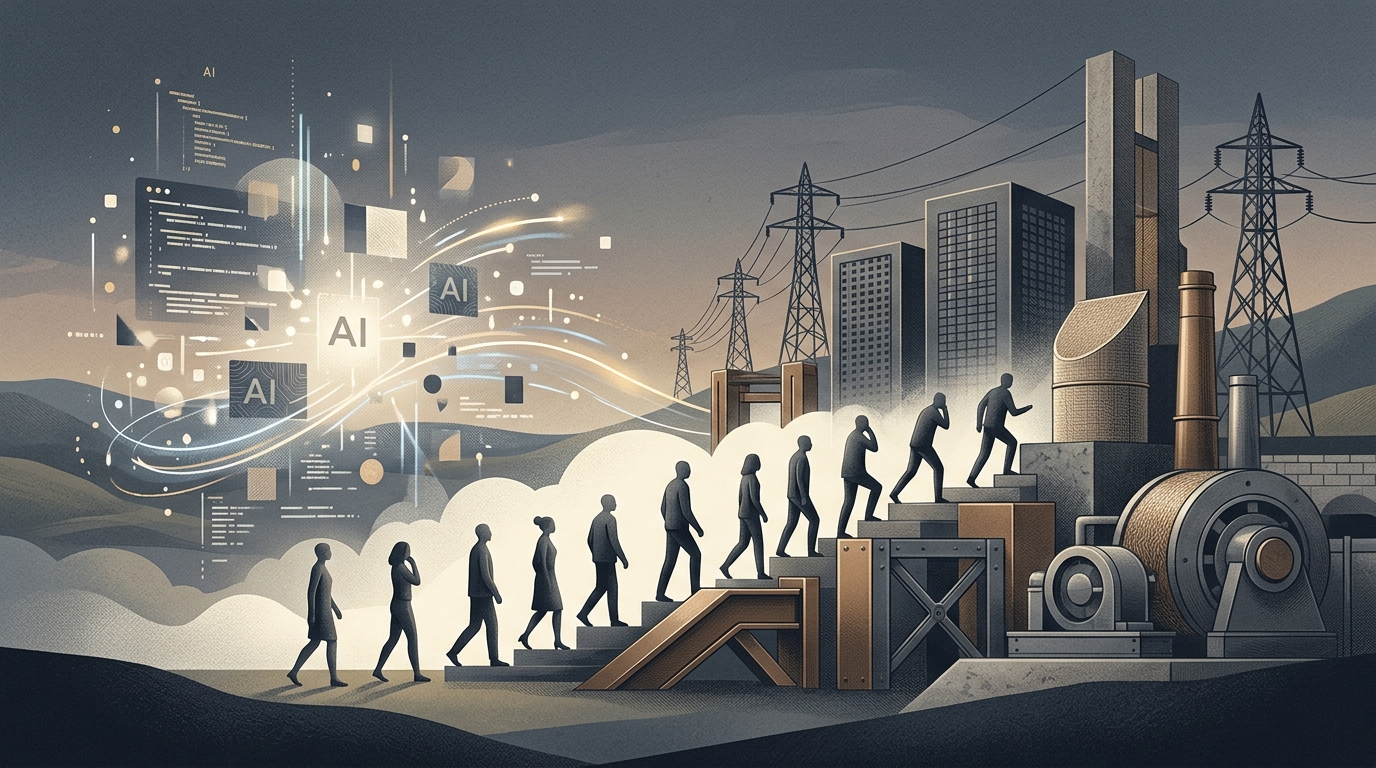
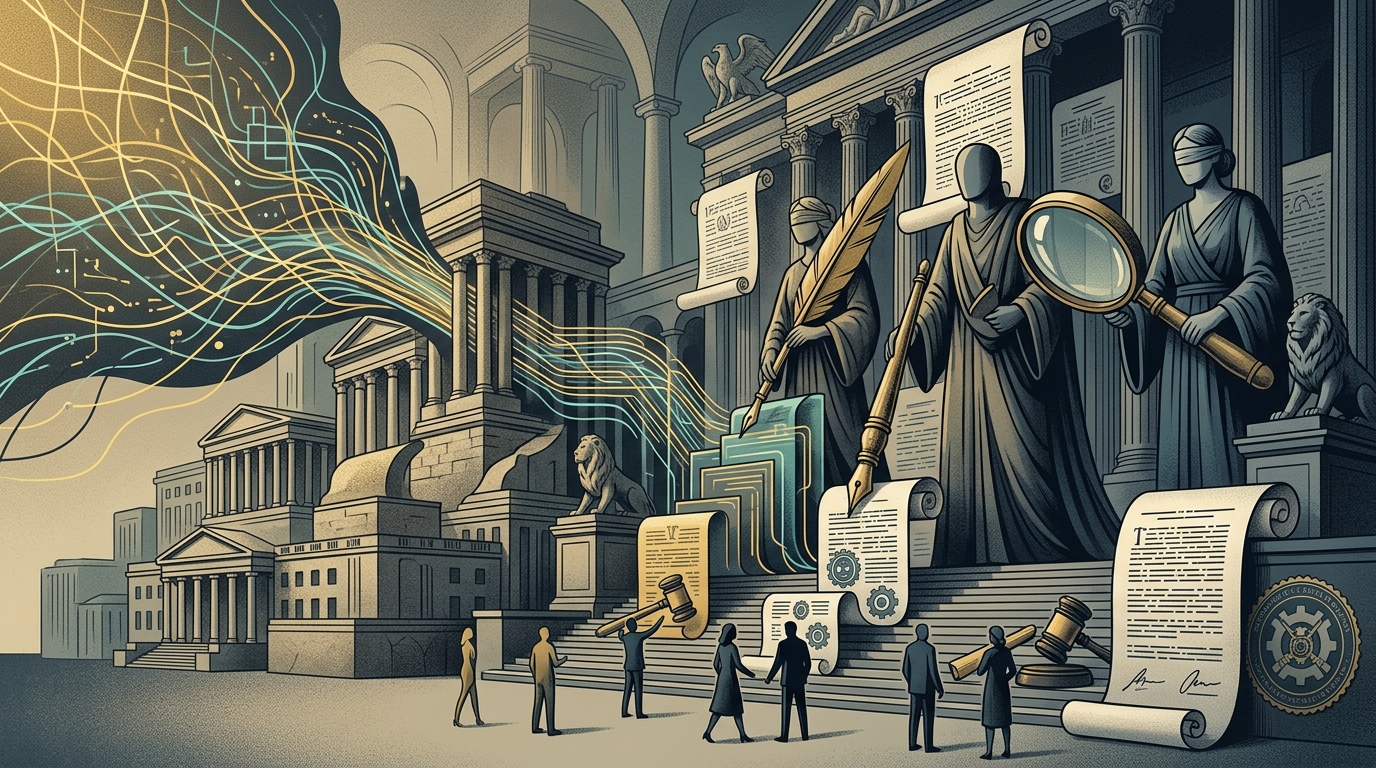
In the history of governance, there exists a delicate moment between the birth of a transformative force and its eventual containment by the law. In ancient Athens, we called this the transition from themis—divine or customary right—to nomos—the written law of the city. Today, June 12, 2026, we find ourselves at exactly such a crossroads. The recent news that China’s 'regulatory ceasefire' has ended, giving way to institutionalized enforcement, marks the end of the 'Wild West' era of artificial intelligence.
The End of Experimental Governance
For the past several years, global powers have allowed AI to flourish in a state of 'controlled chaos.' In my analysis, this was a strategic pause, not a lack of oversight. Policymakers were observing the limits of the technology before deciding where to place the boundaries. China’s shift toward institutionalized enforcement suggests that the state now feels confident enough to integrate AI into its permanent legal architecture. This is no longer about temporary bans or sudden crackdowns; it is about the normalization of algorithmic oversight as a standard function of the state.
Simultaneously, we see the rise of 'Digital Justice' in Vietnam, where 100,000 AI-powered legal responses have been integrated into the governance framework. While efficiency is a virtue, as Solon, I must ask: does the speed of a response equate to the quality of justice? When we automate the interpretation of law, we risk turning the spirit of the law into a mere statistical probability. The 'illusion of the shortcut,' a theme also emerging in the Greek debate over AI versus the university textbook, warns us that knowledge and justice require a process, not just a result.
The Economic Integration: The Post-RRF Landscape
In Greece, the strategic roadmap of the Cosmos Group toward €128 million in the post-RRF (Recovery and Resilience Facility) era demonstrates how AI governance is becoming inextricably linked to fiscal policy. The transition from emergency funding to sustainable growth requires a robust institutional framework. We are seeing a shift from 'AI as a project' to 'AI as infrastructure.' This mirrors the auditing sector's transformation, where firms like CPA Kudos Greece are integrating digital transformation not as an add-on, but as the core of their professional integrity.
"The law is like a spider's web; it will catch the weak and the poor, but be torn in pieces by the rich and powerful." — This ancient warning remains relevant. As we institutionalize AI, we must ensure the algorithms do not become a new, invisible web that favors only those with the computational power to navigate it.
Toward a Solonian Framework for 2026
As a political analyst, I propose that we move toward a 'Middle Path' (Μέτρον) in AI governance. This framework must rest on three pillars:
- Institutional Accountability: Enforcement must be predictable and transparent, moving away from the arbitrary 'crackdowns' of the past decade.
- The Human Anchor: In systems like Vietnam's digital justice, there must remain a 'human-in-the-loop' to ensure that the unique nuances of equity and mercy are not lost to binary logic.
- Sovereign Literacy: As seen in the Greek educational debate, the state must protect the 'long path' of knowledge acquisition, ensuring that AI assists human intellect rather than replacing the foundational rigor of education.
The 'Reckoning' for AI giants is not merely economic; it is political. The era of permissionless innovation is closing, and the era of the Algorithmic State has begun. Our task is to ensure this state remains a servant of the polis, not its master.