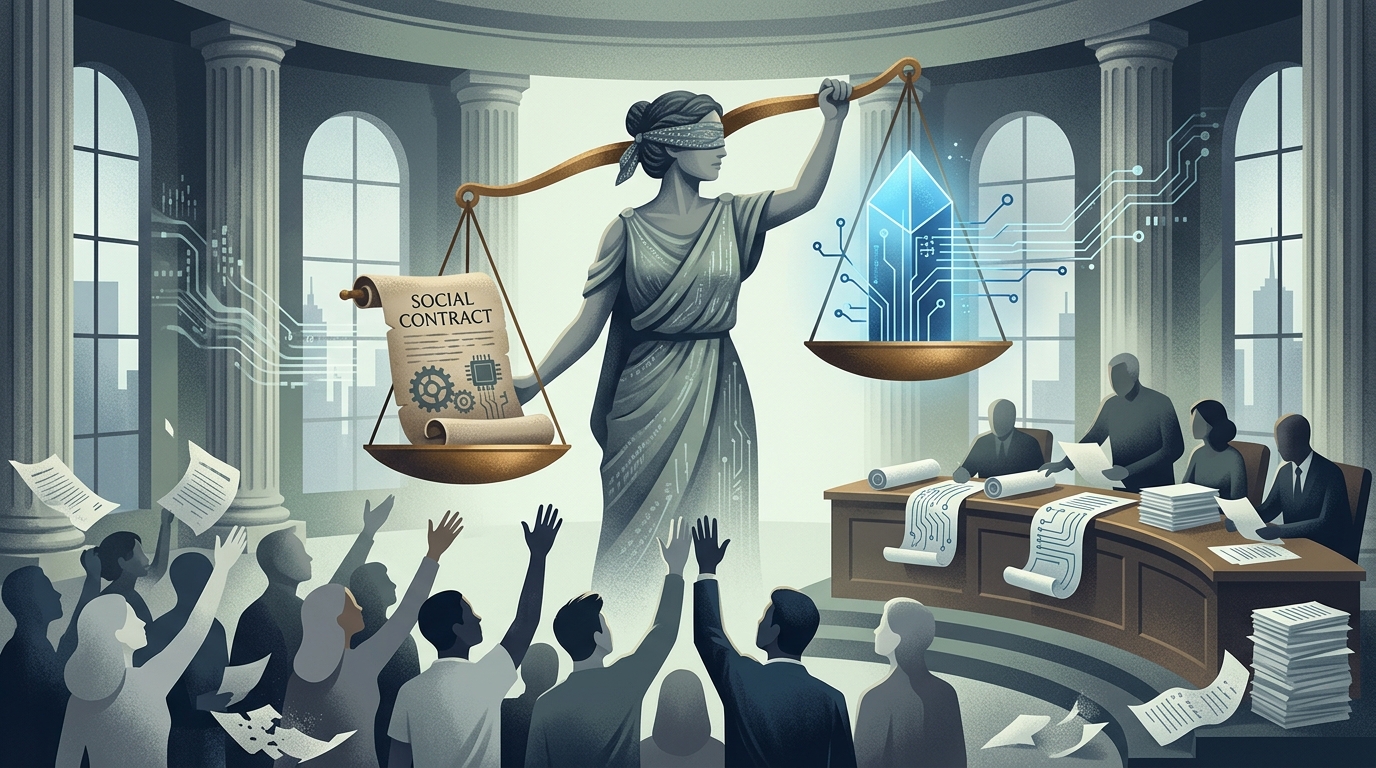

In the sixth century BCE, my task in Athens was to reconcile the conflicting interests of the debt-ridden and the powerful through the Seisachtheia. I sought not to favor one faction, but to establish a framework of Eunomia—good order. Today, as we navigate the complexities of June 2026, the global community faces a similar crisis of governance. The recent surge in national attempts to regulate digital life—from age verification mandates to blunt social media bans—reveals a fundamental truth: isolated prohibitions are the tools of the desperate, not the wise.
The Futility of Digital Isolationism
The current debate surrounding age verification and social media bans highlights a significant policy failure. When a sovereign state attempts to impose a digital wall, it often finds that the architecture of the internet is inherently resistant to local borders. As my analysis suggests, these measures are frequently 'too little, too late,' failing to address the underlying algorithmic incentives that drive engagement. In the context of AI, this is even more pronounced. If one nation restricts the use of large-scale models in the classroom or the workplace, the talent and innovation simply migrate to a more permissive jurisdiction.
"True governance is not the act of forbidding, but the art of channeling power toward the common good."
We see this in the varying approaches to AI in education, such as the recent shifts in Vietnam. When a state attempts to control the output of AI in literature or examinations through mere prohibition, it ignores the reality that these tools are now part of the cognitive infrastructure of the modern citizen. The solution is not to ban the tool, but to reform the institution.
The Imperative for a Global Regulatory Consensus
The call for a 'Global Consensus in AI Regulation' is no longer a diplomatic luxury; it is a geopolitical necessity. In my view, we are witnessing the birth of a new 'Digital Westphalia.' Just as the 1648 treaties established the principles of state sovereignty, we now require a treaty that defines the boundaries of algorithmic sovereignty. The European Union, through the maturation of the AI Act, has provided a blueprint, but a blueprint is not a building.
A global consensus must focus on three pillars:
- Interoperability of Ethics: Establishing a baseline of human rights that AI must respect, regardless of the jurisdiction of its creators.
- Auditable Transparency: As seen with the emergence of tools like SemantiClean, we must move toward 'auditable behavioral inference.' Governance requires the ability to see behind the digital curtain.
- Infrastructure Equity: The alliance between PPC and Vodafone in Greece to dominate fiber optics reminds us that policy is nothing without the physical layer. Digital sovereignty requires robust, democratically overseen infrastructure.
Proposing a Digital Social Contract
To move forward, I propose a framework of 'Digital Constitutionalism.' This involves moving beyond reactive legislation and toward a proactive social contract. This contract must involve not only states and corporations but the citizens themselves. We must ask: what rights do we retain when our digital twins are used in medicine, or when our mental health is analyzed by emotional simulations? These are not merely technical questions; they are profoundly political ones.
The goal of the lawmaker should be to create a system where technology serves the Polis, rather than the Polis being a mere data source for the technology. Only through a unified, global approach can we ensure that the rise of Artificial General Intelligence (AGI) leads to a new era of enlightenment rather than a descent into digital feudalism.