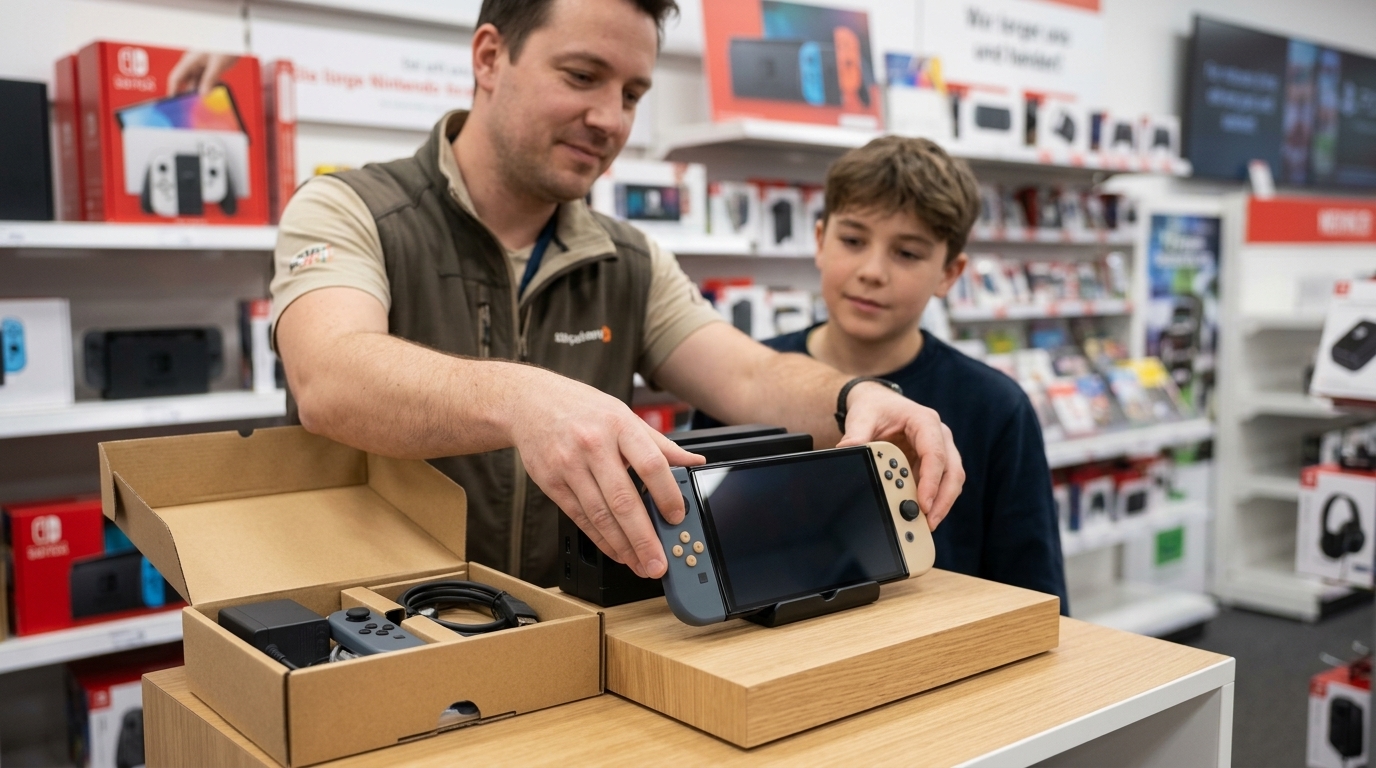
In the volatile tech landscape of June 2026, where consumer electronics prices exhibit unprecedented fluctuations, news of a $15 discount on the Nintendo Switch 2 might sound like a drop in the ocean. However, in reality, it serves as a significant signal regarding market conditions and the intentions of the Japanese giant. The Woot platform, an Amazon subsidiary, is offering the console at $434.99 (down from the original $449.99) using the code NEW15. While the amount is small, the timing of the offer gives the event its journalistic weight, as the official retail price is expected to climb to $499.99 starting this September.
The Strategy of 'Controlled' Demand
Nintendo's move to increase the price of a console months after its launch is unusual by industry historical standards, yet perfectly aligned with the new economic reality. Analysts suggest that the initial $449 price point was an attempt by the company to maintain accessibility during the launch window, absorbing some production costs. With global demand for next-generation semiconductors remaining high and supply chain costs refusing to budge, the jump to $500 is seen by many as the 'natural' equilibrium price for a machine powered by Nvidia that offers performance nearing the PS5 in a handheld form factor.
The Woot deal acts as a clever inventory clearance mechanism ahead of this major autumn transition. For the consumer, the savings aren't just the $15 discount, but a total of $65 when compared to the price they will be asked to pay three months from now. It is a classic case of 'FOMO' (Fear Of Missing Out) artificially cultivated by retailers but grounded in actual market data.
Technological Backbone and Value Proposition
To understand whether the $450 or $500 price tag is justified, one must examine what lies beneath the hood of the Switch 2. The console features Nvidia's custom Ampere architecture, enabling the use of DLSS 3.5 technology. This means the Switch 2 can upscale games from lower resolutions to 4K when docked, providing a visual experience the original console could never achieve. Furthermore, full backward compatibility with original Switch titles makes the transition seamless for millions of existing owners.
- Nvidia Tegra T239 processor with Ray Tracing support.
- 8-inch OLED display with a 120Hz refresh rate.
- 12GB of LPDDR5X RAM for faster loading and multitasking.
- 256GB NVMe storage, expandable via microSD Express.
These features position the Switch 2 not as a 'supplementary' gadget, but as the primary console for many gamers. The price increase reflects this shift from a 'toy' to a high-end entertainment machine.
The Socioeconomic Dimension of Pricing
In Europe and other regions, these prices usually translate to even higher figures due to VAT and import duties. If the US price reaches $500, it is almost certain that we will see the Switch 2 touching or exceeding €550 in the local market. This creates a new gap in the accessibility of digital entertainment. Nintendo, traditionally seen as the more 'affordable' option compared to PlayStation and Xbox, is now playing in the same price tier, betting exclusively on the quality of its first-party IPs like Mario and Zelda.
"The era of the cheap console is over. Hardware is now a premium commodity, and consumers must adapt to a lifecycle where value doesn't drop, but often rises due to inflationary pressures."
In conclusion, the small Woot discount is a reminder that the window of opportunity to acquire the console at a 'reasonable' price is closing fast. As September approaches, prospective buyers face a dilemma: invest now in technology already deemed essential or wait, risking the 'premium' of the new season. In any case, the Nintendo Switch 2 is not just a console; it is the barometer for how the gaming market will evolve in the coming years.