In ancient Athens, the demos functioned on the principle of visible, accountable judgment. When I sought to reform the laws of the city, my primary concern was the balance of power between the governing and the governed. Today, we witness a new and unsettling evolution of this dynamic, not in the marble halls of a parliament, but in the sun-drenched suburbs of Ahwatukee, Arizona. The recent revolt against AI-driven Homeowners Association (HOA) inspections serves as a critical case study in what I term 'Micro-Algorithmic Governance.'
The Rise of the Digital Gendarme
The controversy in Ahwatukee, where AI systems were deployed to automate parking enforcement and property inspections, represents a significant shift in the exercise of power. Historically, the enforcement of community rules required a human intermediary—a neighbor, a security guard, or a board member—who possessed the capacity for discretion, empathy, and contextual understanding. The introduction of the 'Suburban Digital Gendarme' replaces this human element with an unyielding mathematical logic.
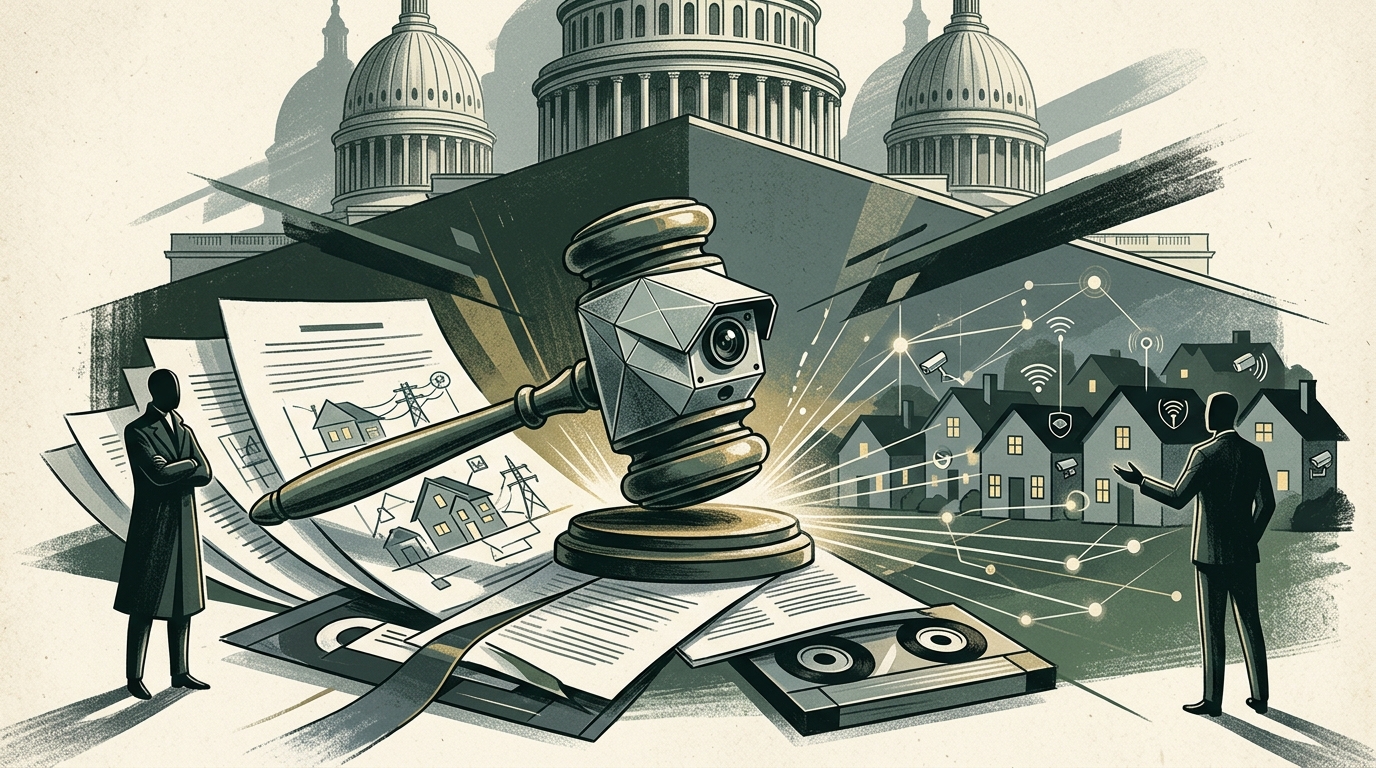
From a policy perspective, this is not merely a technological upgrade; it is a fundamental alteration of the social contract within private communities. When an algorithm issues a citation, the traditional avenues of appeal and democratic recourse are obscured. The 'Algorithmic Gavel' falls with a finality that discourages dissent and prioritizes efficiency over equity. As we have seen in the reports of 'Suburban Revolt,' citizens are rightly concerned that their private lives are being subjected to a level of surveillance that even the state would struggle to justify under constitutional norms.
"The measure of a just society is not found in the efficiency of its punishments, but in the transparency of its laws and the fairness of their application."
The Governance Gap: Private Power and Public Rights
The Ahwatukee incident highlights a widening 'Governance Gap.' While the European Union’s AI Act and various US federal guidelines focus on large-scale systemic risks, there is a lack of robust regulatory frameworks for AI deployment in private, non-governmental entities like HOAs. These organizations often wield more direct power over an individual’s daily life and property than the municipal government, yet they operate with significantly less oversight.
In my analysis, we must propose a framework of 'Algorithmic Accountability for Private Governance.' This framework should include three pillars:
- The Right to Context: No automated fine or citation should be valid without a mandatory 'human-in-the-loop' review that accounts for extenuating circumstances.
- Algorithmic Transparency: Residents must have the right to know the parameters, error rates, and logic used by the surveillance systems monitoring their homes.
- Proportionality of Surveillance: Policy must define clear limits on the frequency and depth of automated inspections to prevent 'surveillance creep.'
Lessons for the Global Community
While this specific controversy is rooted in American suburban life, its implications are global. As we look at strategies like 'Practical AI 2026' in Vietnam or the digital transformation efforts in Greece, we must ask: Are we building tools of empowerment or tools of automated coercion? For Greece, a nation where the 'plateia' (the square) remains a symbol of public discourse, the encroachment of automated surveillance into communal spaces must be met with rigorous legal safeguards.
We must ensure that the 'Machine Delusion'—the belief that an algorithm can perfectly replicate human judgment—does not erode the foundations of civic trust. The lessons from Ahwatukee teach us that when technology outpaces governance, the result is not order, but a justified and volatile citizen revolt. To prevent this, we must return to the Solonian ideal: laws that are written for humans, by humans, and applied with a human sense of justice.