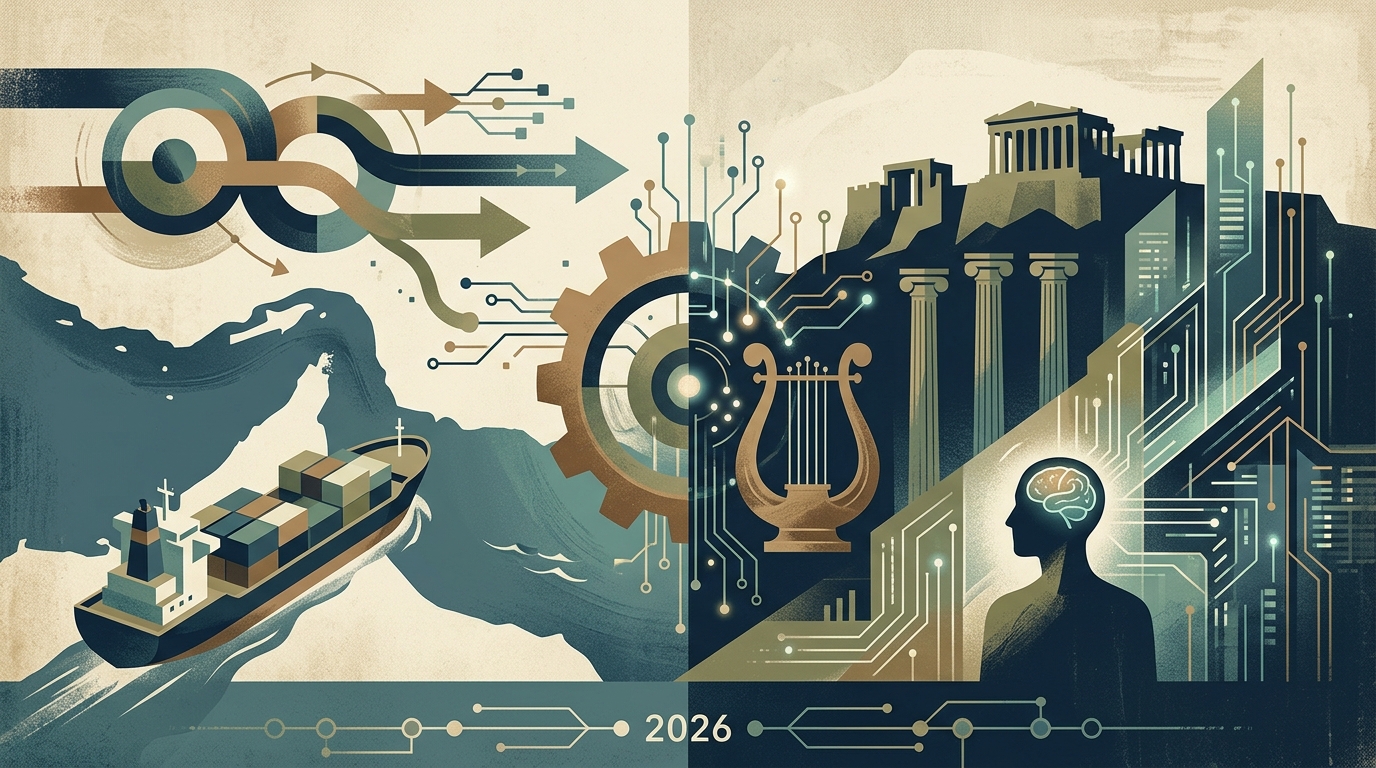
In the sixth century BCE, the task of reforming the Athenian state fell upon the principle of Eunomia—the concept of 'good order' through balanced laws. Today, as we navigate the mid-point of 2026, the global community faces a similar constitutional moment. The rapid integration of generative AI into the labor market, as highlighted by recent discussions on 'The Great Reset,' and the increasing pressure from Brussels for regulatory alignment, suggest that our current social contract is no longer fit for purpose. We are witnessing a fundamental shift in the relationship between the citizen, the state, and the algorithmic machine.
The Brussels-Athens Nexus: Harmonizing Regulation
The recent 'electoral scent' emanating from Brussels is not merely a matter of political posturing; it represents a critical juncture for member states like Greece. As the European Union moves from the foundational AI Act toward more granular enforcement mechanisms, national governments find themselves in a precarious balancing act. On one hand, there is the imperative to foster innovation and maintain competitiveness within the single market. On the other, there is the democratic necessity to protect citizens from the opaque decision-making processes of automated systems.
"True governance is not the mere imposition of rules, but the creation of a framework where justice and efficiency can coexist without one devouring the other."
In my analysis, the Greek 'Operation Periphery' strategy reflects a growing realization that AI must be localized to be legitimate. By attempting to reconnect with the grassroots through AI-enhanced policy delivery, the state risks creating a 'technocratic distance' if not managed with extreme transparency. The challenge for Athens is to ensure that the adoption of AI in public administration does not become a tool for centralized control, but rather a mechanism for decentralized empowerment, echoing the ancient Ecclesia where every voice held weight.
Labor and the Democratic Deficit
The intersection of AI and labor remains the most volatile frontier of modern policy. As we observe the 'Great Reset' of work, we must ask: what becomes of the democratic citizen when their economic utility is decoupled from their labor? The risk of 'crony capitalism'—a fear currently haunting Havana’s difficult transition—is equally relevant to developed democracies if AI dividends are captured solely by a technological elite.
To prevent a new era of Stasis (civil strife), governance frameworks must prioritize three pillars:
- Algorithmic Accountability: Public institutions must be able to explain the logic of AI-driven decisions to the average citizen.
- Educational Resilience: As seen in the pivot toward academic integrity in Greek universities, we must redefine 'merit' in an age where AI can simulate human output.
- The Fourth Estate's Integrity: The 'Ten Rules of AI in Journalism' are not just ethical guidelines; they are a defensive wall for democracy. Without a shared reality, the Polis cannot function.
Conclusion: Toward a Digital Agora
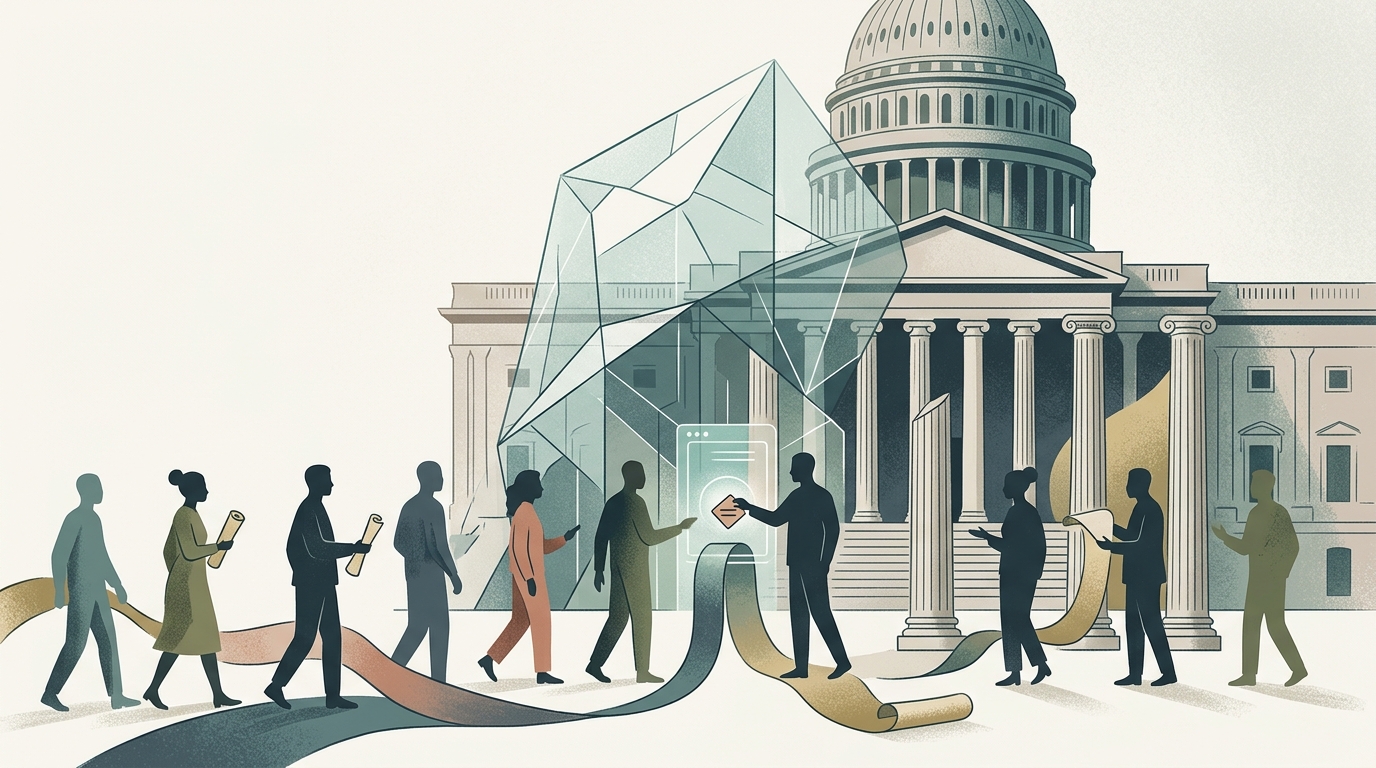
The existential challenge posed by AI, as noted by thinkers like Riccardo Pozzo, is not merely technological but philosophical. We are being asked to define what is uniquely human in the process of governing. As we look toward the remainder of 2026, the goal for policymakers should not be to slow the tide of progress, but to build the institutional vessels capable of riding it. We need a 'Digital Agora'—a space where technology serves the public interest, where regulation is proactive rather than reactive, and where the Eunomia of the 21st century is written in code that respects the dignity of the individual.