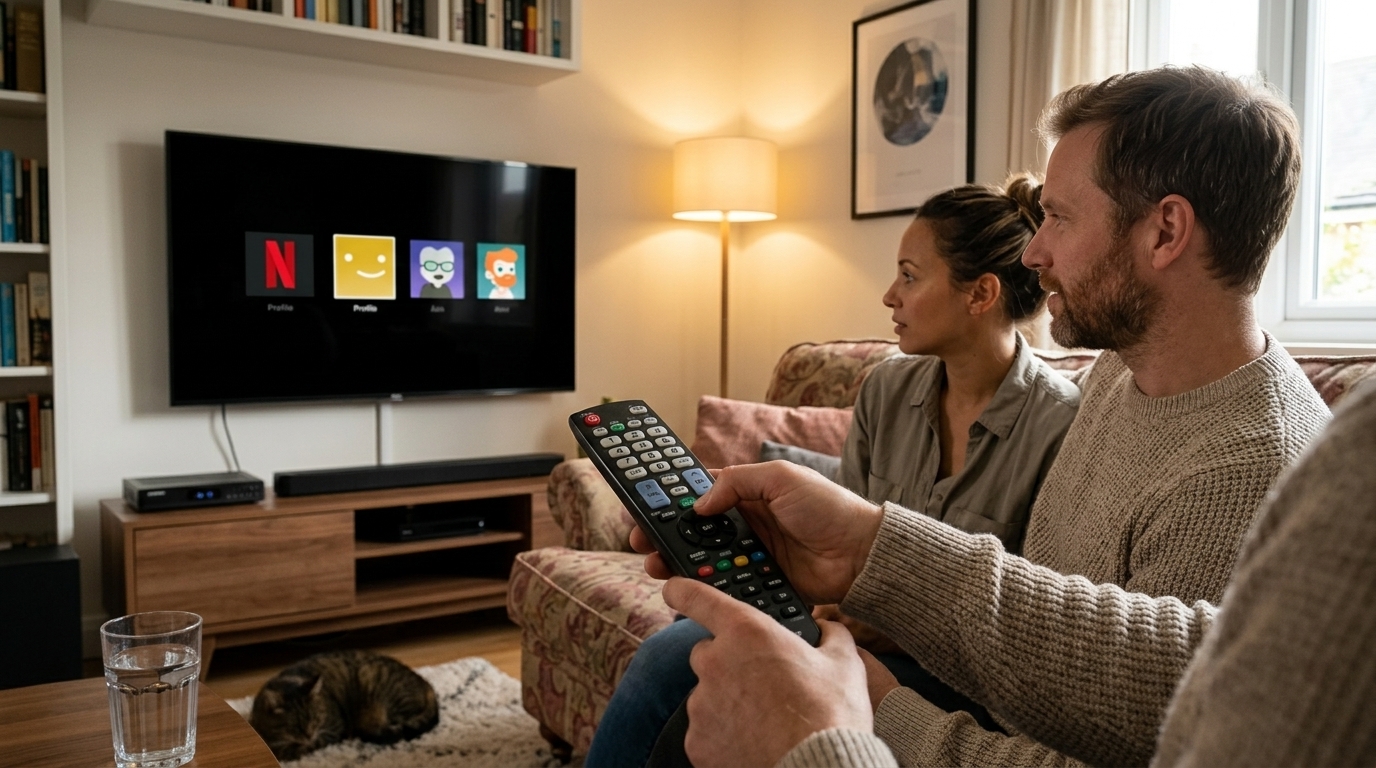
When Netflix began its global ascent a decade ago, its value proposition was clear: liberating the viewer from the tyranny of the broadcast schedule. Binge-watching became the new cultural norm, allowing users to consume entire series in a single weekend, free from advertisements and fixed time slots. However, 2026 finds the company performing a spectacular about-face. Netflix's recent 'experiment,' which involves integrating live sports and real-time entertainment, is not merely a content addition; it is the complete transformation of Netflix into the very entity it once sought to replace.
The Return of 'Appointment Viewing'
Netflix's strategic decision to invest billions of dollars in live broadcasting rights—exemplified by its massive deal with WWE Raw and the streaming of NFL games—highlights a fundamental shift in consumer psychology. Despite the convenience of on-demand viewing, the human need for shared experiences remains potent. Live content creates what advertisers call 'cultural watercooler moments'—events that everyone discusses simultaneously across social media platforms.
This pivot is as much about economic survival as it is about content. As the streaming market reached saturation, acquiring new subscribers became increasingly difficult and expensive. Netflix realized that live programming is the most effective way to keep users 'hooked' on the platform on a weekly basis, significantly reducing churn rates. Furthermore, live events serve as the ultimate magnet for the company's new advertising-supported tier, as advertisers are willing to pay a premium for guaranteed, simultaneous audiences.
The Attention Economy and the Ad-Tier Strategy
By integrating traditional television services, Netflix is unlocking new revenue streams that were previously out of reach. Market analysts suggest this experiment aims for total dominance in the 'attention economy.' While Disney+ and Amazon Prime Video have also ventured into sports, Netflix holds the advantage of a massive user database, which it can leverage to personalize advertisements during live broadcasts with a level of precision that traditional TV could only dream of.
- The shift from binge-watching to weekly appointments increases user engagement and retention.
- Live sports offer content that retains value over time and generates immediate social media buzz.
- The $60 billion advertising pie of traditional television is now Netflix's primary target.
However, this transition is fraught with technical challenges. The infrastructure required to stream live to millions of concurrent users is immense. Past technical glitches during live events (such as the Love is Blind reunion) demonstrated that even a tech titan can stumble under the weight of real-time data flow. The challenge lies in providing the reliability of a traditional broadcaster without sacrificing the agility of a technology company.
Global Implications and the Competitive Landscape
This move is expected to trigger a domino effect across international markets. Local broadcasters, who have historically relied on live sports and news to survive the streaming onslaught, are now facing a direct existential threat. If Netflix begins bidding for local sports rights—such as the Champions League or national football leagues—the media landscape will be irrevocably altered.
'We are no longer looking at a streaming platform, but at the rebirth of television in a digital skin,' notes a senior media analyst.
In conclusion, Netflix's experiment is a tacit admission: linear television never truly died; it just needed a better user interface. The irony is palpable: the greatest disruptor of cable TV has ultimately become its successor, adopting the very practices it once mocked to secure its future in the global entertainment arena. The binge-watching era isn't over, but it is no longer the sole king of the hill.