The market landscape of May 2026 is witnessing a profound structural shift. For years, the 'Seat-Based' model was the golden goose of Silicon Valley, driving the valuations of giants like Salesforce to dizzying heights. However, recent quarterly guidance from the CRM pioneer has sent a tremor through the markets. The message is clear: the era of charging per human user is under existential threat from AI agents that perform the work of dozens. As we analyze the shifts in 'Η Αγορά' this week, we see a capital migration from horizontal software toward vertical, industrial AI and the specialized hardware that powers it.
The Erosion of the SaaS Premium
Salesforce’s lukewarm outlook is not merely a company-specific hiccup; it is a bellwether for the 'Great Decoupling' of software value from human headcount. In a world where generative agents handle lead generation, customer support, and data entry, the traditional per-seat license becomes a liability for the client and a declining revenue stream for the vendor. Market analysts are now recalibrating valuations, shifting focus toward 'Outcome-Based' pricing models.
"The value proposition is moving from providing a tool for a human to providing the result of the task itself. This changes the entire unit economics of the software industry."
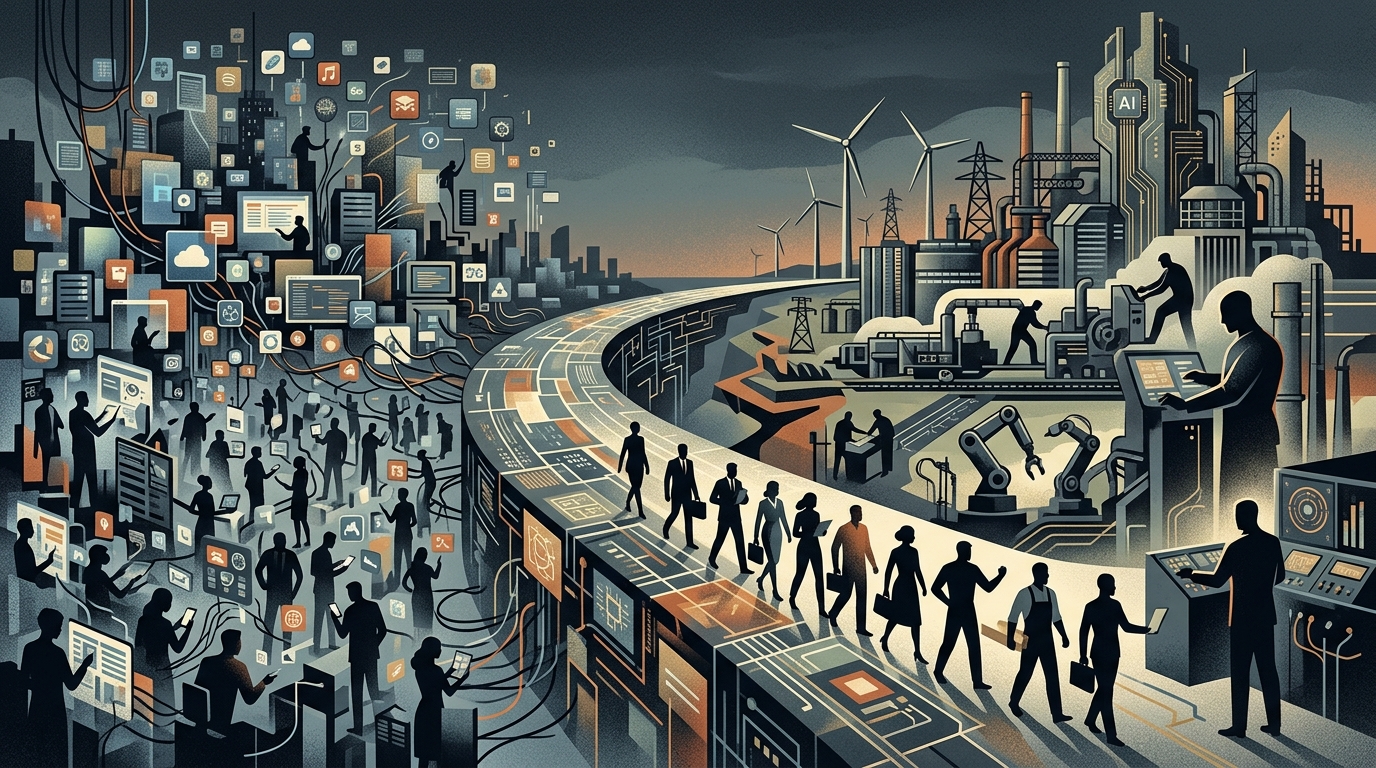
While traditional SaaS faces headwinds, we are seeing a massive influx of capital into 'Physical AI.' The landmark deals between Mistral AI and industrial titans like Airbus and BMW signal a pivot. AI is moving out of the browser and onto the factory floor. These are not just experimental pilots; they are multi-year integration contracts aimed at optimizing supply chains and autonomous manufacturing, representing a more stable, high-margin revenue base than consumer-facing chatbots.
The Infrastructure Moat: Silicon and Memory
On the supply side, the 'HBM Hegemony' has defined the first half of 2026. High Bandwidth Memory (HBM) has officially become the 'new oil.' With ByteDance and Xiaomi aggressively designing custom AI chips to break their dependency on Nvidia, the demand for specialized memory has outstripped supply by 40%. This 'Silicon Labyrinth'—the complex web of custom architecture and sovereign supply chains—is redrawing the global wealth map.
We are observing a strategic divergence: while Hong Kong’s markets show volatility due to geopolitical friction, mainland China’s AI and semiconductor stocks are surging. This is driven by a state-backed 'Commercial Awakening,' where labs like MiniMax are successfully pivoting from research to high-profitability enterprise solutions, anchoring the Yuan and reinvigorating tech exports.
The Greek Perspective: The Silicon Shield
Closer to home, the Greek technological landscape is navigating the implementation of the EU AI Act. While some fear regulatory drag, 'Smart Money' is viewing the AI Act as a framework for stability. Greece is emerging as a niche hub for 'Defense Tech' and 'Digital Reform.' The 'Greek Silicon Shield' is not just a metaphor; it represents a growing ecosystem of startups focusing on maritime AI and Mediterranean security infrastructure, attracting venture capital that seeks refuge from the more volatile consumer tech markets.
The anticipated IPO revival, led by rumors of OpenAI and SpaceX filings for late 2026, suggests that Wall Street is ready to reward companies that control the full stack—from custom silicon to industrial application. For the prudent investor, the strategy is clear: look past the interface and invest in the infrastructure and the industrial integration that makes AI tangible.