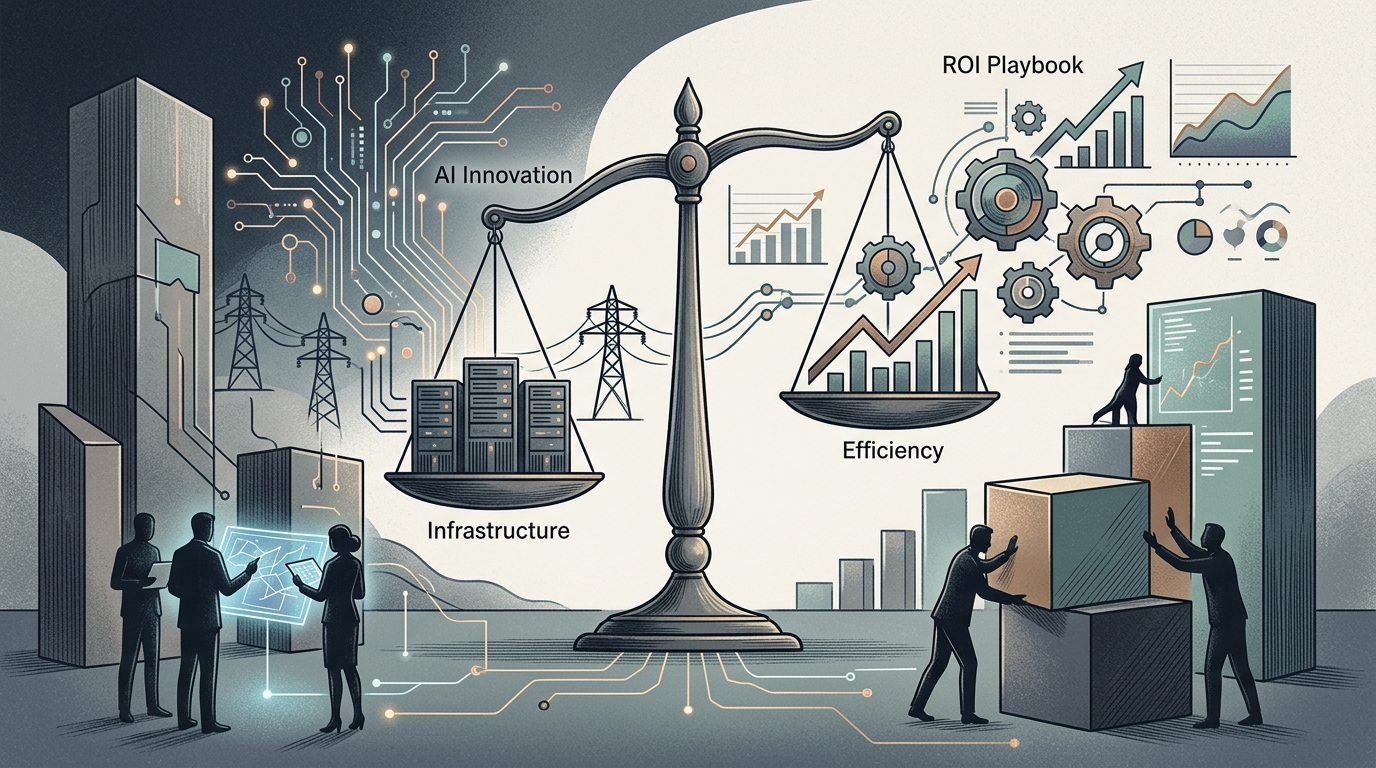

As we navigate the midpoint of 2026, the global markets are witnessing a fundamental structural shift. The era of "AI Brains"—the speculative frenzy surrounding Large Language Models and generative software—is being challenged by the reality of "AI Bodies." This $2.8 trillion paradigm shift represents a move toward the physical infrastructure, energy grids, and semiconductor hardware that make artificial intelligence possible. While the recent two-day crash in SpaceX stock has signaled a cooling of the speculative 'Space Bull Market,' capital is not exiting the tech sector; it is being reallocated toward tangible assets.
The Semiconductor Duel and the Energy Bottleneck
The rivalry between NVIDIA and AMD has entered a new, more aggressive phase. No longer confined to the GPU market, the clash has expanded into a comprehensive battle for the "Silicon Throne," encompassing CPUs, specialized robotics chips, and integrated AI networking. Market data suggests that while NVIDIA maintains its lead in high-end training clusters, AMD’s aggressive push into robotics and cost-efficient inference chips is gaining significant traction among enterprise buyers concerned with ROI.
However, the real story of June 2026 is the energy grid. As AI rewrites the rules of the US and European energy markets, the "Efficiency Revolution" led by firms like DeepSeek is proving that software optimization can only go so far. The market is now pricing in the massive capital expenditure required to upgrade national grids to handle AI-driven loads. This is where the most significant investment opportunities are emerging.
Greece as a Strategic Infrastructure Hub
In this global context, the Greek market is providing a compelling case study. The recent 14x oversubscription in the IPTO (ADMIE) capital increase is not merely a local success story; it is a vote of confidence from global institutional investors like Capital Group. With a €530 million strategic bet, the market is signaling that Greece’s positioning as a "Green AI Nexus" is a viable economic reality.
"The transition from software-centric speculation to infrastructure-led growth marks the maturity of the AI cycle. Investors are no longer buying promises; they are buying power lines and cooling systems."
Greece’s ability to combine renewable energy potential with strategic geographic positioning for data centers is attracting a new class of infrastructure investors. The potential for the Greek economy to transform its academic output into "AI Unicorn Factories" remains a long-term goal, but the immediate market gains are being found in the "bodies"—the physical infrastructure that connects the Mediterranean to the broader European digital economy.
Market Implications and Investor Sentiment
The sentiment remains mixed but fundamentally constructive for those focused on the long term. The "Asian Tech Chessboard" is becoming increasingly complex as Wall Street pivots toward entities like Zhipu to navigate geopolitical frictions, but the underlying trend is clear: efficiency and ROI are the new benchmarks. For the remainder of 2026, we expect to see continued outperformance in the energy and infrastructure sectors (the 'Bodies') relative to pure-play AI software firms (the 'Brains').
- Actionable Insight: Monitor utilities and grid-tech providers as they become the primary beneficiaries of AI scaling.
- Risk Factor: Geopolitical friction remains the primary volatility driver for semiconductor supply chains.
- Greek Outlook: The IPTO success suggests a broader appetite for Greek infrastructure assets that facilitate the digital transition.