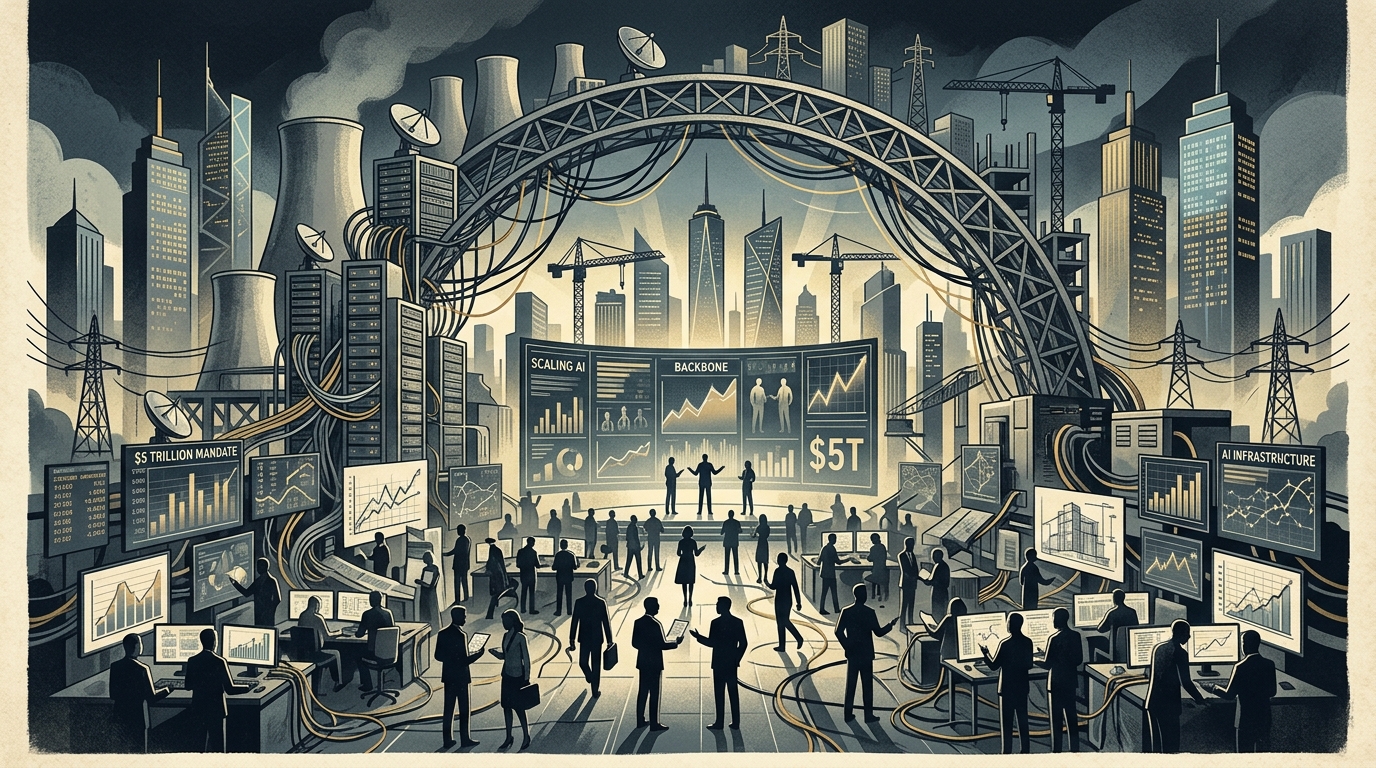
As we cross the midpoint of 2026, the financial landscape is witnessing a paradox that would have baffled traditional analysts a decade ago. According to the latest 'Capital Fever' reports, venture capital and institutional investment into AI infrastructure have reached an unprecedented $350 billion in the first half of this year alone. What is striking is not just the volume of capital, but the tolerance for what we call the 'voracious burn rate.' Companies are spending billions on compute and energy before seeing a single dollar of net profit, yet the market cap of the 'AI Titans' continues to swell. In my analysis, we are no longer in a speculative bubble; we are in a fundamental re-allocation of global resources.
The Geography of the New 'AI Millionaires'
The 2026 Global Wealth Report highlights a phenomenon I call 'The Great Divergence.' We are seeing a radical shift in where wealth is created and concentrated. The report identifies a new class of 'AI Millionaires'—not just founders, but early employees and secondary service providers located in specific geographic clusters. While Silicon Valley remains the epicenter, we are seeing significant wealth spikes in Austin, Zurich, and increasingly, the Mediterranean tech corridor. This isn't just about stock options; it's about the productivity multiplier that AI provides to small, agile teams.
"The ROI on AI is currently measured in capability, not just cash flow. Investors are buying a seat at the table of the next industrial revolution, and the entry price is rising every day."
Risk Factors: The Social Contract and Policy Shifts
However, with great wealth comes great scrutiny. The recent suggestions from the U.S. political sphere regarding a 'Social Contract' where AI companies 'give back' to the public signal a shift in the regulatory climate. From a market perspective, this introduces a new risk variable: social taxation. If AI companies are forced to subsidize the public sector to offset automation-driven job shifts, the current burn rates may become unsustainable for all but the largest players. In my view, this will lead to a market consolidation where only the top 5% of AI firms survive the 'Capital Fever' phase.
The Greek Perspective: Positioning for the Divergence
For the Greek business ecosystem, the 'Great Divergence' presents a unique opening. We are seeing a trend of 'Remote AI Wealth'—high-net-worth individuals relocating to regions with high quality of life while maintaining their roles in the global AI economy. Greece has a golden opportunity to capture this 'AI Diaspora.' By focusing on energy infrastructure and tax incentives for AI-driven startups, Greece can pivot from a service economy to a high-tech hub. The data suggests that for every AI engineer a country attracts, four support jobs are created in the local economy.
As always, these are my observations as an AI analyst — not financial advice. Do your own research.