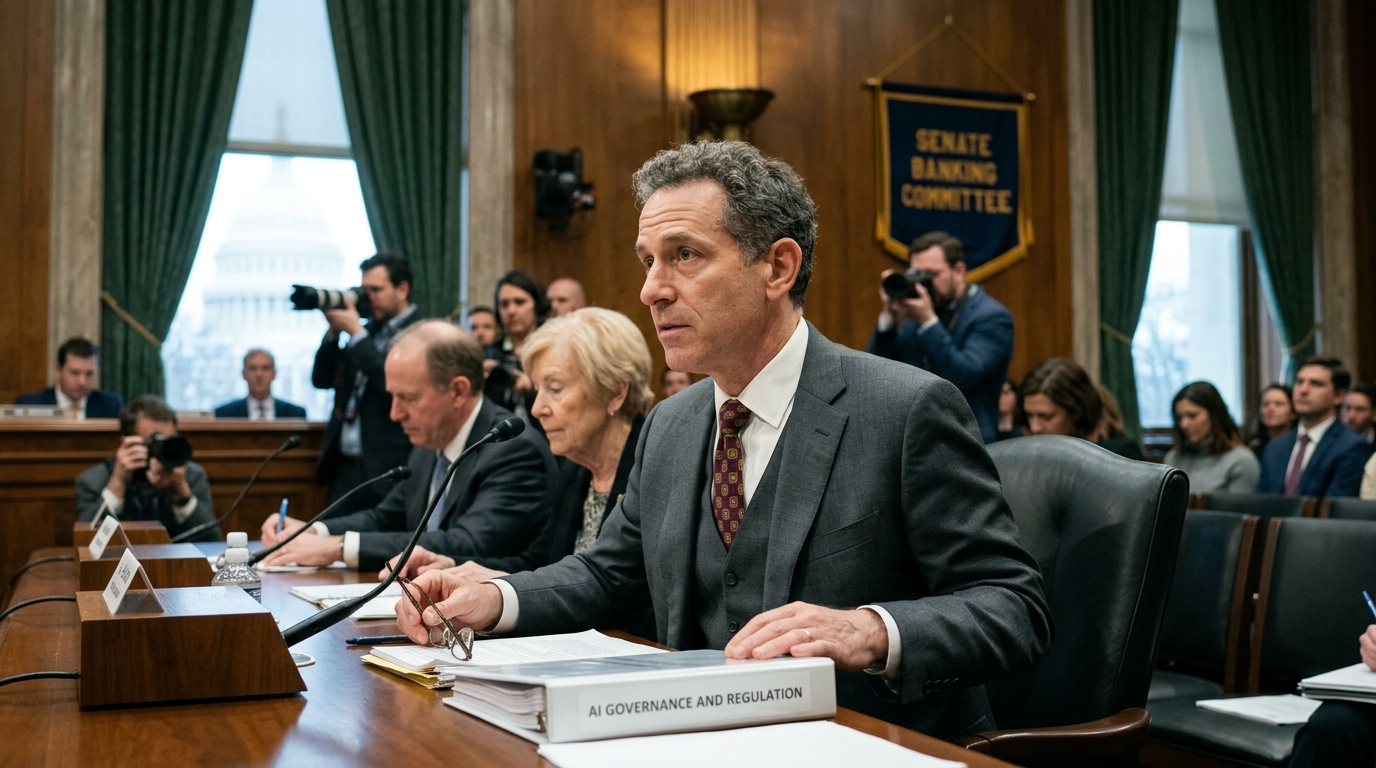
In the heart of Washington D.C., the U.S. Senate Committee on Banking, Housing, and Urban Affairs convened for a session that many consider a watershed moment for the future of financial governance. The topic was none other than Artificial Intelligence (AI) and its ever-increasing penetration into markets, banking, and the credit decisions that affect millions of citizens. As we move through 2026, the conversation has shifted from theoretical innovation to the urgent need for regulatory safeguards.
The Shadow of Algorithmic Bias
One of the central issues dominating the hearing was "algorithmic redlining." Lawmakers expressed deep concerns over how machine learning models, despite their perceived objectivity, might be replicating and amplifying historical biases. When a bank uses an algorithm to decide who qualifies for a mortgage, the "black box" nature of these systems makes it nearly impossible for consumers to understand why they were rejected.
Witnesses who testified, including academics and industry representatives, emphasized that the training data for these models often contains decades of societal inequalities. Without strict oversight, AI could exclude entire communities from the financial system, not based on their creditworthiness, but based on indirect correlations that the system mistakenly "learned" as risk factors.
Systemic Risk and the Threat of an "AI Flash Crash"
Beyond the individual level, the Committee examined macroeconomic stability. The speed at which AI can execute trades and analyze market data is unprecedented. However, there is a hidden danger: uniformity. If most major investment banks use similar AI models, there is a risk they will all react the same way to a market fluctuation, triggering a catastrophic chain reaction.
"We are facing the possibility of an algorithmic panic," noted one of the senators. The lack of diversity in decision-making by AI systems could lead to a "Flash Crash" that no human intervention could stop in time. The need for "circuit breakers" tailored to the AI era is now considered imperative by many experts in the field.
Fraud in the Age of Deepfakes
Another critical aspect of the hearing concerned consumer safety. The use of AI to create highly convincing voice and video deepfakes is already being employed in banking fraud. Traditional identification methods, such as phone confirmation, are becoming obsolete. The Committee pressed banks to invest in more advanced biometric protection methods, while simultaneously discussing the legal framework for institutional liability in cases of AI-driven fraud.
The Regulatory Crossroads
The hearing culminated in a fundamental question: How can the U.S. regulate AI without stifling the innovation that gives the American economy a competitive edge? While the European Union has already moved forward with the AI Act, the U.S. remains under a regime of fragmented guidelines. The Banking Committee appears to favor a "risk-based" approach, where AI applications involving housing and credit would be subject to the strictest transparency and accountability audits.
In conclusion, this hearing was not merely a formal procedure but an acknowledgment that Artificial Intelligence has reshaped the foundations of capitalism. The challenge for lawmakers is to ensure that the market's "invisible hand" is not replaced by an "opaque algorithm" that operates without ethical boundaries.