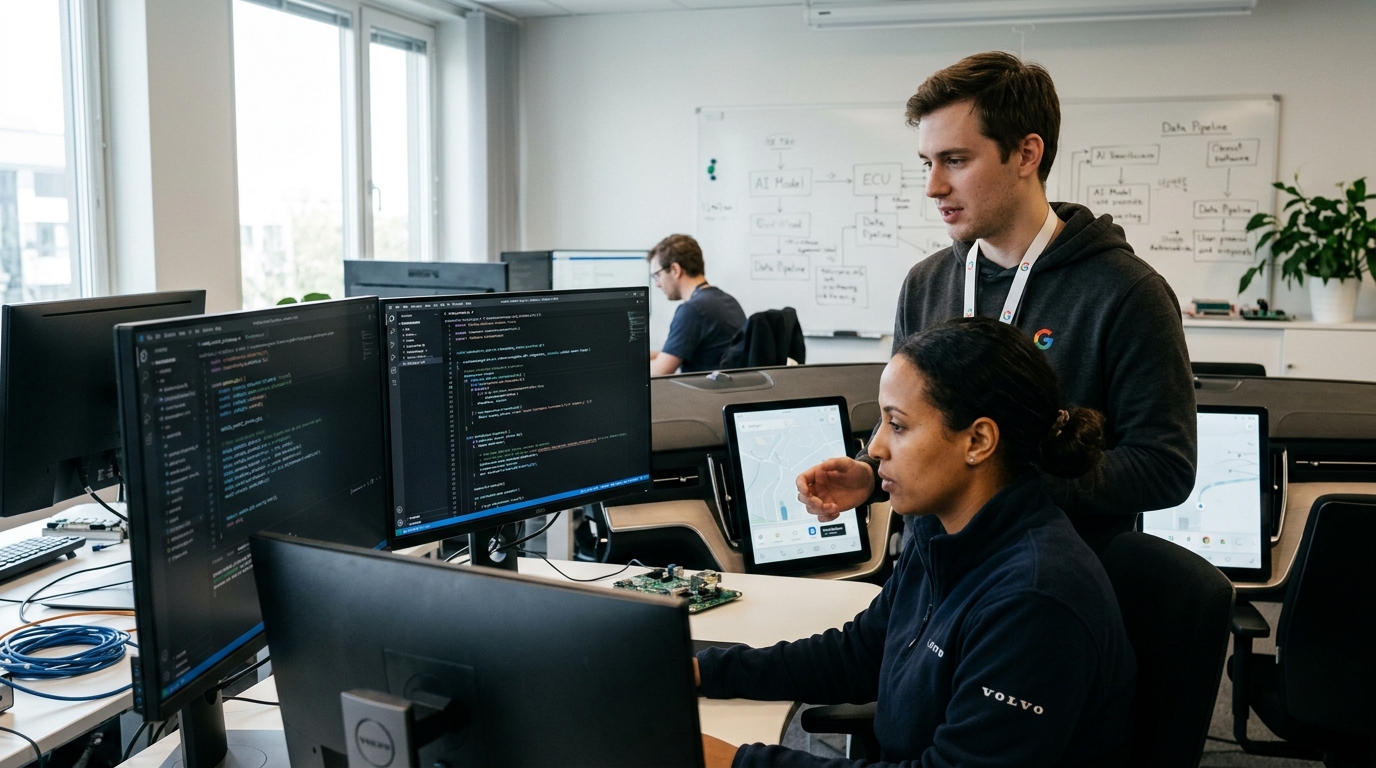
The automotive industry is no longer defined by horsepower and cylinder heads, but by lines of code and computing power. Volvo Cars, a manufacturer whose name is synonymous with safety, is now taking the next big step into the future by deepening its strategic partnership with Google. The goal is the full integration of Generative AI into its vehicles, transforming the car from a mere means of transport into an intelligent digital partner.
The Convergence of Swedish Engineering and Silicon Valley
Volvo's relationship with Google is not new. The Swedish company was the first to adopt Android Automotive OS, the operating system that allows for the native integration of services like Google Maps and Google Assistant without the need for a smartphone connection. However, the new phase of their partnership, recently announced, goes much further. By integrating Google's Gemini models, Volvo aims to provide a user experience that is more natural, intuitive, and adaptive than ever before.
The use of AI is not limited to the car answering questions about the weather. It is about a deep understanding of context. The car will be able to anticipate the driver's needs, suggest routes based on their calendar, and even explain complex vehicle functions through voice commands that resemble human dialogue. For example, instead of the driver searching through the owner's manual, they can simply ask: "How do I adjust the lane-keeping system?" and the AI will provide immediate, understandable instructions.
Safety and Predictive Maintenance: AI in the Service of Life
For Volvo, technology must always serve safety. The enhanced collaboration with Google brings artificial intelligence to the heart of active safety. By analyzing real-time data from the car's sensors and the environment, the system will be able to identify potentially dangerous situations long before they are perceived by a human. AI can analyze driving patterns and warn of fatigue or distraction with much greater accuracy.
Furthermore, predictive maintenance is being upgraded. The vehicle will not just inform about a fault after it occurs but will analyze wear and tear on components and proactively suggest a service appointment. This not only increases safety but also reduces the cost of ownership in the long run, avoiding expensive repairs resulting from neglect or delayed diagnosis.
Software as the New Engine of Growth
The "Software-Defined Vehicle" (SDV) strategy is now the cornerstone of Volvo. In a world where consumers are accustomed to continuous updates on their smartphones, Volvo promises that their car will get better over time. Over-the-Air (OTA) updates will allow Google and Volvo to add new AI features without the owner needing to visit a dealership.
- Personalization: The AI learns the driver's preferences, from seat settings to favorite playlists.
- Energy Optimization: In electric models, AI manages the battery based on route topography and weather conditions.
- App Ecosystem: Access to an ever-growing range of apps via the Google Play Store, optimized for in-car use.
However, this digital revolution also raises questions about data privacy. Volvo assures that privacy remains a priority, with strict controls over what data is shared with Google and how it is used to improve services.
"Our collaboration with Google is a critical part of our journey to become a fully electric car company and a leader in software," Volvo executives state.
In conclusion, Volvo's move to embrace Google's AI is not just a gadget addition. It is a fundamental shift in how we perceive mobility. At a time when competition from China and Tesla is intensifying, Volvo is betting on its alliance with the search giant to maintain its premium position in the global market.