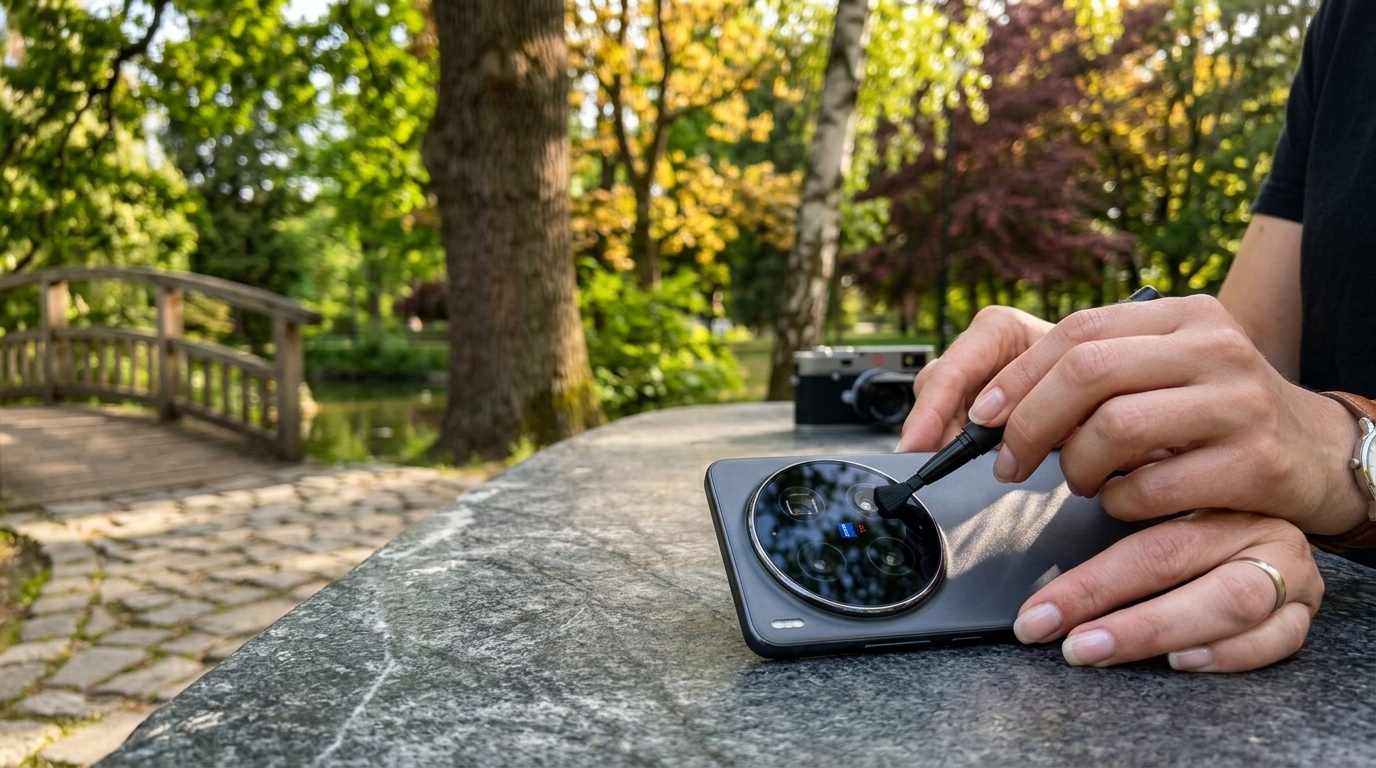
In the ever-evolving world of technology, the arrival of the Vivo X300 Ultra marks a milestone moment, akin to the first time digital photography threatened the supremacy of film. This is not just another smartphone with a good camera; it is a declaration of power from the Chinese tech industry, which no longer follows trends but dictates them. Vivo's Ultra series has established itself as the "golden ratio" for photography enthusiasts, but the X300 Ultra takes the game to a level previously thought impossible for a pocket-sized device.
The Telephoto Lens as the New Battlefield
For years, manufacturers focused primarily on the main sensor. However, by 2026, the battleground has shifted to zoom capabilities. The Vivo X300 Ultra integrates a stunning 200MP periscope telephoto lens, utilizing a massive sensor (by telephoto standards) that allows for capturing images with incredible detail even in low-light conditions. The ability to photograph a subject from hundreds of meters away while maintaining skin texture or architectural nuances is something that previously required lenses costing thousands of dollars.
The use of pixel binning technology on the telephoto lens allows the device to combine multiple pixels into one, significantly increasing light sensitivity. This means that night shots with zoom, traditionally the Achilles' heel of smartphones, are now on par with main camera captures. Vivo has successfully addressed the issues of noise and lack of sharpness, creating an experience that fundamentally changes how we perceive distance.
The Zeiss Partnership and Optical Excellence
The collaboration between Vivo and Zeiss is more than just a logo on the back of the phone. It is a deep technical synergy involving lens coatings (T* coating) to reduce flare and improve color fidelity. In the X300 Ultra, Zeiss has contributed to creating a "natural" bokeh that doesn't rely solely on AI algorithms but on the actual optical properties of the glass elements.
Users can choose from various color profiles, with "Zeiss Natural Color" being the choice for professionals seeking realism. Unlike competitors (such as Samsung or Apple) that often oversaturate colors to make them more "Instagrammable," Vivo offers a cinematic aesthetic reminiscent of analog cameras. This approach appeals to a more mature audience that appreciates shadow, depth, and the inherent truth of an image.
Computational Photography: The Invisible Director
Despite the emphasis on hardware, software remains the brain of the operation. The X300 Ultra utilizes a dedicated imaging processor (V-series chip), which processes billions of data points in milliseconds. AI here doesn't just "paint" over the image; it optimizes dynamic range (HDR) and white balance in a way that feels organic rather than artificial.
- Real-time motion detection for instantaneous focus tracking.
- Advanced stabilization that effectively turns the smartphone into a handheld gimbal.
- Macro functionality via the telephoto lens for close-up shots with stunning depth of field.
- 14-bit RAW processing for maximum flexibility in post-production.
The ability to record 8K video at 60fps with HDR across all lenses is another achievement that places the X300 Ultra at the summit. The transition from the ultra-wide to the telephoto lens during recording is now perfectly smooth, devoid of the jarring shifts in color or exposure seen in other flagship devices.
Geopolitics and the Market: Why Isn't It Everywhere?
While the Vivo X300 Ultra is arguably the king of cameras, its availability in Western markets remains limited. Geopolitical tensions between the US and China, combined with the strategic decisions of parent company BBK Electronics, often keep these technological "monsters" within Asian borders or in selected European markets. This creates a paradox: the best photography tool in the world is also one of the hardest to acquire for the average Western consumer.
However, its mere existence forces traditional players to innovate. When Apple sees Vivo offering optical zoom that surpasses its own by generations, it is compelled to invest more heavily in R&D. The Vivo X300 Ultra is not just a phone; it is a catalyst pushing the entire industry forward, reminding us that in technology, complacency is the greatest enemy.
"Photography is no longer about what the eye sees, but what the sensor can capture through the prism of artificial intelligence. The X300 Ultra is proof that the boundaries have been shattered."
In conclusion, the Vivo X300 Ultra stands as the ultimate tool for the modern content creator. By blending the heritage of Zeiss with the cutting edge of Chinese engineering, it manages to provide an experience that transcends the limits of a smartphone and enters the realm of professional photography. For anyone for whom the camera is the primary and only purchasing criterion, the search ends here.