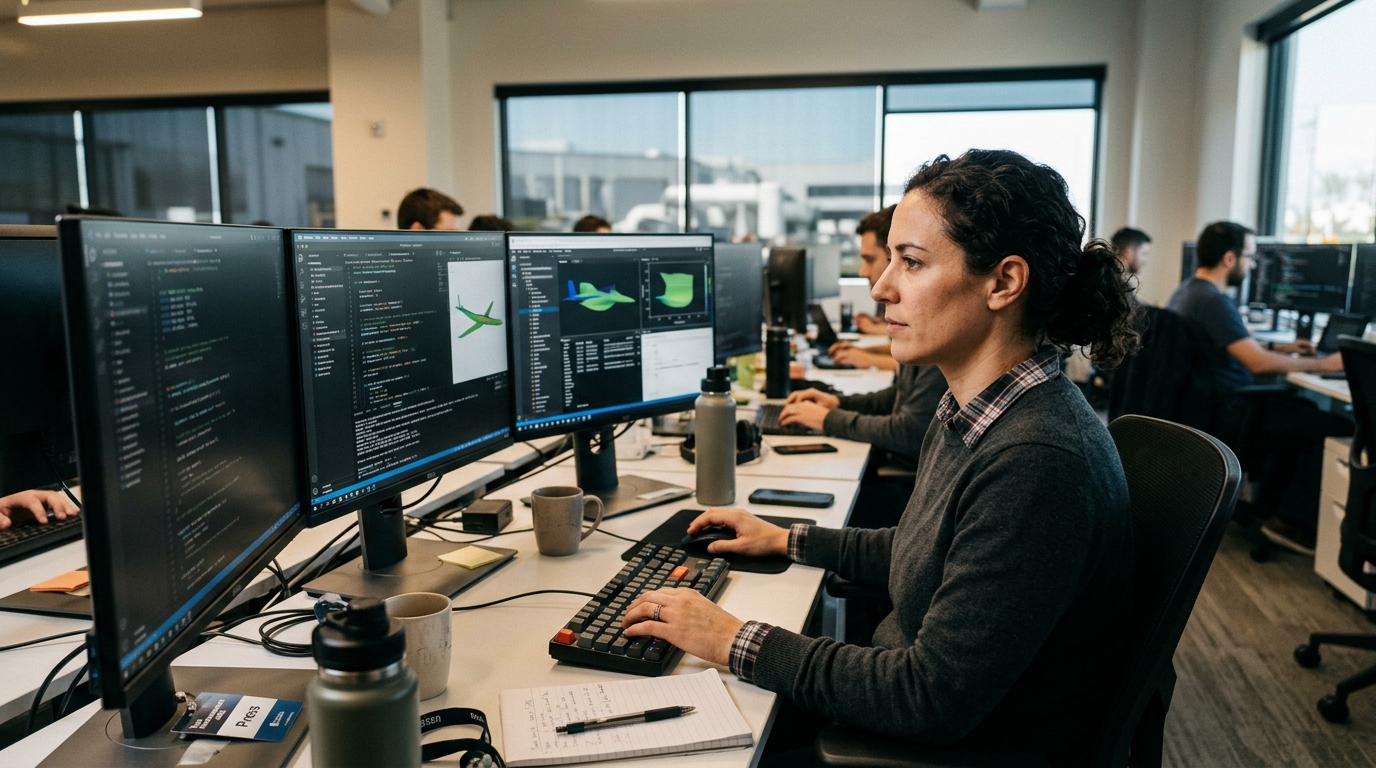
In the high-stakes world of aerospace, where a single centimeter of error or a missed line of code can lead to billion-dollar catastrophes, development speed has traditionally been sacrificed at the altar of safety. However, Elon Musk’s SpaceX, renowned for its disruptive "fail fast, learn faster" philosophy, appears to have found a new ally in its quest to conquer Mars: Cursor AI. The news of their partnership to boost AI-driven coding development is not just a corporate announcement; it is a profound validation that high-stakes software engineering is undergoing a permanent transformation.
The Cursor Advantage and the Need for Velocity
Cursor, an AI-native code editor built on the foundations of VS Code, has rapidly gained the trust of top-tier engineers globally. Unlike simple plugins that offer basic completions, Cursor indexes the entire codebase, allowing developers to ask complex structural questions, refactor large modules, and debug logic errors in seconds. For SpaceX, which manages millions of lines of code for Starship navigation systems and the sprawling Starlink satellite constellation, this capability is invaluable.
Transitioning to AI-augmented development allows SpaceX engineers to shift their focus from syntax and boilerplate to high-level architecture and systems logic. This not only slashes development cycles but also enables more frequent testing of novel concepts in flight simulators, accelerating the innovation loop that has made the company a dominant force in the space industry.
Security and Reliability in Mission-Critical Systems
One of the most pressing questions surrounding this partnership concerns security. How can a company that works closely with the U.S. Department of Defense trust an external AI provider with its proprietary rocket code? The answer lies in Cursor’s enterprise-grade solutions, which emphasize data privacy and localized processing.
- Local codebase indexing to protect intellectual property.
- Strict encryption protocols and granular access controls.
- The ability to deploy specialized models within isolated environments.
SpaceX employs a hybrid approach: the AI proposes, but the human engineer disposes. For real-time systems controlling Raptor engines, AI-generated code is subjected to rigorous automated verification and physical simulations long before it ever touches rocket hardware. The goal is to enhance human capability, not replace the critical oversight required for spaceflight.
The Future of the Software Engineer
This collaboration signals a broader shift in the software engineering profession. Proficiency in C++ or Python is no longer the sole benchmark of a great engineer. The "engineer of the future" at SpaceX must be a skilled orchestrator of artificial intelligence. The ability to frame problems correctly and critically evaluate machine-generated solutions is becoming more vital than raw typing speed or syntax memorization.
"We are no longer just writing code; we are directing intelligence to construct it for us, while keeping a firm hand on the wheel of safety and reliability," notes an industry analyst following the partnership.
As SpaceX pushes the boundaries of what is possible, the adoption of tools like Cursor will likely set the standard for other sectors, including automotive and med-tech. The era of the isolated programmer is ending, making way for a symbiotic relationship between human creativity and machine efficiency.