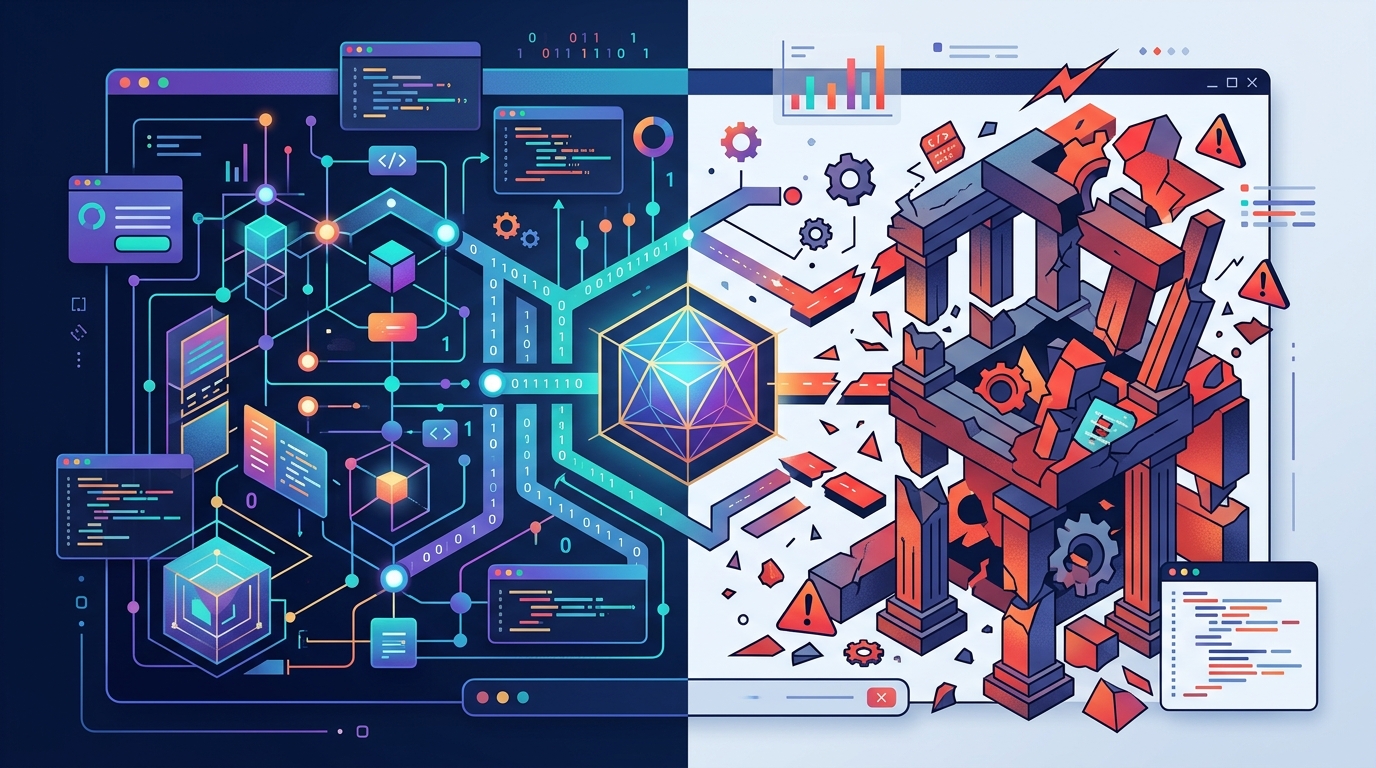
In the ever-evolving landscape of enterprise technology, SAP, the German giant that serves as the backbone of global business operations, is making a strategic pivot that promises to redefine the relationship between humans and machines in the workplace. The era of simple "conversational assistants" (chatbots) appears to be waning, giving way to a new generation of autonomous AI agents. These agents are not limited to suggesting responses or summarizing texts; they are designed to execute complex tasks, make decisions, and interact with multiple systems without constant human guidance.
From Assistance to Autonomy
For decades, ERP (Enterprise Resource Planning) software was a tool for record-keeping and organization. With the advent of Generative AI, SAP initially introduced Joule, a digital assistant that helped users navigate the company’s vast ecosystem. However, the market now demands more. SAP's new strategy focuses on agents that can, for example, fully manage a procurement process: from identifying a stock shortage and evaluating suppliers to negotiating prices and issuing purchase orders.
This transition from "help me do it" to "do it for me" represents the biggest bet in the company's history. SAP is leveraging its massive data advantage. As 77% of global transaction revenue touches an SAP system, the company possesses the necessary context to train agents that understand business logic deeply—something general assistants like ChatGPT cannot easily achieve.
The Architecture of Trust and Business Context
One of the biggest hurdles to the adoption of autonomous agents is trust. In a financial environment, an error in invoicing or a flawed inventory forecast can cost millions. SAP addresses this by integrating "guardrails" and adhering to a "human-in-the-loop" model. Agents will operate within predefined boundaries and seek approval for critical decisions, while their decision-making process will be transparent and traceable.
- Autonomous resolution of invoice disputes.
- Real-time supply chain optimization.
- Personalized talent management and recruitment via SuccessFactors.
- Automated compliance with ever-changing tax regulations.
This strategy is not just about technology; it’s about competitive survival. With Salesforce promoting Agentforce and Microsoft enhancing Copilot Studio, SAP must prove that its approach is more deeply rooted in operational needs. SAP's advantage lies in the fact that its agents do not need to "learn" the business from scratch; they are born within its data.
Implications for the Workforce
The rise of executing agents inevitably raises questions about the future of work. While SAP argues that agents will free employees from repetitive and tedious tasks, the reality is that many mid-level roles in administration and finance will need to undergo radical transformation. Workers will evolve from "data processors" to "agent orchestrators," requiring new skills in managing AI systems and critically evaluating their outputs. The challenge for enterprises will be the smooth transition of their staff into this new digital reality, avoiding the social destabilization that mass automation could bring.
Conclusion: The New Era of the Intelligent Enterprise
SAP's bet is bold. If successful, it will transform ERP from a static system into a living, breathing organism that self-corrects and grows. Success will not be judged by the complexity of the algorithms, but by the ability of these agents to deliver real value without compromising the security and integrity of businesses. As of May 2026, the global market finds itself at a tipping point: AI is ceasing to be an impressive conversationalist and is becoming the new, invisible colleague holding the keys to productivity.