In an era where smartphones have become an extension of our identity, the intrusion of unwanted calls (spam) represents one of the most frustrating challenges of digital daily life. From automated marketing messages to dangerous phishing attempts (vishing), users often find themselves targeted by an endless wave of disruptions. Samsung, recognizing this need for digital tranquility, has integrated advanced Artificial Intelligence tools into the One UI ecosystem, offering users the ability to filter their calls with surgical precision.
Bixby Text Call: Your Digital Gatekeeper
The spearhead in the fight against unwanted calls is Bixby Text Call. This feature is not just a simple filter; it is a virtual assistant that answers calls on your behalf. When you receive a call from an unknown number, you can opt to activate Bixby. The assistant asks the caller about the purpose of the call and transcribes their response into text in real-time on your screen. You can read what the caller is saying and respond by typing, with Bixby converting your text back into voice.
This approach fundamentally changes the game. Spammers, who usually rely on automated systems or high-pressure sales tactics, tend to hang up as soon as they realize they are speaking to an AI. Furthermore, this feature protects your privacy, as you don't need to expose your voice to a stranger until you are certain of their identity.
How to Activate the Protection
The activation process is straightforward and integrated into the settings of Samsung's "Phone" app. Follow these steps:
- Open the Phone app and tap the three dots (More) in the upper right corner.
- Go to Settings.
- Locate the Bixby Text Call option and toggle the switch to on.
- Download the necessary language pack (English and many other languages are robustly supported).
- In the same settings section, enable Caller ID and Spam Protection, powered by the Hiya service.
With these settings, your phone gains a double line of defense: a database that recognizes known spammers and an active AI that interrogates unknown callers.
The Battle of Algorithms: AI vs. AI
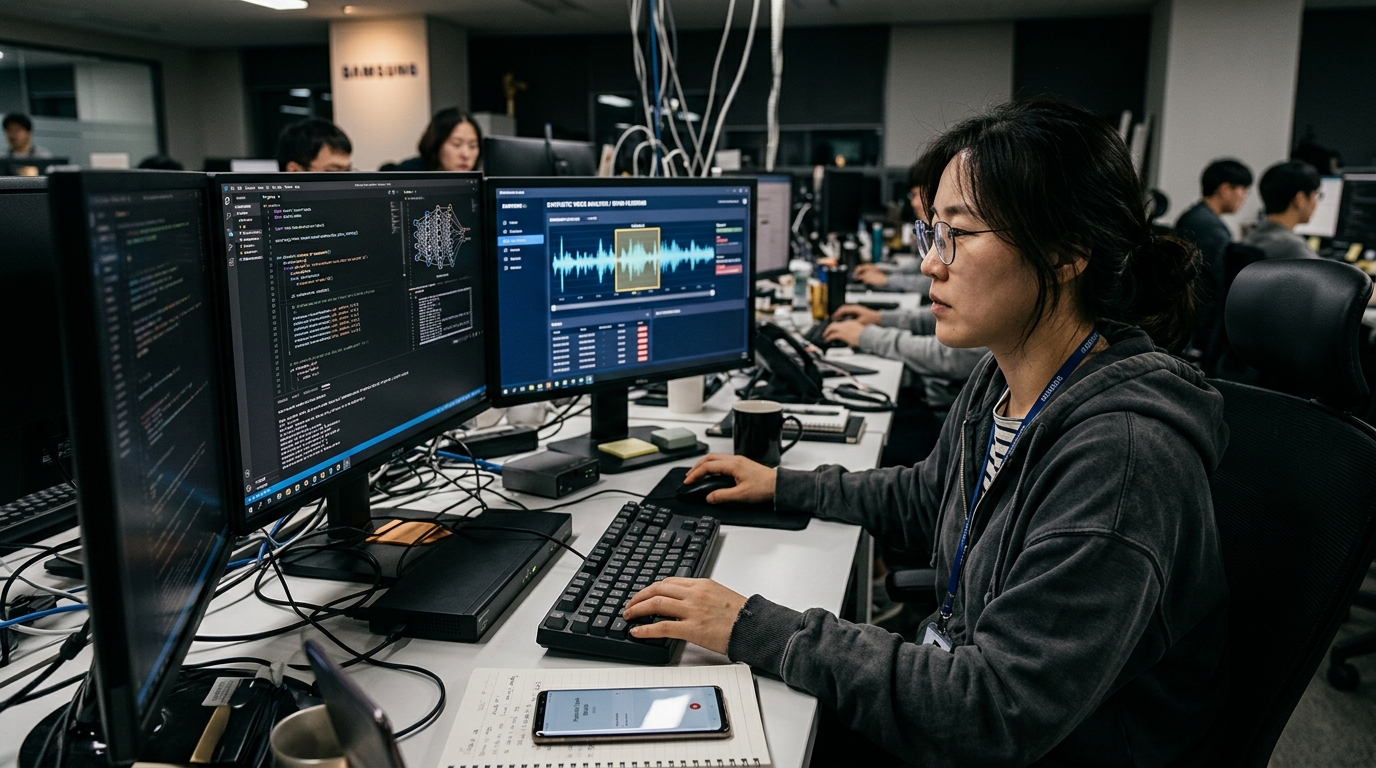
The rise of AI filtering does not happen in a vacuum. Spammers themselves are now using Generative AI to create more convincing scam scripts or even clone the voices of known individuals. Samsung, through its collaboration with data providers and continuous training of its models, strives to stay one step ahead. Samsung's "Smart Call" analyzes calling patterns—such as the frequency and duration of calls from a specific number—to flag potential threats before the phone even rings.
"Technology should not only be the tool of communication but also the firewall of our peace of mind," say tech market analysts.
Privacy and On-Device Processing
A critical question that arises is data management. Samsung has emphasized on-device processing. This means that a significant portion of the Bixby Text Call transcription takes place locally on the device, reducing the need to send sensitive audio data to the cloud. This enhances user trust, as personal conversations remain within the boundaries of the device hardware, protected by the Knox security system.
In conclusion, using artificial intelligence for call filtering is no longer a luxury but a necessity. Samsung, by integrating these tools, transforms the smartphone from an open channel of annoyance into a controlled communication environment, giving control back to the user.