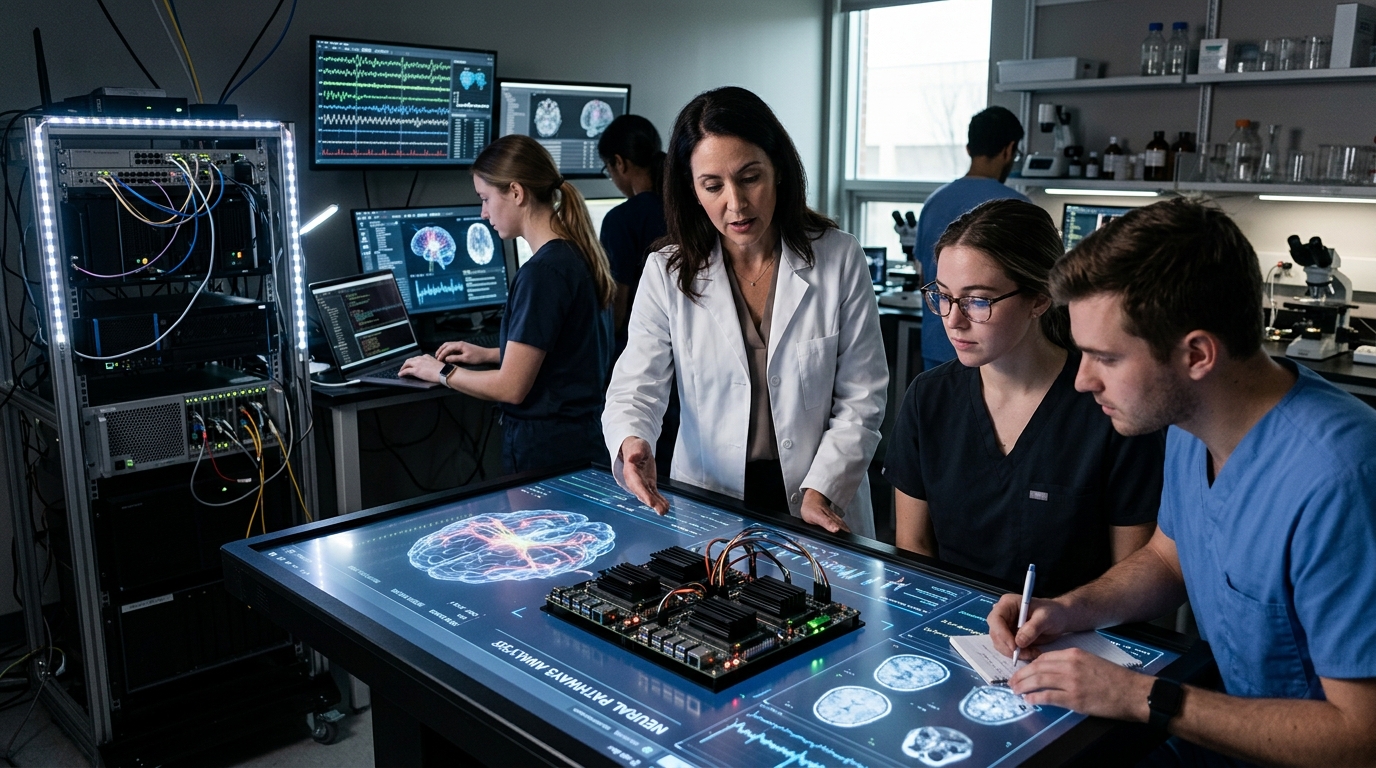
Medical education, a field traditionally rooted in the rote memorization of vast amounts of information and strict adherence to proven protocols, currently finds itself at a critical crossroads. As we move through the first half of 2026, recent research published in the scientific journal Cureus confirms what many academics had long suspected: undergraduate medical students are not waiting for official university directives to integrate Artificial Intelligence (AI) into their daily routines. The study documents a radical shift in attitudes and the utilization of AI models, outlining a future where the "digital assistant" is as indispensable as the stethoscope.
Mass Adoption and Student Motivations
According to the study's findings, the vast majority of students are now using tools like ChatGPT, Claude, and specialized medical AI models to understand complex pathophysiological mechanisms. Utilization is not merely limited to essay writing; it extends to clinical reasoning and case simulation. Students report that AI offers a personalized learning experience that the traditional lecture hall fails to provide. The ability to "ask" a model about a rare drug interaction at 2 AM and receive a structured response in seconds has fundamentally changed the game.
However, the study emphasizes that this adoption is not without its concerns. Despite the enthusiasm, there is a pervasive anxiety regarding the accuracy of information. Students appear divided: on one hand, they recognize the incredible speed and data synthesis capabilities, while on the other, they fear "hallucinations"—model-generated inaccuracies—which in medicine can have fatal consequences. The ability to critically evaluate AI outputs is emerging as the new essential skill for the future clinician.
The Academic Gap and "Shadow Learning"
One of the most concerning findings of the research is the gap between student usage and the formal integration of AI into the curriculum. While students experiment with advanced models, many medical faculties worldwide remain in a "defensive crouch," focusing primarily on preventing plagiarism rather than educating on the proper use of these tools. This creates a phenomenon of "shadow learning," where future doctors train themselves on technologies that will define their professional lives, yet do so without the guidance of experienced mentors.
- The lack of official guidelines leads to uneven levels of proficiency among students.
- Ethical use of patient data in AI environments remains a "gray zone" in students' daily practice.
- There is a risk of over-reliance on technology, which may atrophy clinical intuition and critical thinking.
The Cureus study suggests that medical universities must move from mere observation to active engagement. Integrating "Digital Health Literacy" courses and using approved, medically certified AI models in laboratories is now an imperative necessity.
Ethical Dilemmas and the Human Touch
Beyond technical training, the study raises serious questions about the nature of medical care. If a student becomes accustomed to relying on an algorithm for diagnosis, how will they maintain empathy and the human connection with the patient? Research participants expressed the view that AI should function as a "copilot" rather than a replacement for the physician. The challenge for the medical community in 2026 is to define the boundaries of this collaboration.
"AI will not replace doctors, but doctors who use AI will replace those who do not," a common industry saying goes, and it is one that the new generation seems to have fully embraced.
In conclusion, the Cureus research serves as a wake-up call for the global medical community. The shift toward AI is irreversible. The question is no longer whether AI has a place in medical education, but how we will ensure its use enhances, rather than undermines, the quality of care and patient safety. The new generation of doctors is ready for the digital future; it remains to be seen if the educational system can keep pace.