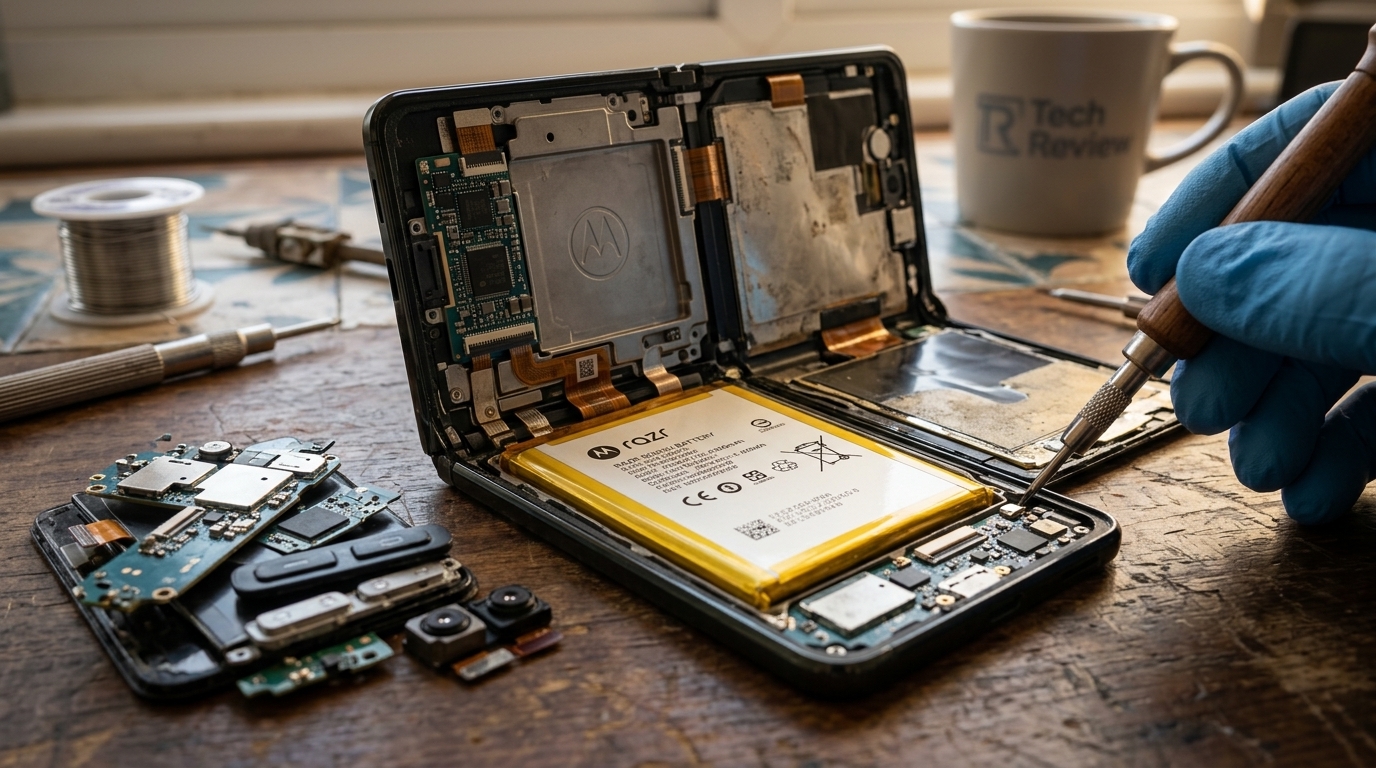
The foldable smartphone market is entering a period of maturity, where experimental flourishes are giving way to rigorous optimization. Motorola, after investing heavily in reviving the iconic Razr as a flip-phone, has finally stepped into the arena of large-format foldables with the Razr Fold. It is a device that evokes mixed emotions: on one hand, it solves the category's biggest headache—battery life—and on the other, it falls short in areas now considered standard for the ultra-premium segment.
The Battery Life Revolution
For years, foldable users have had to accept a harsh compromise: mediocre battery life. The internal space occupied by complex hinges and massive inner displays left little room for substantial power cells. The Razr Fold shatters this status quo. With power management that rivals the best traditional slab-style smartphones, the device comfortably lasts through a full day of heavy use, leaving the Samsung Galaxy Z Fold and Google Pixel Fold in its wake.
Motorola achieved this feat not just through raw capacity, but through aggressive software optimization. The LTPO display is tuned with precision, and background processes are strictly managed. For the professional constantly on the move, this reliability is perhaps the strongest selling point the company has presented in years.
Software: The Achilles' Heel
However, a foldable phone is not merely a device with a large screen; it is a productivity tool. This is where the Razr Fold begins to falter. While Google and Samsung have spent years developing multitasking features like taskbars and seamless app continuity, Motorola delivers what feels like a "blown-up" version of Android that lacks depth.
- The lack of advanced split-screen features makes the large internal canvas less useful than it ought to be.
- Many apps are not properly optimized for Motorola’s specific aspect ratio, resulting in letterboxing or UI glitches.
- The camera software remains steps behind the competition, particularly in low-light performance and shutter lag.
As industry analysts have noted, the software experience feels like that of a device rushed to market before its ecosystem of features was fully baked. At a price point often exceeding $1,500, users demand a frictionless experience, something Motorola currently fails to provide in its entirety.
Design and Durability
Design-wise, the Razr Fold follows Motorola’s philosophy of ergonomic curves, making it more comfortable to hold than the boxy Pixel Fold. The hinge feels robust, and the center crease is notably less prominent than on the Galaxy Z Fold 5. Nevertheless, the material choices on the back of the device lean towards a plastic feel, which contrasts sharply with the premium positioning of the brand.
"The Razr Fold serves as a reminder that hardware innovation is insufficient if it isn't matched by a coherent software philosophy."
In conclusion, the Motorola Razr Fold is a device stuck in the middle. It is the best foldable for those who despise frequent charging, but the least capable for those looking to truly replace their tablet or laptop. Motorola has taken a significant first step, but the path to the top requires more than just endurance; it requires finesse.