Shopping for a laptop in 2026 is a fundamentally different experience than it was just a few years ago. If 2023 was defined by the transition to hybrid work, 2026 is defined by the total integration of local artificial intelligence. The traditional specs we used to obsess over—clock speeds and core counts—have been overshadowed by a new protagonist: the Neural Processing Unit (NPU). As we navigate the tech landscape of May 2026, understanding these shifts is crucial to making a purchase that won't feel like a relic by next year.
The NPU Revolution: Beyond the CPU and GPU
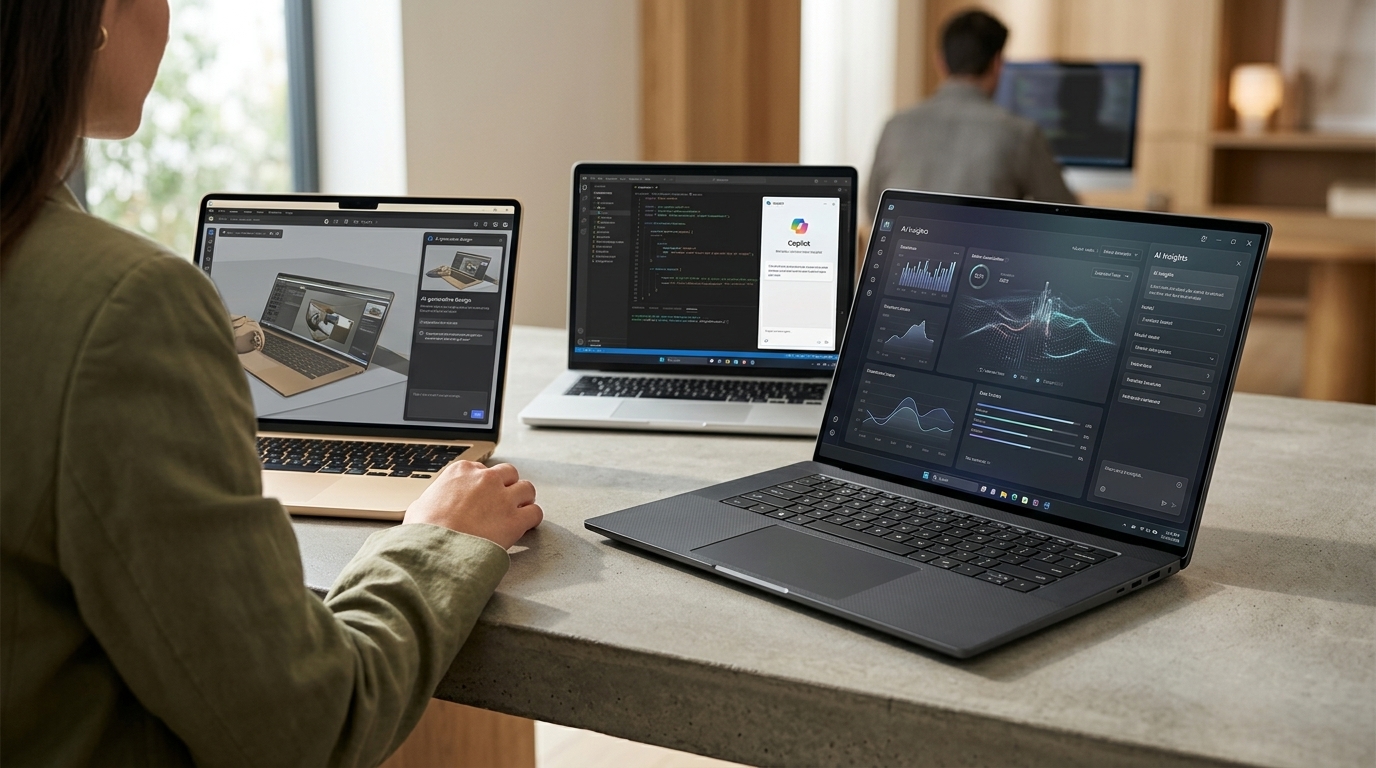
In 2026, the "AI PC" is no longer a marketing buzzword; it is a hardware requirement. The industry has standardized around a minimum performance threshold of 45 to 50 TOPS (Trillions of Operations Per Second) for the NPU. This dedicated silicon is what allows your laptop to run sophisticated AI features—like real-time generative fill in creative suites, advanced local privacy filters, and autonomous personal assistants—without murdering your battery life or causing your fans to scream.
When browsing, you should look for processors like the Snapdragon X Elite Gen 2, Intel’s latest Lunar Lake (or its successor), or Apple’s M5 series. These chips are designed with an "AI-first" architecture. If a laptop lacks a powerful NPU, you will find yourself locked out of essential OS updates and productivity tools that rely on local inference rather than cloud processing. In 2026, the NPU is the true heart of the machine.
The Silicon Wars: ARM's Dominance and x86's Evolution
The great architectural divide has reached a boiling point. ARM-based laptops, once considered niche or underpowered for Windows users, have now claimed a massive share of the market. Thanks to incredible efficiency, ARM laptops in 2026 routinely deliver 20+ hours of actual, heavy-duty battery life. For the digital nomad or the student, the ability to go two full days without a charger is the ultimate luxury.
However, the x86 giants, Intel and AMD, haven't stood still. Their 2026 offerings have successfully integrated many of ARM's power-saving advantages while maintaining their lead in raw legacy performance. If your work involves heavy 3D rendering, complex scientific simulations, or high-end gaming, the latest x86 chips remain the gold standard. But for 90% of users, the silent, cool, and long-lasting performance of ARM is now the superior choice.
RAM and Storage: The 16GB Floor
If you take one piece of advice from this guide, let it be this: 8GB of RAM is dead. In 2026, 16GB is the absolute bare minimum, and 32GB is the recommended standard for anyone doing more than basic web browsing. AI models are memory-hungry. Even when idle, your system is likely running local models that occupy several gigabytes of RAM to ensure your AI assistant is responsive.
Storage has also seen a shift. With the advent of Gen 5 NVMe SSDs, data transfer speeds have reached a point where the bottleneck is often the user, not the hardware. While 512GB is the entry point, we recommend 1TB. As AI tools generate more high-resolution assets and local databases grow, storage fills up faster than ever. Furthermore, ensure the SSD is user-replaceable—a trend that is fortunately returning to the mainstream.
Displays and Connectivity: The OLED Era
By mid-2026, LCD screens have largely been relegated to the budget bin. OLED is the standard for the mid-range and premium markets. The introduction of Tandem OLED technology—which stacks two layers of organic LEDs—has solved the brightness and longevity issues of earlier generations. These displays offer HDR performance that makes both work and entertainment vastly more immersive.
In terms of ports and wireless, Wi-Fi 7 is a non-negotiable for future-proofing. It provides the low latency required for cloud-syncing massive AI datasets. Thunderbolt 5 is also becoming more common, offering 80Gbps of bandwidth—enough to power dual 8K displays or high-end external GPUs with a single cable. If a laptop only offers USB-C 3.2 in 2026, it’s already behind the curve.
Sustainability and the Right to Repair
Perhaps the most encouraging trend in 2026 is the industry's pivot toward sustainability. Under pressure from both regulators and consumers, major manufacturers have made their devices more modular. When buying a new laptop, check its iFixit score or the manufacturer's commitment to spare parts. A laptop that allows you to swap out the battery, keyboard, or even the NPU module is not just an ethical choice; it’s a financial one. In an era where hardware evolves rapidly, the ability to upgrade specific components rather than replacing the whole unit is the smartest way to protect your investment.