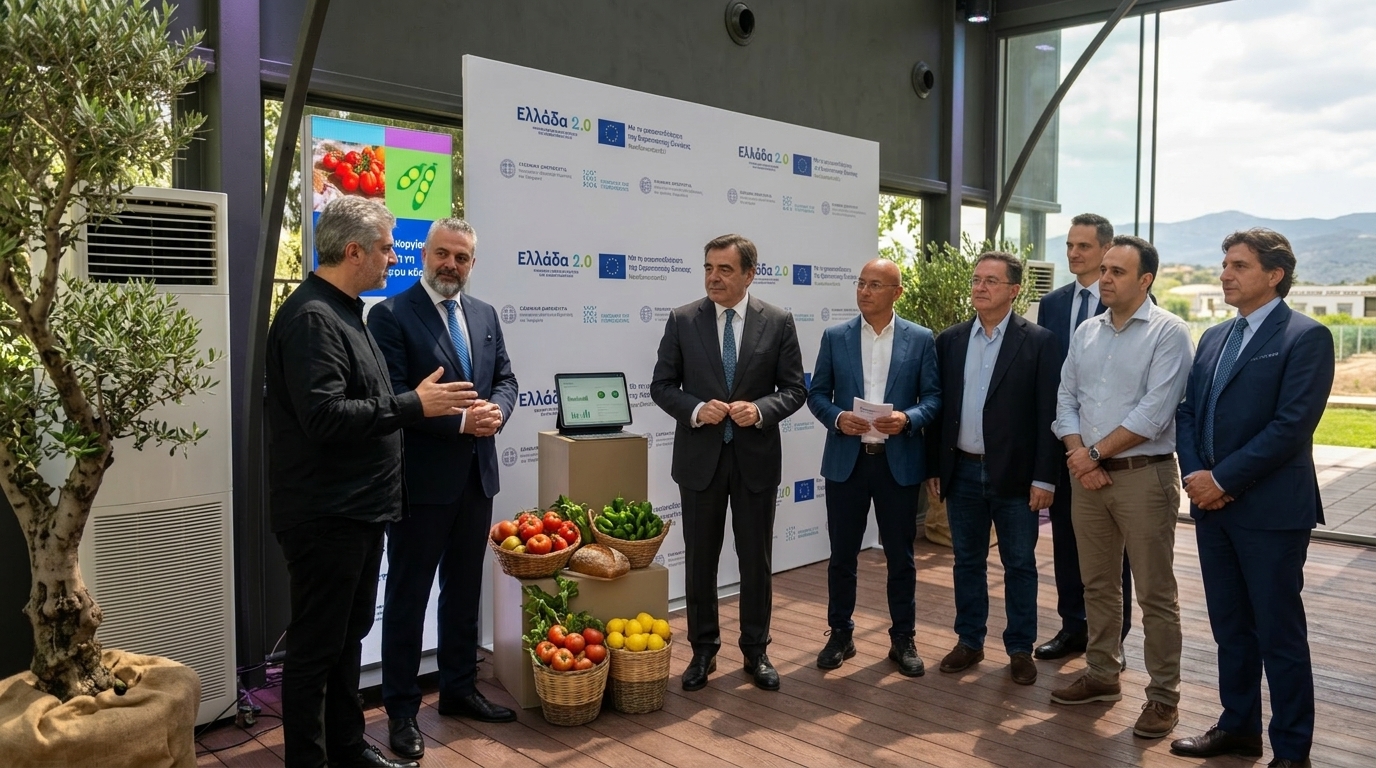
Greek agriculture stands at the threshold of a structural transformation that transcends the boundaries of traditional farming. The new digital project 'Outward-looking Agriculture' (Exostrefis Georgia), with a budget of 25.48 million euros, aspires to become the 'digital backbone' of the primary sector, operating similarly to the AADE's myDATA system. The goal is not merely to simplify bureaucratic processes but to create an unforgeable data ecosystem that will protect the Greek brand name in international markets.
The Digital Shielding of Production
The project, funded by the Recovery and Resilience Fund (RRF), aims for the complete digitalization of the product's journey from field to shelf. Through the creation of a central platform, all data regarding the production, certification, and movement of agricultural products will be gathered in real-time. This means that every kilo of feta cheese, every liter of olive oil, and every package of fruit and vegetables will carry a digital identity confirming its origin.
The need for such a system is imperative. For decades, the Greek agricultural sector has suffered from fragmentation and a lack of transparency. The absence of central control allowed opportunists to exploit the prestige of Greek products, distorting the market and undermining the efforts of honest producers. With the 'myDATA of agri-food,' the government attempts to close these windows of opacity.
Ending 'Hellenizations'
One of the biggest wounds to the Greek economy is illegal 'Hellenizations'—the practice where products imported from third countries are rebranded as 'Greek' to benefit from the added value of our national products, often while being of questionable quality. The 'Outward-looking Agriculture' project introduces strict control and cross-referencing mechanisms. By using cutting-edge technologies such as Big Data analysis and Artificial Intelligence, the system will be able to detect unusual spikes in production or discrepancies between declared land areas and the final quantities traded.
- Automated checks at the country's entry and exit points.
- Integration with the Integrated Administration and Control System (IACS/OSDE).
- Digital certificates for PDO (Protected Designation of Origin) and PGI products.
- Transparency in producer and wholesale prices.
Combating fraud is not just a matter of justice; it is a matter of survival. In a global market where consumers demand to know the story behind their food, traceability is the strongest competitive advantage.
Extroversion and International Competitiveness
The project's title is no coincidence. 'Outward-looking Agriculture' aims to make Greek products more attractive to international buyers. Large retail chains abroad seek reliable suppliers who can guarantee the safety and authenticity of their products. The digital platform will act as a 'seal of trust,' reducing audit costs for exporters and accelerating customs and certification procedures.
'Digitalization is not a luxury; it is the new tool for the modern farmer. Without data, Greek land remains unprotected against international competition,' state officials from the Ministry of Rural Development.
However, the challenge remains the integration of these technologies by the agricultural base itself. The average age of Greek farmers is high, and digital literacy remains an issue. For the venture to succeed, the platform must be extremely user-friendly, and an extensive support network of agronomists and consultants is required to guide producers into the new digital era.
Conclusion: A New Model for Growth
The €25.48 million project is just the beginning. The creation of a data-driven ecosystem in agri-food can be the catalyst for attracting investments in AgriTech. If Greece manages to combine the exceptional quality of its raw materials with digital transparency, then the primary sector can become the true 'rocket' of the Greek economy for the next decade. The stakes are high, but technology now provides the tools to win.