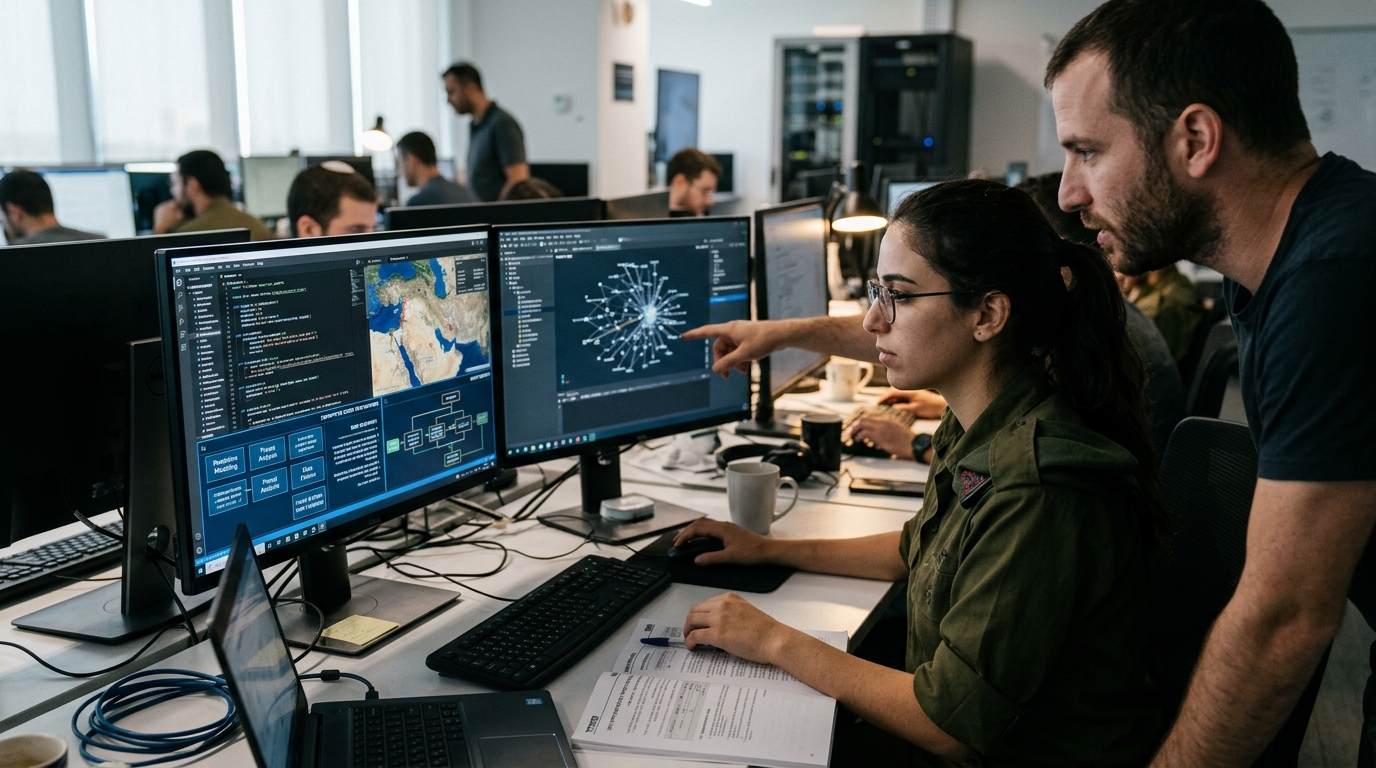
In the modern theater of Middle Eastern operations, the roar of artillery is now accompanied by the silent but relentless processing speed of billions of data points. According to recent statements by a high-ranking commander of the Israel Defense Forces (IDF) to the Jerusalem Post, the integration of Artificial Intelligence (AI) and Big Data is no longer just a supportive tool; it has become the central pillar that changed the rules of the game during the recent escalation with Iran.
The Transition to Algorithmic Warfare
Traditional espionage and intelligence analysis relied for decades on human capacity to synthesize information. However, the sheer volume of data generated today by satellites, drones, intercepts, and cyberspace far exceeds human capabilities. The IDF commander emphasized that the integration of advanced algorithms allowed the military to process information in fractions of a second, identifying targets and threats that would have previously remained invisible.
The system described functions as a "neural web" connecting every unit in the field to a central database. When Iran launched its attacks, Israel's ability to predict missile trajectories and prioritize threats relied on machine learning models trained on thousands of simulation scenarios. This "algorithmic shield" did not only limit physical damage but also enabled surgical precision in the IDF's responses.
The Role of Big Data in Target Acquisition
One of the most controversial yet effective aspects of this technology is automated target generation. According to the revelations, the IDF's AI systems can suggest targets at a rate that far exceeds traditional methods. "What once required weeks of research by dozens of analysts can now be completed in minutes," the official stated. The use of systems like 'Gospel' (Habsora) and 'Lavender' has been at the center of international scrutiny, but for Israel, they represent the necessary counterweight to the complexity of Iranian proxies and their concealed infrastructure.
"Artificial intelligence does not make the final decision, but it provides the commander with a crystal-clear image of the field, eliminating the 'fog of war'," the commander noted.
The ability to connect disparate data—from a social media post to the thermal signature of a launcher—allows the IDF to create a dynamic digital twin of the battlefield. This Big Data approach ensures that no move by the adversary goes unnoticed, effectively turning information into kinetic power.
Challenges and Ethical Dilemmas
Despite operational success, the use of AI in warfare raises serious questions. Reliance on algorithms can lead to errors that humans may not have the time to correct. Furthermore, the international community is concerned about the "dehumanization" of conflict, where lives are turned into data points on a screen. The IDF commander defended the technology, arguing that the precision offered by AI actually reduces collateral damage, as it allows for target identification with minimal fire dispersion.
However, the confrontation with Iran showed that the adversary is not standing still. Cyber warfare and "data poisoning" efforts represent the new challenges. If AI relies on corrupted data fed by the enemy, its decisions could prove fatal. The battle, therefore, shifts from the borders to the data centers, where the quality of code is as vital as the quality of steel.
The Future of Conflict in the Middle East
The IDF's experience from the war with Iran serves as a lesson for all modern militaries. The integration of AI and Big Data is no longer a luxury but a prerequisite for survival. As Iran continues to develop its own capabilities in drones and cyber-attacks, Israel's technological superiority will be tested daily by the speed at which its algorithms are updated.
In conclusion, 21st-century warfare is an information war. The winner is not necessarily the one with the most tanks, but the one who can fastest convert raw data into strategic knowledge. The IDF appears to have taken the decisive step in this direction, setting new standards for the global defense industry while simultaneously opening a Pandora’s box regarding the future of human judgment in war.