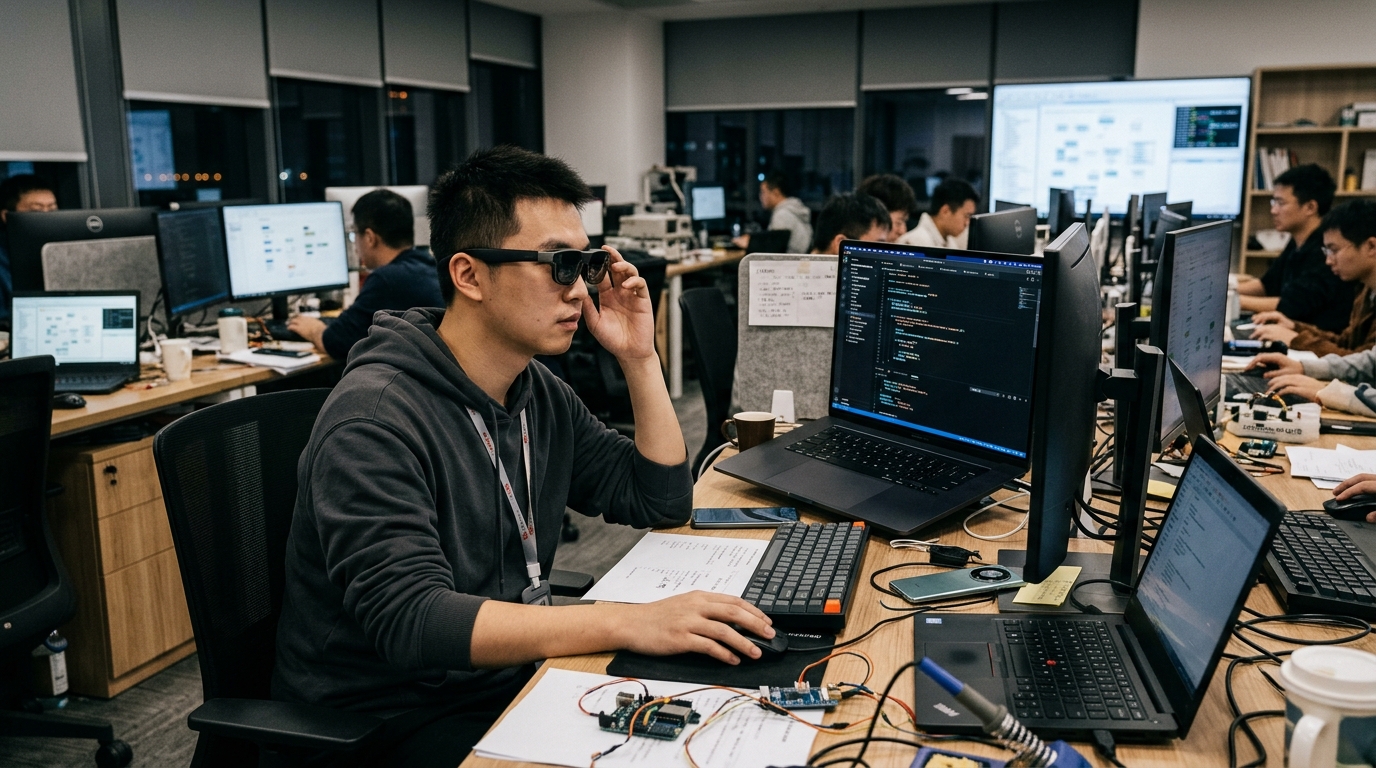
The launch of Huawei’s latest AI glasses is more than just an addition to the Chinese giant’s product lineup; it is a definitive statement on the future of the human-technology interface. In an era where the smartphone appears to have plateaued in terms of radical innovation, Huawei is betting on the concept of 'ambient' AI—intelligence that is always present, always observant, and seamlessly integrated into everyday objects.
The Strategic Pivot: HarmonyOS and the Pangu Model
After years of navigating geopolitical headwinds and restricted access to Western supply chains, Huawei has emerged with a renewed focus on technological sovereignty. The new AI Glasses represent the pinnacle of this effort, powered by the homegrown HarmonyOS and the sophisticated Pangu large language model. Huawei is not merely targeting domestic consumers; it is attempting to set a new global standard for what wearable AI should look and feel like.
Unlike previous iterations of smart eyewear that focused primarily on audio delivery, these new glasses feature advanced multimodal capabilities. Equipped with miniaturized high-resolution cameras, they can 'see' the world, recognize objects in real-time, and provide contextual information via voice or subtle visual cues. The integration of Pangu AI allows the device to act as a cognitive exoskeleton, offering everything from real-time sign translation to nutritional analysis of a meal, all without the user ever touching a screen.
The Battle for the 'Face-Real Estate'
The smart eyewear market is rapidly becoming the new frontier for tech titans. While Meta has gained traction with its Ray-Ban collaboration and Apple has pushed the boundaries of spatial computing with the Vision Pro, Huawei is carving out a middle ground. Its design philosophy emphasizes aesthetics—the devices look like standard high-end frames—while packing significant processing power. This strategy addresses a key barrier to adoption: the social friction of wearing bulky, 'techy' headsets in public.
Huawei is leveraging its massive user base in Asia to cultivate an ecosystem of applications ranging from indoor navigation to industrial and medical use cases. The ability of these glasses to sync flawlessly with the company’s broader ecosystem—including smartphones, laptops, and even smart vehicles—provides a competitive edge that companies without such deep vertical integration struggle to match.
Geopolitics and the Privacy Paradox
However, Huawei’s ascent in the AI wearable space is not without its complications. Data security concerns remain a significant hurdle, particularly in Western markets. As glasses equipped with cameras and microphones record the wearer's surroundings, the question of data residency and processing transparency becomes paramount. Huawei has countered these concerns by emphasizing 'on-device AI,' where most data processing occurs locally on the glasses rather than in the cloud, a move designed to appease privacy-conscious regulators.
"The competition is no longer about who has the fastest processor, but who can deliver the most organic AI experience without disrupting human connection," notes an Asia-based market analyst.
Furthermore, the reliance on China’s domestic semiconductor industry is a double-edged sword. While it shields Huawei from further sanctions, it forces the company to achieve breakthroughs in software efficiency to compensate for the lack of access to the 2nm or 3nm lithography processes currently dominated by TSMC and its Western partners.
Conclusion: Toward a Post-Screen Society?
Huawei’s AI Glasses serve as a harbinger of a future where the smartphone screen might eventually be viewed as an archaic relic. If adoption continues at this pace, we are looking at a fundamental shift in how information is consumed and how we interact with the physical world. For Huawei, the success of this product category would mark its definitive return to the global innovation elite—not as a fast follower, but as a pioneer of a new era in computing.