In the high-stakes world of Emergency Medical Services (EMS), the difference between life and death is often measured in seconds and strict adherence to clinical protocols. Yet, for decades, the process of Quality Assurance (QA) and Quality Improvement (QI) remained a laborious, manual task. Supervisors had to sift through thousands of incident reports, hoping to catch errors or identify areas for improvement. The Henderson Fire Department (HFD) in Nevada is changing this paradigm, adopting Artificial Intelligence to scale its capabilities and transform passive data into actionable intelligence.
The Data Wall and the Need for Automation
Traditionally, EMS agencies are only able to manually review a small fraction of electronic Patient Care Reports (ePCRs)—typically between 1% and 5%. This creates a massive blind spot. If a paramedic makes a systemic error in drug dosage or if there is a delay in intubation that isn't flagged as "unusual," the issue might go unnoticed for months. Henderson Fire recognized that manual inspection was no longer sustainable given the increasing call volume.
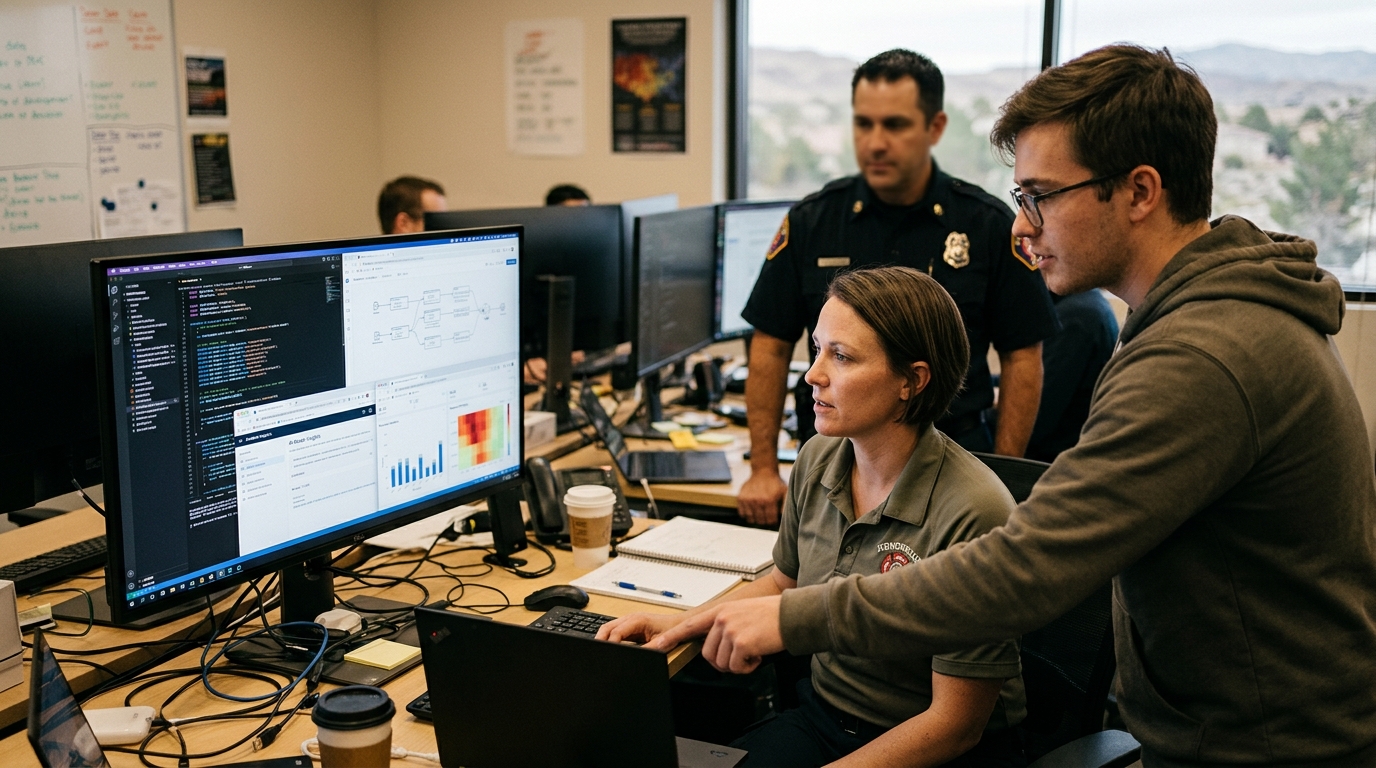
By integrating AI tools, the department can now analyze 100% of its reports. The technology does not replace the human reviewer but acts as a high-speed "screener." Using Natural Language Processing (NLP), the system scans paramedic narratives, cross-references response times, vital signs, and interventions with established protocols, and immediately flags deviations that require human attention.
From Punishment to Education
One of the most significant shifts AI brings to Henderson is a cultural move from "policing" to "education." In the past, the QA process was often viewed as punitive. AI allows Fire leadership to identify not just mistakes, but also exceptional performance. If a specific station consistently achieves better outcomes in stroke management, the AI can highlight this pattern, allowing the department to study and disseminate those best practices across the force.
- Pattern Detection: Identifying service-wide trends that would be impossible to see in isolated reports.
- Risk Mitigation: Immediate recognition of clinical deviations that could lead to legal liability.
- Resource Optimization: Directing training resources where data shows a genuine knowledge gap exists.
The Department Chief in Henderson notes that using AI has reduced the time officers spend on clerical work, allowing them to focus on mentoring younger responders. This is critical in an era where burnout among first responders is at an all-time high. The AI handles the "drudge work" of data entry and initial screening, leaving the nuanced human interaction to the veterans.
Challenges and the Future of Public Safety
Despite the benefits, the adoption of AI in public safety is not without challenges. Patient data privacy (HIPAA compliance) is the top priority. The systems used by Henderson are designed to operate within secure environments, ensuring that data analysis does not breach medical confidentiality. Furthermore, there is always the risk of "algorithmic bias," where the system might misinterpret a correct but unconventional clinical decision.
"AI doesn't make the final call on whether a paramedic did their job correctly. It simply shows us where we need to look," says a department official.
The Henderson example serves as a beacon for other agencies worldwide. As healthcare systems are increasingly strained, the ability to extract insights from data in real-time will become the new norm. The transition from reactive to proactive public safety is now possible, provided the technology remains a tool for human judgment rather than a replacement for it. The future of EMS lies in this hybrid model: machine precision combined with human compassion.