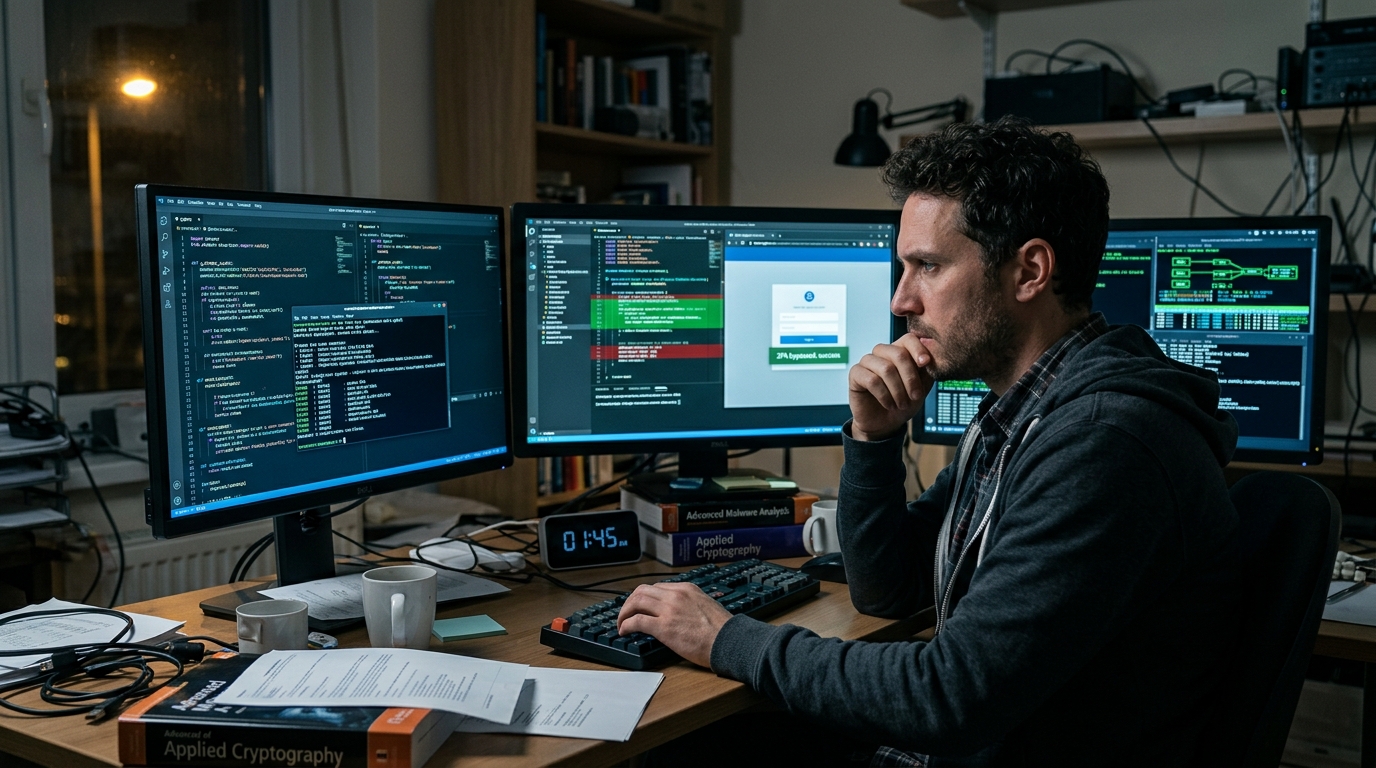
Digital security as we know it has reached a critical juncture. Recent reports indicating that hackers have successfully utilized artificial intelligence to generate zero-day exploit code—code that targets previously unknown vulnerabilities—represent a milestone that is sending shockwaves through the global IT community. The fact that this attack was accompanied by the successful bypass of two-factor authentication (2FA), a system long considered the 'gold standard' of personal protection, signals the beginning of a new, more perilous era.
Anatomy of an Advanced Threat
The use of AI in cyberspace is not entirely new, but the ability to generate zero-day exploits is a complete game-changer. Traditionally, discovering such a vulnerability required months of research by specialized developers with deep knowledge of system architecture. With the aid of Large Language Models (LLMs), this process is being dramatically automated and accelerated. AI can scan millions of lines of code in seconds, identifying logic flaws that a human eye would take weeks to spot.
The most alarming aspect of this particular case is the targeting of 2FA. This bypass was not achieved through simple brute force, but through sophisticated social engineering and session hijacking methods perfected by AI. The AI can create convincing phishing environments that steal session tokens in real-time, rendering the one-time code sent to a user's phone entirely useless, as the hacker has already 'hijacked' the active connection.
The Democratization of Cybercrime
One of the most significant issues arising from this development is the 'democratization' of advanced cyber-attacks. Until recently, zero-day exploits were the exclusive domain of state intelligence agencies or the wealthiest criminal organizations (APT groups). Now, with AI's help, even less experienced hackers gain access to 'digital weapons' of mass destruction. This shift upends the power balance of the internet.
- Automated vulnerability discovery in both open-source and proprietary software.
- Creation of polymorphic malware that changes its structure to evade antivirus detection.
- Personalized phishing attacks at scale, utilizing local idioms and perfect grammar.
- Bypassing biometric data via deepfake technologies.
The ease with which AI can adapt code to the specific needs of an attack means that defenders are no longer facing a static enemy, but an organism that evolves in real-time.
The Counter-Strike: AI vs. AI
In this landscape, traditional defense based on virus signatures and static rules is doomed to fail. The only viable solution is the adoption of defensive AI. Organizations must invest in systems that use machine learning to analyze user and network behavior, detecting anomalies that suggest an attack before it reaches completion.
"We are no longer in a war of code, but in a war of algorithms. The speed of AI in offense can only be countered by the speed of AI in defense," note cybersecurity analysts.
Furthermore, the international community must reconsider the ethical frameworks and safety guardrails of AI models. While companies like OpenAI and Google implement restrictions on generating malicious content, hackers use 'jailbreaking' techniques or train their own, unregulated models (such as WormGPT) that lack any ethical constraints.
Conclusions and Outlook
The emergence of AI-generated zero-days is a warning for the future. Cybersecurity is no longer just a technical issue; it is a matter of national and economic survival. Citizens must be educated on using more advanced protection methods, such as hardware security keys (e.g., YubiKey), which are much harder for AI to bypass compared to SMS or apps. Simultaneously, governments must collaborate to create a global 'immune system' for the internet before the attackers' algorithms render our digital infrastructure irreversibly vulnerable.