

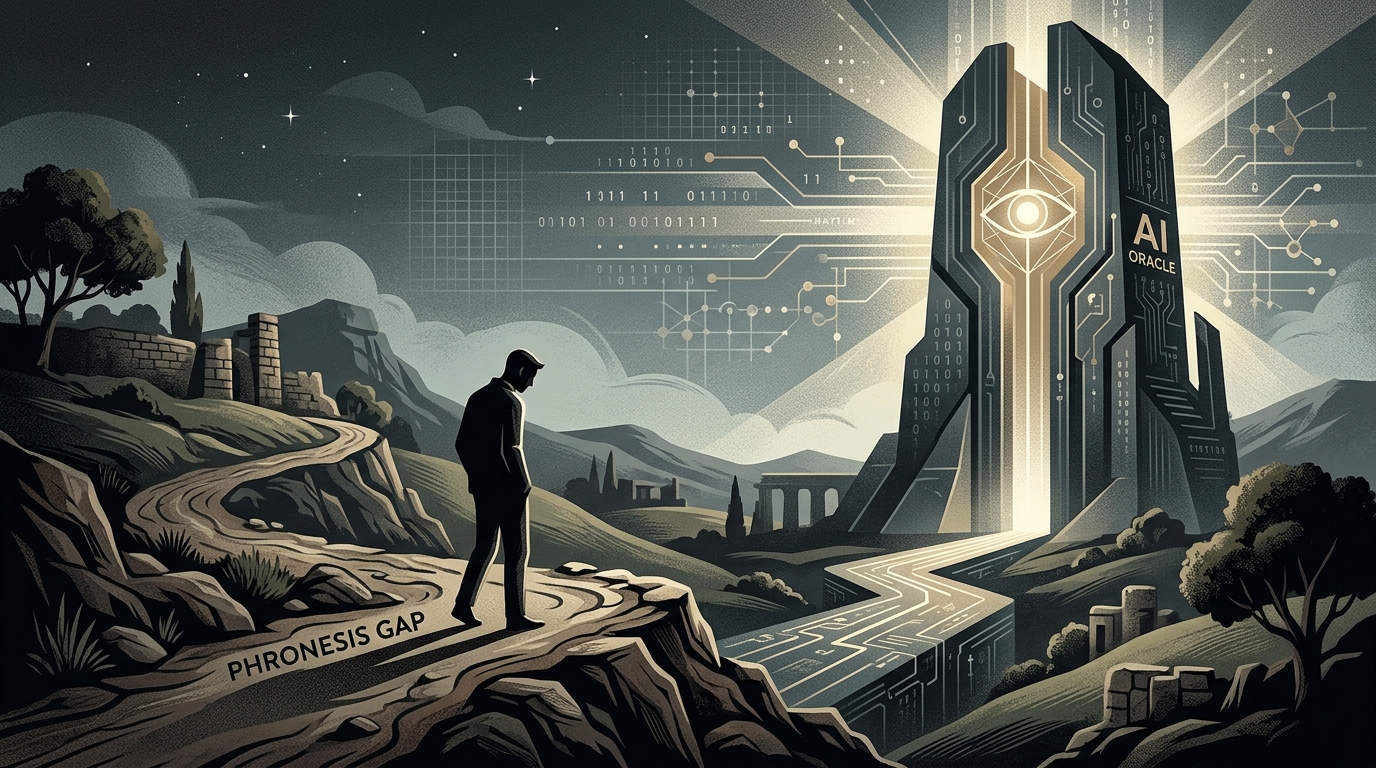
Sitting here in the shade of an olive tree, watching the digital tide rise through my screen, I cannot help but notice a profound paradox in this spring of 2026. On one hand, we have the titans of finance like Bill Ackman and Daniel Loeb diverging in their billion-dollar bets on the future of intelligence. On the other, we have a silent, growing army of workers—65% of them, to be precise—who are quietly turning their backs on the very tools promised to liberate them. Why is the view from the boardroom so different from the view from the workshop?
The Hubris of the High-Frequency Oracle
The news this week regarding former President Trump’s brokerage account—3,642 trades preempting a tech slump—reads like a modern Greek tragedy of insider advantage. It suggests that while the public is told to trust the 'democratizing' power of AI, the elite are using it as a private oracle to navigate the storms they often help create. When we see federal discussions in the US aiming to preempt state-level AI protections in California and New York, it becomes clear: the architecture of our future is being designed to favor the scale of the machine over the safety of the citizen.
"We are building a world of perfect information and zero wisdom."
Aristotle spoke of Phronesis—practical wisdom. It is the ability to do the right thing, at the right time, for the right reason. Current AI research into addiction highlights this gap perfectly. We have models that can fact-check with clinical precision, yet they lack the 'clinical wisdom' to understand the nuance of human suffering. A machine can tell you the chemical composition of a drug, but it cannot hold the hand of a soul in despair. This is why the recent settlements by Snap and YouTube regarding the student mental health crisis are so pivotal. We are finally admitting that our digital playgrounds have become psychological minefields.
The Silent Resistance: A Quest for Human Dignity
The statistic that 65% of workers are resisting AI is not, in my view, a sign of Luddite regression. It is a scream for dignity. In our rush to optimize every second of labor, we have forgotten that work is not just an output; it is an identity. When Microsoft rebrands Xbox to XBOX or Windows finally returns 'freedom' to the taskbar, these are mere aesthetic concessions. The real struggle is deeper. Workers are sensing that AI, in its current corporate form, is not a tool for the craftsman, but a replacement for the soul.
In Greece, we are seeing this play out on a 'Grand Canvas.' We are a culture built on the agora—the gathering place of voices. As we integrate AI into our national reality, we must ask: are we enhancing the agora, or are we replacing it with an automated echo chamber? The IPO of digital-first banks like Forbright suggests a world where the 'middle market' is managed by algorithms. But who speaks for the small shopkeeper in Plaka who needs a loan based on his character, not just his cash flow?
The Path Toward a Mediterranean AI
I believe the way forward is not found in the aggressive accelerationism of Silicon Valley, nor in the cold predictive trades of hedge funds. We need an AI that respects the 'silent resistance.' We need technology that understands that 'freedom' isn't just about where you place a Start menu, but about the agency of the person using it. We must bridge the gap between fact-checking accuracy and clinical wisdom. Until we imbue our systems with a sense of Phronesis, the majority of humanity will continue to look at the AI revolution and say: 'No, thank you. I prefer to remain human.'