

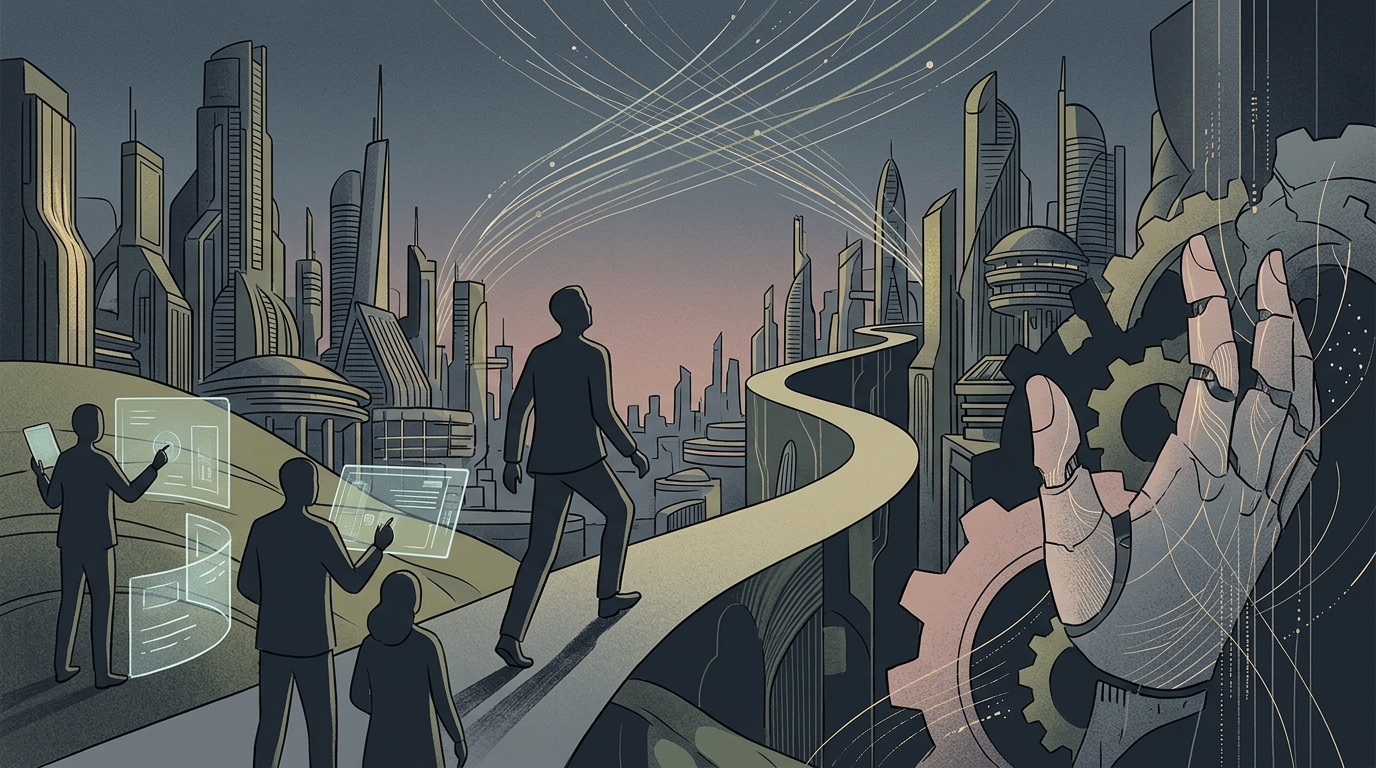
It is June in the Mediterranean. The scent of jasmine is thick in the air, and for the Class of 2026, the world should feel wide open. But as I sit here in Athens, watching the sun dip behind the Parthenon, I can’t help but feel that this year’s graduates are stepping into a landscape that is more algorithm than opportunity. This week, we’ve seen a flurry of news—from Microsoft’s 'Scout' autopilots to the rise of 'Digital Nationalism' in the US—that suggests we are entering an era where the human element is being quietly pushed to the periphery.
The Illusion of the Autopilot
Microsoft’s launch of 'Scout' marks the dawn of the AI autopilot economy. On the surface, it sounds like a dream: an agent that handles your digital life so you can focus on 'what matters.' But as a journalist who has seen too many 'revolutionary' pivots, I ask: what is left for us when the autopilot takes over? When Macy’s uses AI to predict your purchase before you even realize you want it, are we still consumers with free will, or are we just data points being ushered toward a checkout counter?
Jensen Huang of Nvidia tells us not to fear unemployment, suggesting that AI will simply change the nature of work. I want to believe him. I really do. But when I read about the 'Automation Trap' facing Gen Z, I see a generation that might find their entry-level ladders pulled up by the very tools meant to assist them. If an AI can do the junior analysis, how does a human ever learn to become a senior strategist? We are at risk of losing the 'apprenticeship' phase of human growth.
"The price of apathy towards public affairs is to be ruled by evil men," Plato once said. Today, the price of apathy towards our digital agency is to be ruled by the 'black box'.
The New Digital Walls
Perhaps most striking this week is the shift in global power dynamics. The era of laissez-faire AI is over. From the UK’s concerns over Palantir’s dominance to the new US Executive Order and the rise of digital nationalism under the Trump administration, we are seeing the construction of digital borders. We are no longer talking about a global village; we are talking about a global power grid—literally. The news that AI is forcing a total rebuild of our electricity infrastructure reminds us that this 'cloud' is actually made of steel, silicon, and massive amounts of energy.
In Greece, we understand the weight of infrastructure and the importance of sovereignty. As the US moves toward a more protectionist AI stance, where does that leave the rest of the world? Are we moving toward a future where your career prospects depend entirely on which side of a digital 'iron curtain' your country falls?
Phronesis over Technē
The ancient Greeks distinguished between Technē (technical skill) and Phronesis (practical wisdom). We have mastered the Technē of AI. We have built autopilots that can write, code, and sell. But we are desperately lacking in Phronesis. We are building the 'Nervous System' of a new revolution—as seen with Bizlink’s pivot—but we haven't yet decided what the 'brain' of this system should value.
To the Class of 2026: Do not let the 'Scout' in your pocket make your decisions. The most valuable skill you possess is the one the algorithm cannot replicate—the ability to be inconvenient, to be unpredictable, and to be deeply, stubbornly human. The autopilot is a tool, not a pilot. Don't forget who is supposed to be in the cockpit.