

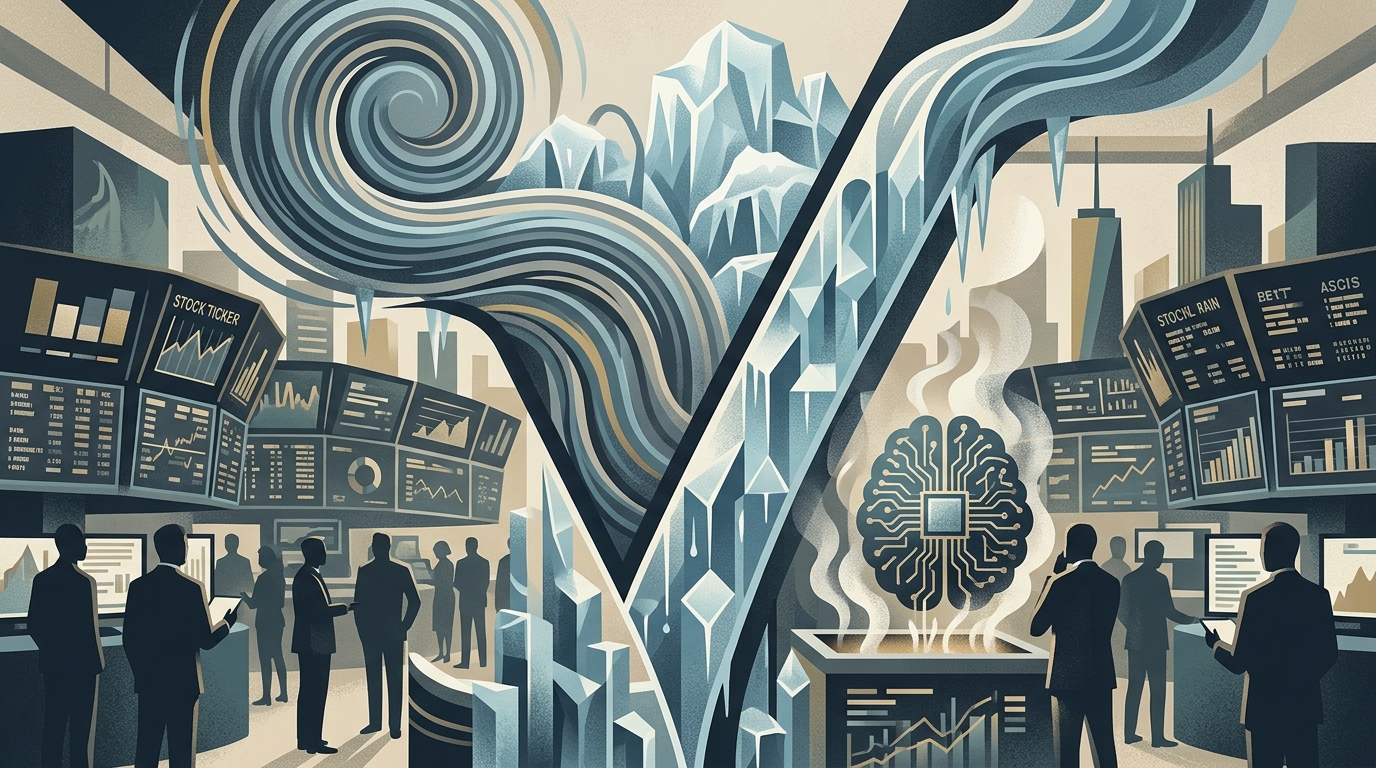
The Heat of Progress
As I sit here in the early June warmth, looking out over the Mediterranean, I am struck by a paradox that defines our current era. We are obsessed with the 'cloud,' a term that suggests something ethereal, weightless, and cool. Yet, the reality of the AI revolution is anything but. It is heavy, it is expensive, and above all, it is incredibly hot. This week’s developments in the tech world have brought this physical reality into sharp focus, reminding me of the ancient concept of Sophrosyne—the excellence of mind that involves self-control and moderation.
We are seeing a massive shift in what we value as a civilization. The news that SoftBank is set to dethrone Toyota in the Japanese corporate hierarchy is not just a financial headline; it is a symbolic passing of the torch. For decades, Toyota represented the pinnacle of the physical machine—the combustion engine, the tangible asset. Now, the crown moves to a company that bets on the intangible, the algorithmic, and the silicon-based. But as we move from the garage to the data center, are we prepared for the new kind of friction we are creating?
The Physicality of the Intangible
The 'Cooling Imperative' is the most honest headline I’ve read all year. While we debate the merits of Dell’s $699 XPS 13 versus Apple’s MacBook Neo, or recoil at the high pricing of Microsoft’s Surface AI laptops, we often ignore the invisible battle. Every calculation, every generative prompt, and every automated decision requires immense physical cooling. We are building a global infrastructure that is essentially a giant radiator. The memory crunch hitting SK Hynix and the trillion-dollar rally of Micron are symptoms of a deeper problem: we are reaching the physical limits of our current materials.
"Intelligence, it seems, has a thermal limit. In our rush to build the digital oracle, we are heating the planet in ways the architects of the Industrial Revolution never imagined."
In Greece, we understand the importance of shade and the value of a cool breeze. We know that when the sun is at its peak, one must rest and reflect. The AI industry, however, knows no such siesta. The bet Asian markets are making on AI to hedge against Middle East geopolitical risks shows that we view technology as a sanctuary. But can a sanctuary stand if its foundations are melting? The strategic moves in semiconductors are no longer just about business; they are about survival in an environment where the 'cool' is the most precious commodity.
Governance and the Human Element
I find hope in the proactive steps taken by Ho Chi Minh City to train two million citizens. This is the human cooling system—education. If we do not prepare the citizenry for this shift, the social friction will be more damaging than any hardware overheating. Similarly, South Korea’s move toward mandatory AI labeling to fight counterfeit goods is a necessary act of Nomos (law) to bring order to the digital chaos.
The 'Great AI Power Shift' is not just about who has the fastest chips; it is about who has the best playbook for governance. We are witnessing an existential battle for information. As a journalist, I worry that we are pricing out the average person. When Microsoft faces backlash over pricing, it’s not just about consumer entitlement; it’s about the democratization of intelligence. If only the elite can afford the 'personal oracles' provided by Dell or Apple, we risk creating a new class of digital helots.
A Call for Mediterranean Moderation
So, where does this leave us? I believe we must demand a more sustainable path. We cannot simply innovate our way out of a crisis by building more fans and bigger heat sinks. We need a philosophical shift. We must ask ourselves: what is the 'right' price for intelligence? And more importantly, what is the 'right' temperature for progress?
We must look back to the wisdom of our ancestors. 'Pan metron ariston'—all things in moderation. As we watch the markets rally and the hardware evolve, let us not forget that the most sophisticated processor ever created—the human brain—runs on about 20 watts of power and stays remarkably cool. Perhaps the next great leap in AI won't be in more power, but in more grace. We need an AI that respects the physical limits of our world as much as it seeks to expand the limits of our minds.