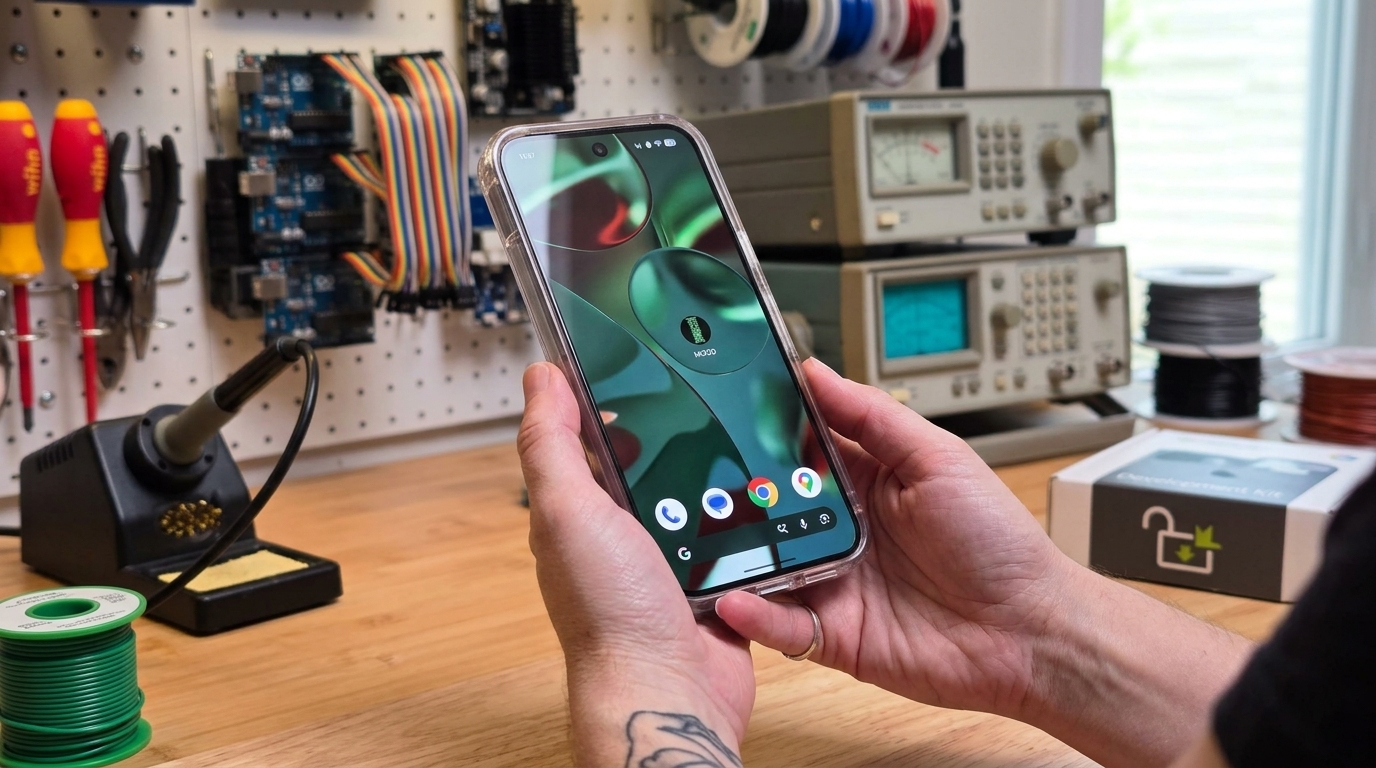
The history of software development has always been defined by a strict hierarchy: on one side were those who possessed the 'magic' language of code, and on the other were the users who merely consumed the result. Today, we stand on the threshold of a radical reversal of this dynamic. Recent user experiences with Google’s Gemini AI Studio, where creating three Android apps in a single afternoon became a reality without writing a single line of traditional code, marks the arrival of 'vibe coding'.
The term, which has begun circulating widely in Silicon Valley communities, describes a process where the creator does not concern themselves with syntax, semicolons, or memory management, but rather with the 'vibe'—the logic, intent, and aesthetic of the application. In essence, Artificial Intelligence takes on the role of the executive programmer, while the human is elevated to architect and director.
The Technology Behind the 'Miracle'
The key to this evolution lies in Gemini 1.5 Pro and the revamped Google AI Studio environment. The model's ability to understand massive context windows allows it to 'see' the entire structure of an Android project simultaneously. When a user types a 150-word description for an app—for example, a specialized calorie counter that recognizes photos—the AI doesn't just suggest code snippets. It generates the entire APK package, ready for installation.
This process removes the most painful part of programming: setting up the development environment. Traditionally, a new Android developer would have to struggle for hours with Android Studio, Gradle builds, and SDKs before even seeing 'Hello World' on their screen. Now, Google is bridging this gap, allowing the user to bypass technical minutiae and jump straight to a functional product.
Vibe Coding: The Democratization of Creation
'Vibe coding' is not just a convenience; it is a cultural shift. For decades, learning to code was considered the 'golden ticket' to the digital economy. However, the complexity of languages like Kotlin or Java posed an insurmountable barrier for non-technical creators. With Gemini, the programming language becomes our natural language.
- Speed: From idea to app in less than 10 minutes.
- Accessibility: Individuals without technical backgrounds can solve personal problems with bespoke software.
- Iterability: The ability to request changes ("make the button red", "add a database") in real-time.
This evolution mirrors the transition from punch cards to graphical user interfaces (GUIs). Every time technology becomes more abstract, the number of people who can use it increases exponentially. The question is no longer 'how do I build it?' but 'what is worth building?'
The Shadows of Automated Code
Despite the excitement, industry professionals remain skeptical. Building an app that 'seems to work' is very different from building secure, scalable, and optimized software. AI-generated code can often contain hallucinations, security vulnerabilities, or unnecessary complexities that a human programmer would avoid.
"Vibe coding is great for prototypes, but maintaining a system you don't fully understand is a nightmare waiting to happen," software analysts warn.
Furthermore, there is the issue of 'technical debt.' If a user creates ten apps in an afternoon, who will update them when Android security standards change? The ease of creation could lead to an ocean of 'disposable software,' consuming resources and creating new cybersecurity risks.
The Future of the Profession
What does this mean for career developers? The answer is not replacement, but evolution. The developer's role is shifting from writing code to curation and quality control. Experienced engineers will use 'vibe coding' to accelerate routine tasks, dedicating their time to solving truly difficult architectural problems.
In countries like Greece, where IT talent is high but resources are often limited, such tools can provide a boost to local startup entrepreneurship. The ability for a young person in the province to realize an idea for an agricultural app in an afternoon, without needing a team of developers, is revolutionary.
In conclusion, Google's move with Gemini AI Studio is not just about Android phones. It's about turning creativity into immediate digital action. 'Vibe coding' is here to stay, and while it won't make programmers redundant, it will certainly make the world of software much noisier, more colorful, and accessible to everyone.