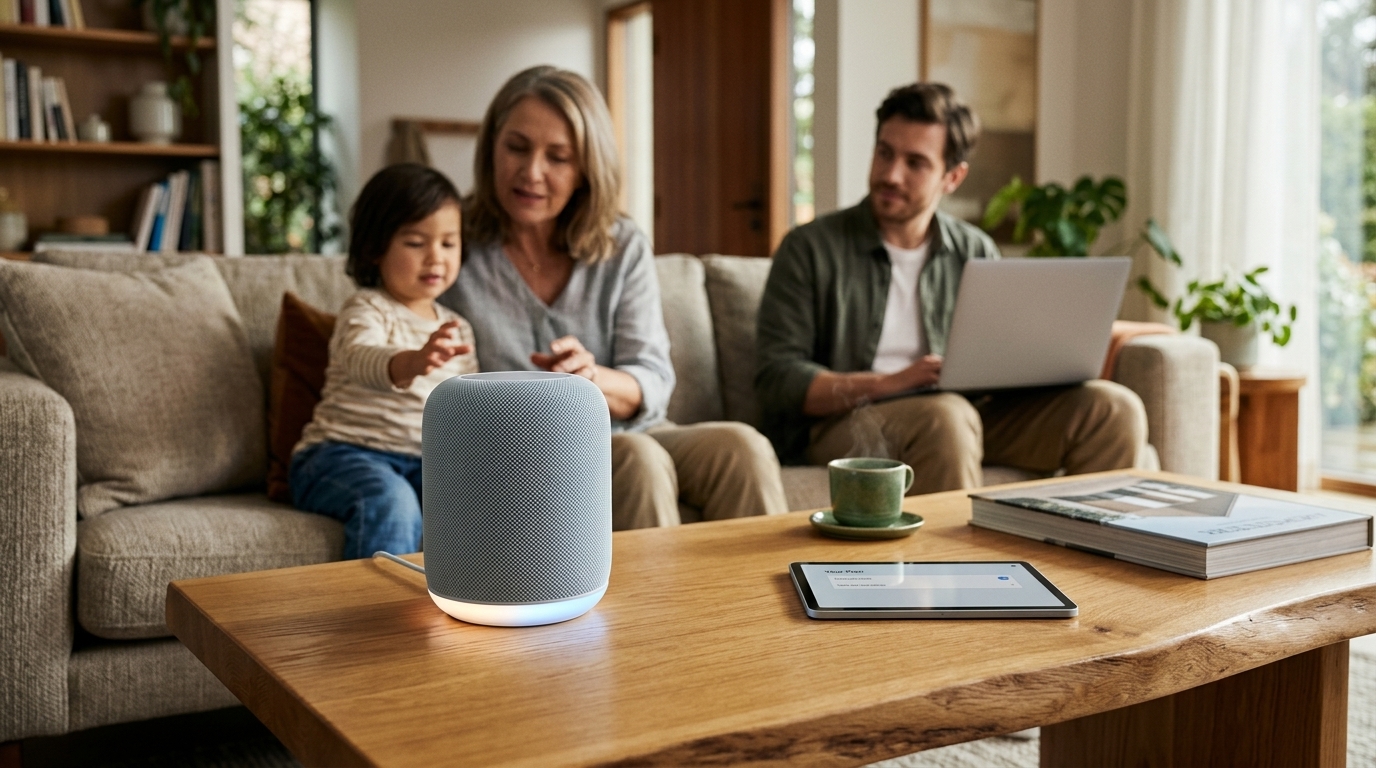
It was 2020 when Google released its last major smart speaker, the Nest Audio. In an industry that moves at the speed of light, six years feel like a century. Today, in 2026, the tech giant from Mountain View makes a powerful comeback with the new Google Home (2nd Generation), a device that doesn’t just promise to play music, but to serve as the central nervous system of our digital lives. However, this new era comes with a significant shift in corporate philosophy: the introduction of paywalled features.
The Anatomy of AI: From Assistant to Gemini
The heart of the new Google Home is none other than Gemini, Google's advanced large language model, which now runs in a hybrid fashion between local processing and the cloud. The difference from the old Google Assistant is staggering. The new speaker doesn't just wait for commands; it understands context, remembers previous conversations, and can execute complex scenarios without the need for specific keywords.
For instance, you can tell it: "Put on a movie that matches the rain outside and dim the lights to a sunset hue," and the device will coordinate the TV, smart lights, and sound system with a naturalness that is almost eerie. The response is near-instantaneous, thanks to the new Tensor G6 Home processor, specifically designed to handle neural networks locally, ensuring privacy for core functions.
The Subscription Model: A New Reality
But here lies the point of contention. While basic functions—such as home control and simple queries—remain free, Google is introducing "Gemini Home Premium." With a monthly subscription, users unlock "Proactive Intelligence." This means the speaker can alert you if you've left the water heater on based on your habits, make calls on your behalf to book appointments, or act as a real-time personal translator for the entire room.
Wired notes that this move serves as an experiment to see if consumers are willing to pay "rent" for the intelligence of their devices. It is a strategy that strongly echoes the SaaS (Software as a Service) model, but transposed into our living rooms. Criticism is sharp, as many believe that purchasing a €300 device should include its full suite of capabilities.
Acoustic Excellence and Design
In terms of pure audio engineering, Google made no compromises. The new speaker features a three-way system with an active crossover, delivering room-filling bass without distorting mid-range frequencies. Spatial Audio support is impressive, creating a sense of depth usually reserved for much more expensive Hi-Fi systems. Its design, covered in recycled fabric in earthy tones, makes it an elegant object that blends into any decor, avoiding the "cold" aesthetic typical of many gadgets.
- Matter 2.0 protocol support for ultimate compatibility.
- Microphones with noise-cancellation technology that can hear a whisper from the next room.
- Physical microphone kill-switch for privacy advocates.
- Built-in Thread border router for faster smart home response times.
Conclusion: The Future is Here, but it Comes at a Price
The 2026 Google Home is undoubtedly the most capable smart speaker ever built. The integration of Gemini turns it into a true digital assistant rather than just a "box that tells you the weather." However, Google's decision to lock advanced intelligence behind a paywall raises a critical question about the future of technology: Will AI become a privilege for those who can afford a monthly tax? For now, Google is leading the pack, but its competitors are watching closely to see if the public will accept these new rules of the engagement.