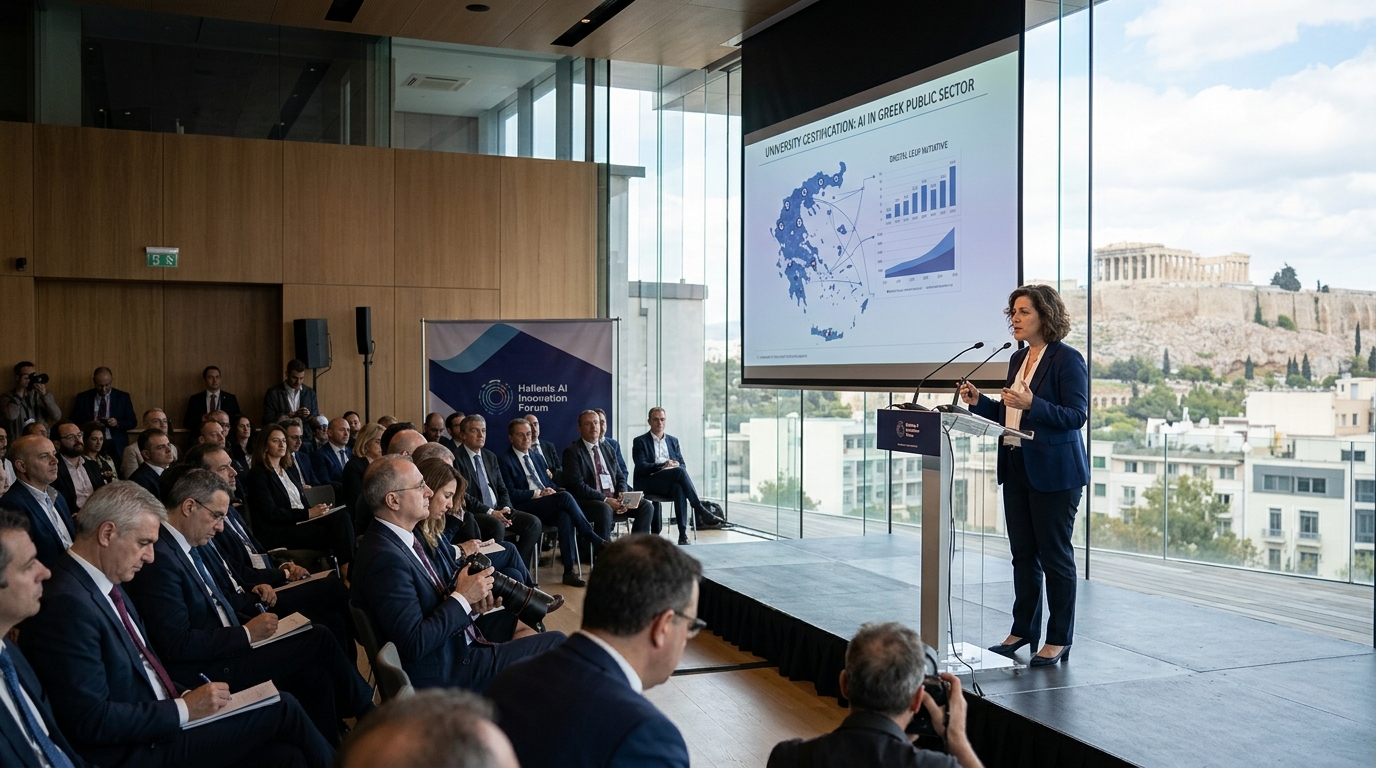
In an era where technological evolution often outpaces bureaucratic adaptability, Greece is attempting a bold leap into the future. The announcement of the universal introduction of the University Certificate in Artificial Intelligence (AI) for public sector employees, in collaboration with entities like GoLearn and leading Greek academic institutions, is not merely an educational initiative; it is a strategic choice for survival in the 21st century.
The Architecture of Digital Upskilling
The training program, bearing the seal of Greek public universities, aims to familiarize civil servants with the fundamental principles of Machine Learning, Big Data analysis, and Generative AI models. The significance of this certificate transcends simple knowledge acquisition; it is directly linked to the evaluation system and ASEP (Supreme Council for Civil Personnel Selection) points, making it an essential asset for professional advancement within the state apparatus.
The partnership with GoLearn, one of Greece's largest training and certification providers, ensures that the theoretical knowledge of universities is translated into applicable skills. Participants do not just learn how algorithms work; they learn how to use them to optimize internal processes—from automating correspondence to predicting needs in critical sectors such as healthcare and civil protection. This bridge between academia and vocational training is vital for a country seeking to modernize its administrative backbone.
From Bureaucracy to Algorithmic Governance
The introduction of AI in the public sector promises to heal decades-old pathologies. The ability of AI models to process vast volumes of documents and extract conclusions in seconds could drastically reduce waiting times for citizens. Imagine a system where filing an application does not require weeks of manual review, but rather a preliminary assessment by a trusted AI system that flags omissions or errors in real-time. This is the promise of the 'Digital Transformation Bible' coming to life.
However, this transition is not without its challenges. 'Algorithmic transparency' and the protection of citizens' personal data (GDPR) remain at the heart of the debate. Civil servants are called upon to become the guardians of ethical technology use, ensuring that AI-assisted decisions do not contain biases or lead to social exclusion. The university background of the certification is crucial here, as it provides the necessary theoretical and ethical framework that a simple technical training would lack.
Social Dimensions and the Future of Work
There is often a fear that AI will replace workers. The Greek government, through these programs, seems to be adopting the opposite approach: Augmentation. The goal is not to eliminate jobs, but to free employees from repetitive, low-value tasks so they can focus on more complex duties requiring human judgment, empathy, and strategic thinking. By 2026, the 'average' civil servant is expected to be more of a data-literate manager than a paper-pusher.
Conclusion: A New Standard for Governance
In conclusion, the University AI Certificate via GoLearn represents the first substantial step toward creating a new generation of 'digital executives.' In a country often identified with slow-moving bureaucracy, investing in AI could be the catalyst for a state that is friendlier, faster, and ultimately fairer for the citizen. The success of this venture will be judged in practice—by whether these new skills can penetrate administrative silos and deliver tangible results in the daily lives of all Greeks. It is a gamble on human capital that, if successful, could redefine the relationship between the Greek state and its people.