In the heart of Silicon Valley, where algorithms meet imagination, Google Labs has ushered in a new era for the seventh art. The 'Flow Sessions' are not merely a series of tests for new software; they represent a profound experiment in the future of human expression. By assembling a cohort of visionary artists—ranging from directors to visual stylists—Google granted them access to Flow, an experimental AI filmmaking tool, and tasked them with the impossible: finding the soul within the code.
The Revolution of Iterative Design
The first and perhaps most vital lesson emerging from these sessions is the shift from 'commanding' to 'collaborating.' Traditionally, AI usage was viewed as a linear process: input a prompt, receive an output. However, the Flow Sessions artists discovered that the true magic lies in iteration. Flow allows creators to build upon previous versions, tweaking details, adjusting lighting, or modifying camera movement without losing the core essence of their original vision.
This approach feels more akin to the work of a sculptor than a programmer. The artist begins with a raw block of digital data and, through continuous interaction with the model, chips away at the unnecessary to reveal the essential. As many participants noted, AI does not replace the vision; it serves as a tireless assistant offering hundreds of alternatives in seconds, allowing the human to focus on high-level direction and emotional resonance.
Embracing the 'Happy Accident'
In conventional filmmaking, a CGI glitch or an unexpected image distortion is seen as a failure to be corrected at great expense. In the world of Generative AI, these 'errors'—often called hallucinations—are a primary source of inspiration. The Flow Sessions artists urge creators not to fear the unpredictable.
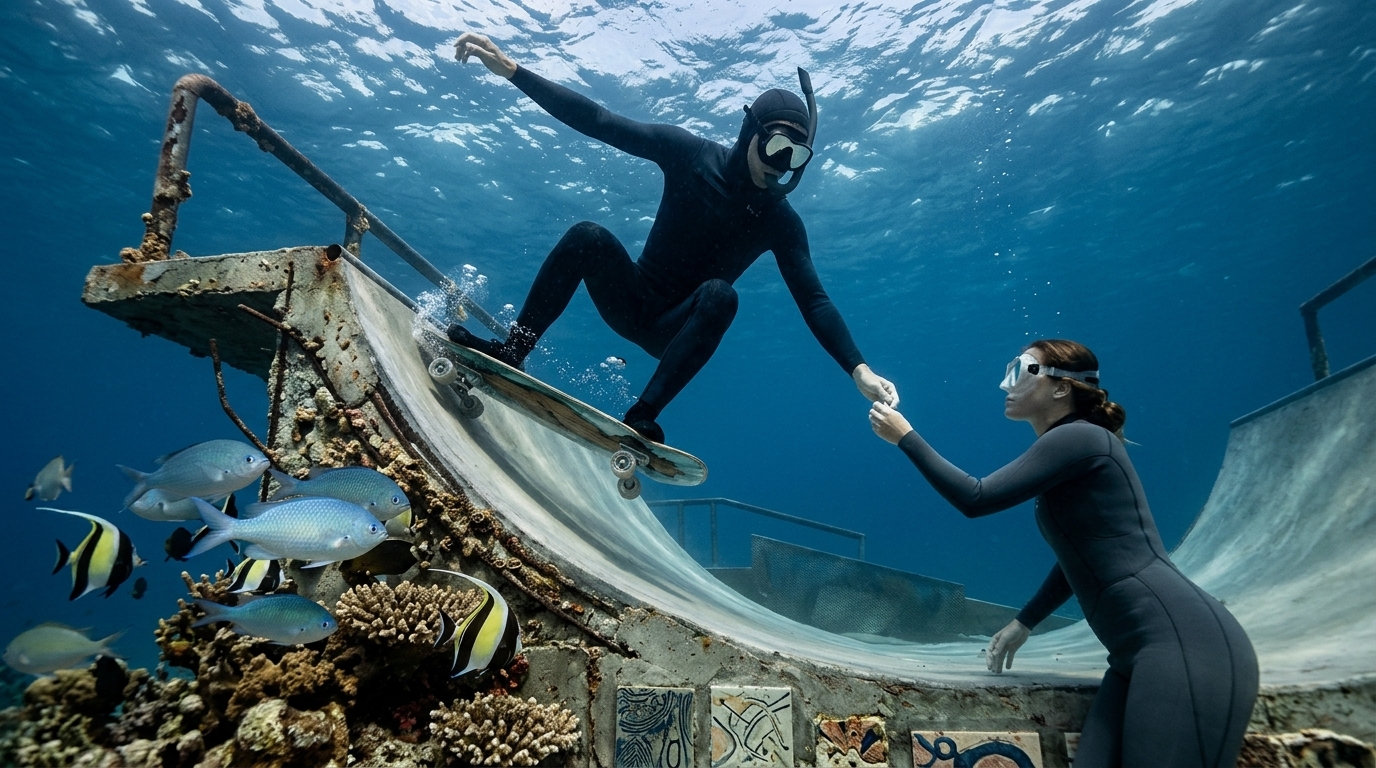
Many of the most striking scenes created during the sessions occurred when the model 'misinterpreted' an instruction, generating surreal landscapes or movements that a human mind might never rationally conceive. This 'digital dream' aesthetic opens new pathways for experimental cinema. Instead of forcing AI to replicate reality with absolute precision, we can allow it to show us its unique perspective, creating a new visual language that teeters between the familiar and the uncanny.
The Artist as Curator and Conductor
A recurring question in the age of AI is: 'Where does the machine end and the human begin?' The answer from the Flow Sessions is definitive: the human remains the master curator. The ease of content production via AI means we will soon be inundated with mediocre works. What will distinguish art from noise is the creator's ability to select, synthesize, and imbue the generated imagery with meaning.
- The Power of Selection: Out of the thousands of variations Flow can produce, the artist must recognize the one that resonates emotionally.
- Narrative Synthesis: AI can generate a beautiful frame, but it cannot (yet) craft a story with a beginning, middle, and end that speaks to the human condition.
- Ethical Stewardship: Using tools like Flow necessitates a new ethical stance regarding intellectual property and authenticity.
Ultimately, the Flow Sessions teach us that technology is not the enemy of creativity, but its mirror. As our tools become more sophisticated, we must dig deeper within ourselves to find something authentic to say. Cinema is not dying; it is transforming into something more accessible, more fluid, and, paradoxically, more personal.