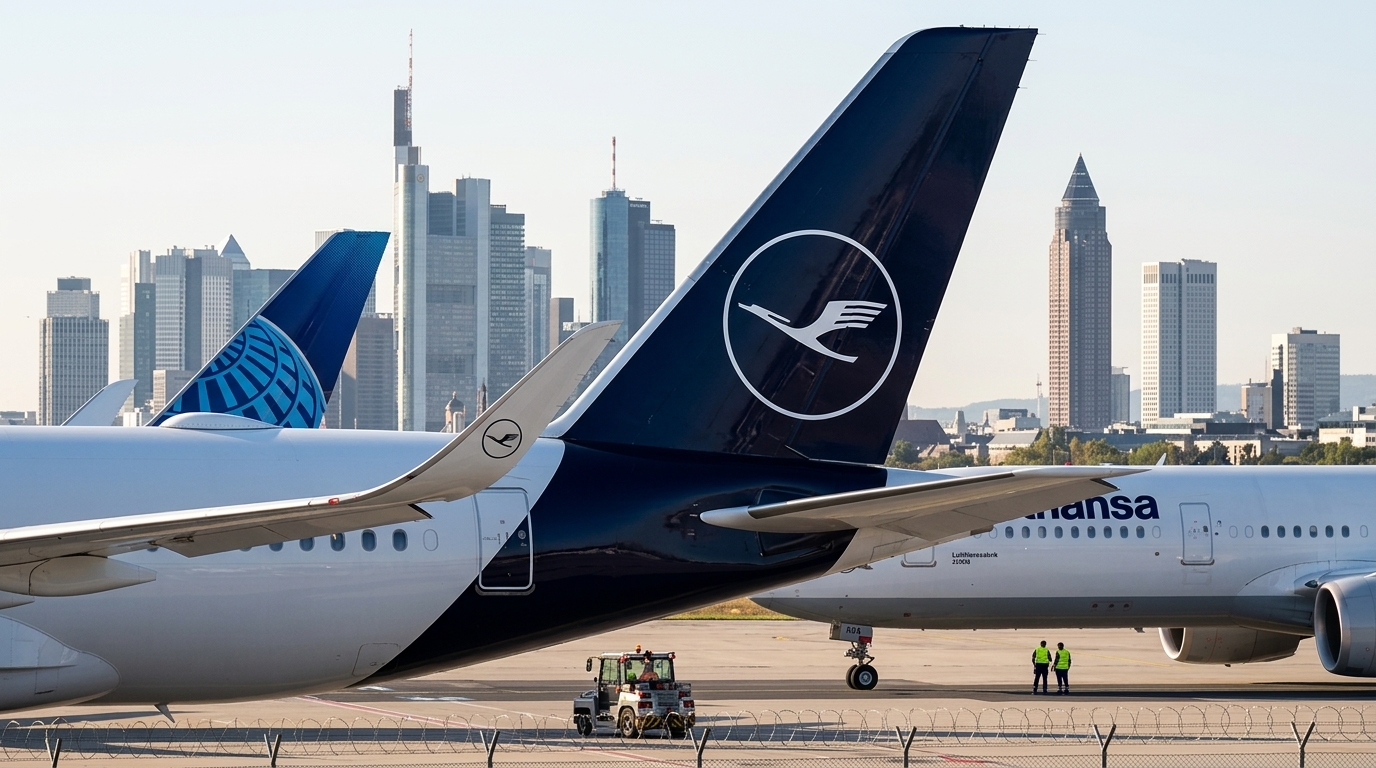
The era of "blank checks" for Europe's national flag carriers appears to be coming to a definitive close. In a landmark ruling that shakes the foundations of European competition policy, the Court of Justice of the European Union (CJEU) has dismissed the appeals of Lufthansa and the European Commission, upholding the previous annulment of the €6 billion rescue package the airline received during the pandemic.
Chronicle of a Foretold Legal Clash
It all began in 2020, when global aviation found itself in a freefall due to COVID-19 lockdowns. The German government, alarmed by the prospect of its national symbol collapsing, rushed to approve a gargantuan recapitalization package. The European Commission, under the pressure of extraordinary circumstances, gave the green light with expedited procedures. However, competitors like Ryanair and Condor did not sit idly by, taking the matter to court with the argument that this aid violated the principles of free competition and gave Lufthansa an unfair advantage in the post-COVID era.
The General Court of the EU had already ruled in 2023 that the Commission committed "multiple errors," primarily because it failed to investigate whether Lufthansa could have raised capital from the markets instead of turning to the state. The current CJEU ruling seals this verdict, rejecting claims that the judges were overly strict given the crisis context.
Legal and Economic Implications
The decision hinges on a critical question: When is a company entitled to state support? According to the Court, the Commission failed to prove that Lufthansa lacked access to private financing. Furthermore, the conditions set for the surrender of airport slots in Frankfurt and Munich were deemed insufficient to compensate for the distortion of competition.
- The Principle of Necessity: The state must be the lender of last resort, not the first choice.
- Commission Transparency: The ruling is a blow to Margrethe Vestager, who has been accused of excessive leniency toward large member states.
- The Precedent: Other airlines that received similar aid (e.g., Air France-KLM) might find themselves facing similar legal challenges.
Although Lufthansa has already repaid most of the aid, the legal annulment creates a "regulatory vacuum." The company now finds itself in an awkward position, as the terms under which it operated for the past few years have been ruled illegal, which could open the door for compensation lawsuits from competitors.
A New Balance in the European Union
This ruling is not just about a company's balance sheets; it is about Europe's vision for a single market. For years, Germany and France have been accused of using their economic might to protect their "national champions" at the expense of smaller countries and new market entrants. The European Court, with this move, sends a clear message: The rules of the game apply to everyone, regardless of the size of the flag on the airplane's tail.
"Competition is not a luxury to be suspended in times of crisis, but the guarantee that recovery will be fair for all," note Brussels analysts.
In the future, the European Commission will have to be much more careful and well-documented in its decisions. Lufthansa, for its part, is called upon to prove that it can dominate the skies relying on its own strengths rather than the "safety net" of the German Ministry of Finance. The defeat in Luxembourg is a lesson in humility for the aviation giant and a victory for the concept of equal treatment within the EU.