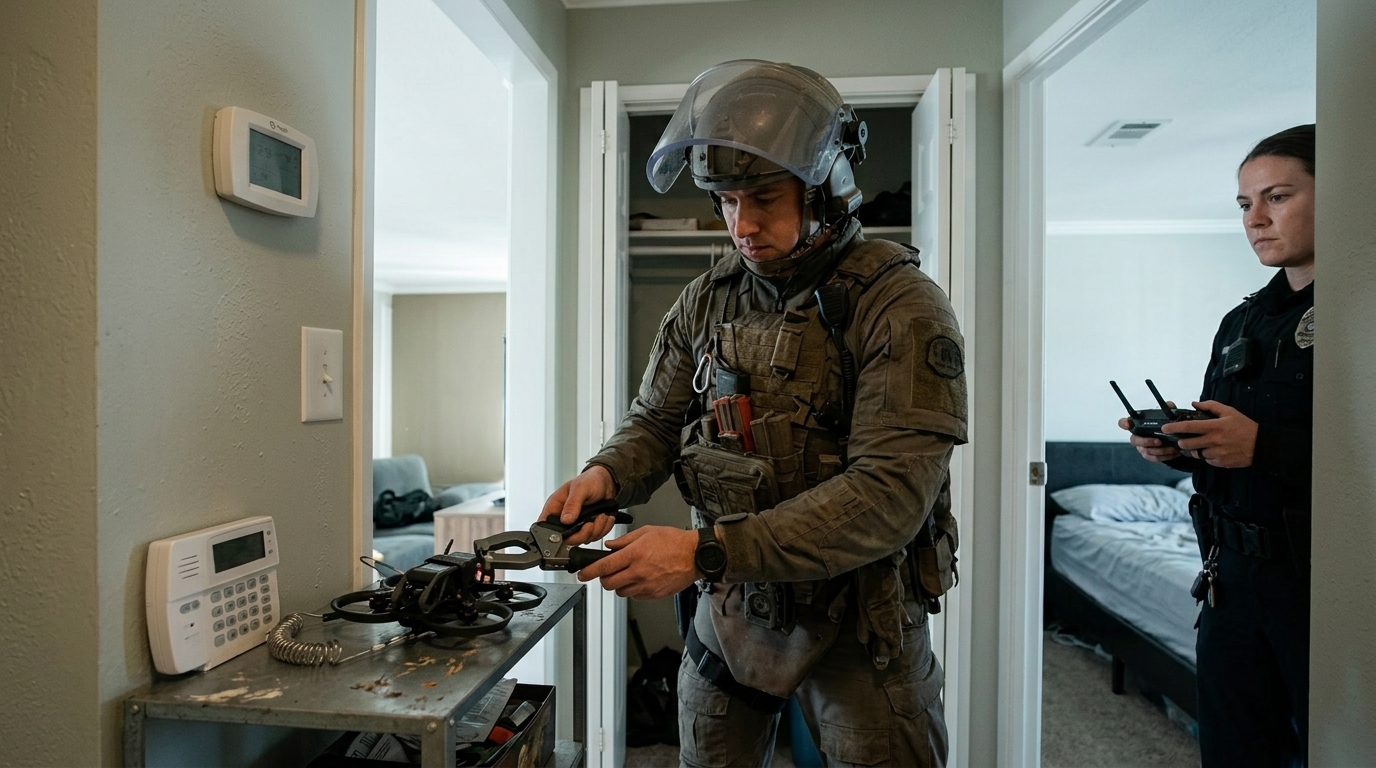
In a move described as a "nationwide first" for the United States, law enforcement authorities have utilized an unmanned aerial vehicle (drone) to disarm an incapacitated but armed suspect. The incident, publicized through a promotional video, highlights the rapid expansion of "Drone as First Responder" (DFR) programs and raises urgent questions regarding the ethics, legality, and future of policing in the digital age.
The Tactics of Remote Intervention
The operation took place during a crisis where the suspect had lost consciousness or was unable to respond but was still clutching a firearm that posed a threat to officers and bystanders. Rather than deploying a SWAT team or risking a direct approach, authorities used a drone—likely equipped with specialized manipulators or using the aircraft's frame itself—to physically move the weapon away from the individual's reach.
This approach differs radically from traditional policing. Until now, drones have been used primarily for surveillance, pursuit, or crime scene mapping. Their use as a tool for physical intervention—exerting "force" on objects or people—marks a new phase in the evolution of security force tactics. Proponents argue that this method saves lives by reducing the need for lethal force and protecting officers from unnecessary risks.
The Rise of DFR Programs
This incident is not isolated but part of a broader trend. Numerous police departments across the US, from California to New York, are adopting DFR programs. In these programs, drones launch automatically from the roofs of police stations as soon as a 911 call is received, often arriving at the scene minutes before patrol cars. This "eye in the sky" provides immediate situational awareness, allowing commanders to make more informed decisions.
However, the transition from simple observation to active intervention, such as disarmament, causes concern. Civil liberties organizations warn of the "militarization" of local policing. If a drone can disarm someone, what prevents it from carrying non-lethal weapons like tasers or tear gas in the future? The slide toward fully automated law enforcement now seems less like a science fiction scenario and more like an impending reality.
Legal and Ethical Dilemmas
The use of drones for such purposes operates in a legal gray area. While the Fourth Amendment of the US Constitution protects against unreasonable searches and seizures, the legal framework for the use of "robotic force" is still being shaped. There is a risk that technology will be used as a substitute for human judgment, leading to alienation between the police and the community.
Furthermore, the reliability of the technology remains an issue. What happens if a drone malfunctions during a disarmament? What if the weapon discharges due to contact with the drone? Accountability in these cases is difficult to define. Despite these concerns, the success of this specific operation is likely to encourage other departments to invest in similar technologies, making drones an integral part of daily policing.
Conclusion: A Double-Edged Progress
Using a drone to disarm a suspect is a milestone. On one hand, it is a triumph of engineering that can prevent bloodshed. On the other, it is a reminder that our relationship with power and surveillance is changing fundamentally. As drones become more autonomous and capable, society must decide how much "remote" power it is willing to grant the state, ensuring that safety does not come at the cost of fundamental freedoms.