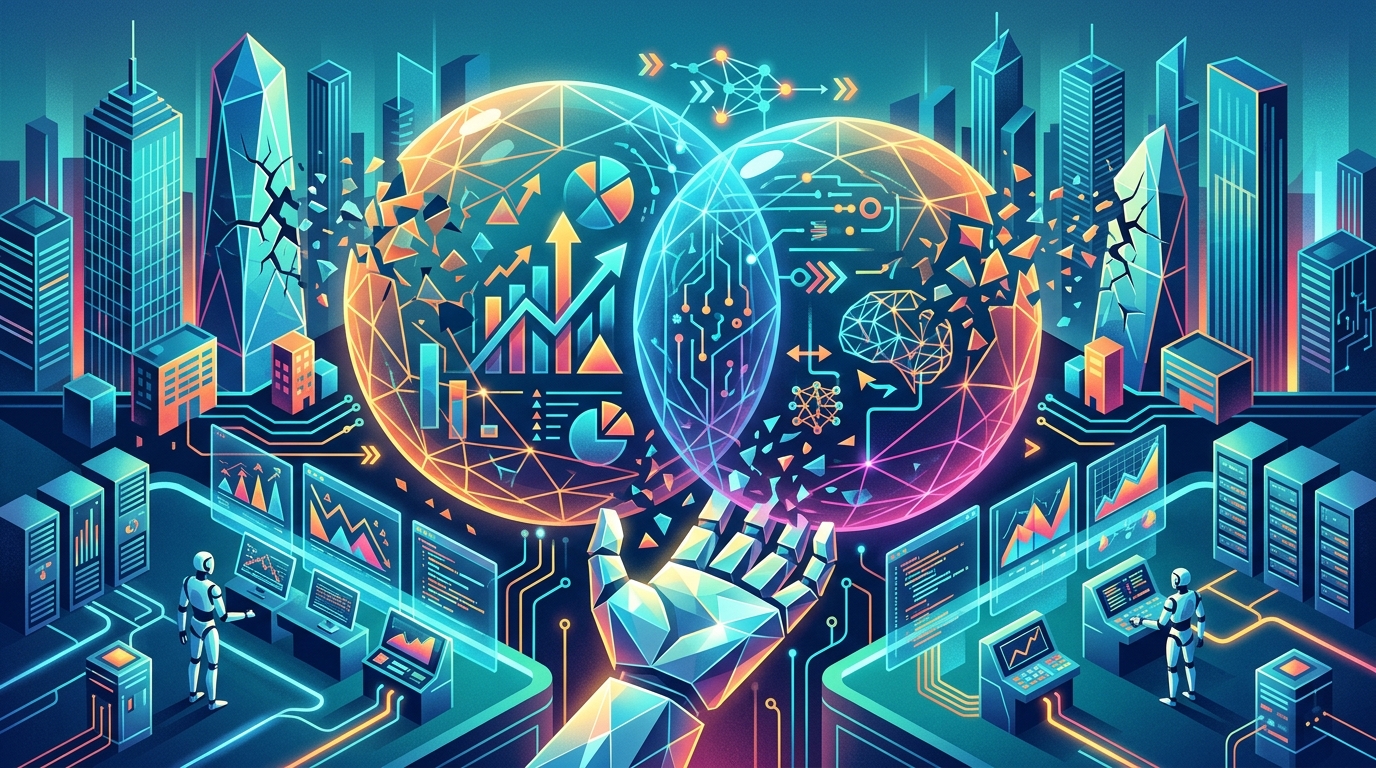
For more than a century, the insurance industry has rested on a fundamental premise: human error is the primary driver of risk. Whether it was a car crash, a factory floor mishap, or a medical error, actuaries could quantify human inattention, fatigue, or poor judgment. However, the emergence of "Physical AI" — intelligence embedded in robots, autonomous vehicles, and smart infrastructure — is shattering these models, forcing insurance giants to rewrite their rulebooks from scratch.
From Human Error to Algorithmic Liability
Physical AI is not just a chatbot on a screen; it is a system that interacts with the material world, moving objects, driving trucks, and operating surgical tools. When such a system fails, the question of "who is at fault?" becomes exceptionally complex. Traditionally, if a driver ran a stop sign, liability was clear. In the age of physical AI, if an autonomous vehicle causes an accident, liability could rest with the software developer, the training data provider, the sensor manufacturer, or even the company that maintained the system.
This shift from individual liability to "product liability" is fundamentally altering the economic landscape. Insurers are no longer assessing a driver’s history, but the robustness of a neural network. As analysts at PYMNTS point out, this requires a new generation of actuaries who understand machine learning as deeply as they understand probability distributions.
The Data Dilemma and the Transparency Black Box
The biggest hurdle for insurers is the lack of historical data. Traditional insurance relies on decades of statistics. Physical AI, however, evolves at such a pace that last year’s data might already be obsolete. Furthermore, there is the "black box" problem: deep learning algorithms often make decisions in ways that are not fully understood even by their creators.
- How do you price a risk you cannot explain?
- Who owns the telemetry data in the event of an accident?
- How do continuous over-the-air software updates affect the validity of a policy?
Insurers are now pushing for greater transparency from AI manufacturers, demanding access to the machine's "logic paths." Without this transparency, premiums for robotics companies could become prohibitive, potentially stifling innovation in critical sectors like logistics and healthcare.
Rewriting Actuarial Science
The challenge is technical as much as it is legal. Actuaries must now collaborate with data scientists to create simulation models. Instead of looking at the past, they are using "digital twins" to predict how a robot will react to millions of potential edge-case scenarios. This predictive insurance is the future, but it requires massive investments in computational power and expertise.
"We are no longer insuring the probability of a human mistake, but the probability of a systemic failure that could occur simultaneously across thousands of units," says a senior executive at a major global insurer.
This systemic risk is what haunts the market most. If a code glitch in an autonomous vehicle company causes accidents across its entire fleet at once, the resulting claims could bankrupt even the largest insurers. The need for government intervention and new regulatory frameworks, such as the EU AI Act, is becoming urgent to define the boundaries of corporate responsibility.
Conclusion: A World Without Precedent
Physical AI is forcing the industry to abandon the safety of historical precedent and sail into uncharted waters. The transition will be painful and expensive. However, it also offers a unique opportunity: the creation of a safer world where risks are not random, but predictable and manageable through technology. The bet for insurers is whether they can evolve into technology companies before technology renders their traditional models obsolete.