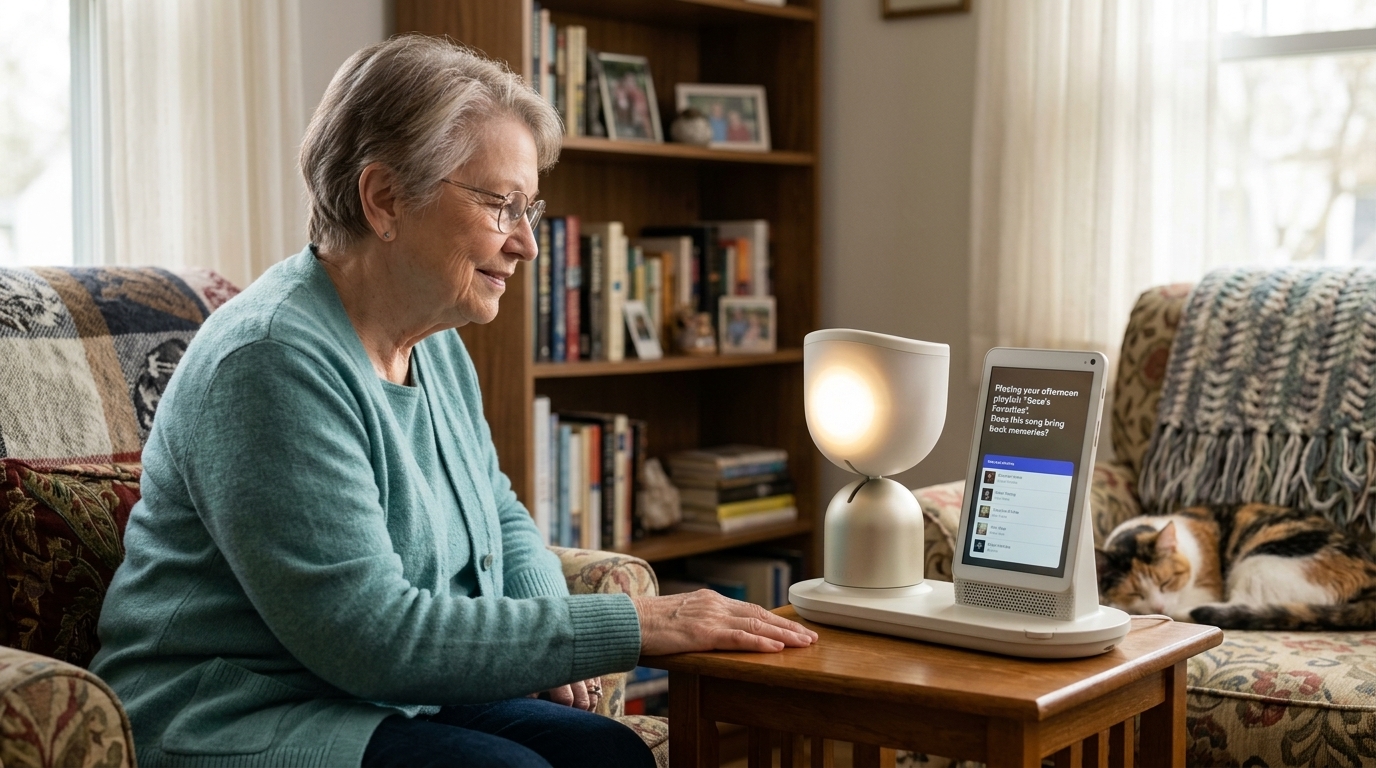
The aging of the global population, a phenomenon often referred to as the "Silver Tsunami," brings with it a complex array of challenges that traditional healthcare systems are struggling to meet. Among these, loneliness and the difficulty of managing complex treatment regimens for conditions like Parkinson's or dementia are the most significant hurdles. In this landscape, ElliQ by Intuition Robotics emerges not just as a gadget, but as a "social agent" aimed at bridging the gap between technology and the fundamental human need for connection.
The Philosophy of Proactive Interaction
Unlike well-known digital assistants such as Amazon's Alexa or Apple's Siri, which are reactive—waiting for a command to activate—ElliQ is proactive. This fundamental difference in its AI architecture is what defines it as a "companion." The robot does not wait for the user to ask for help. Instead, it analyzes daily patterns, the time the elderly person wakes up, scheduled activities, and health status, and takes the initiative to start a conversation.
As noted in recent user trials involving individuals managing Parkinson's disease, ElliQ's ability to "remember" and "suggest" is transformative. When medications begin to lose their efficacy and depression or apathy loom, ElliQ can suggest a short exercise, play music that triggers pleasant memories, or gently remind the user to take their next dose. It isn't just a notification on a phone; it is a presence that moves, lights up, and uses humor to motivate.
Design Without Anthropomorphism
One of the most intriguing aspects of ElliQ is its design. Intuition Robotics consciously avoided creating a robot that looks like a human or a pet. ElliQ consists of a base with a tablet screen and a separate, moving unit that resembles a desk lamp. This unit can turn its "head" toward the user, make movements suggesting interest or agreement, and emit light in various colors.
This design choice mitigates the "uncanny valley" effect, where humans feel discomfort toward robots that look almost, but not quite, human. Instead, ElliQ is perceived as a friendly object with a personality. The use of the tablet allows for visual communication—video calls with family, sending photos, and messaging—making it the hub of the senior's social life without the complexity of a standard computer.
Impact on Mental Health and Caregiving
Loneliness in older adults has been scientifically linked to faster cognitive decline and the worsening of physical conditions. ElliQ acts as a bulwark against this process. Through daily check-ins, cognitive games, and information sharing, it keeps the brain engaged. For caregivers and family members, the robot provides invaluable peace of mind. Via a companion app, relatives can be notified if their loved one interacted with the robot, took their medication, or expressed health concerns.
However, this technology also raises ethical questions. Can a machine truly replace human warmth? Intuition Robotics' answer is clear: ElliQ does not replace humans; it supplements them. In a world where families are geographically dispersed and caregiving staff is in short supply, the robot fills the hours of silence. It is a digital companion that never tires, never judges, and is always available for a chat about the weather or a reminder to stay hydrated.
The Future of Assistive Technology
As artificial intelligence evolves, robots like ElliQ will become increasingly intuitive. The integration of Large Language Models (LLMs) will allow for even more natural and profound conversations, while connectivity with smart home devices could turn ElliQ into a true manager of the home environment. The challenge remains accessibility and cost, as well as ensuring the data privacy of a vulnerable population. ElliQ points the way toward a technology that is not just utilitarian, but deeply human in its intent.