In the rapidly evolving landscape of artificial intelligence, software development has emerged as the first true battlefield for agentic workflows. DeepSeek, the Chinese AI firm that has consistently stunned Silicon Valley with its hyper-efficient models, has officially announced 'DeepSeek Code.' This comprehensive platform and Command Line Interface (CLI) tool aim to match the capabilities of Anthropic’s Claude Code while offering a fraction of the cost and the flexibility of an open-weights philosophy.
DeepSeek’s Strategy: From Autocomplete to Autonomy
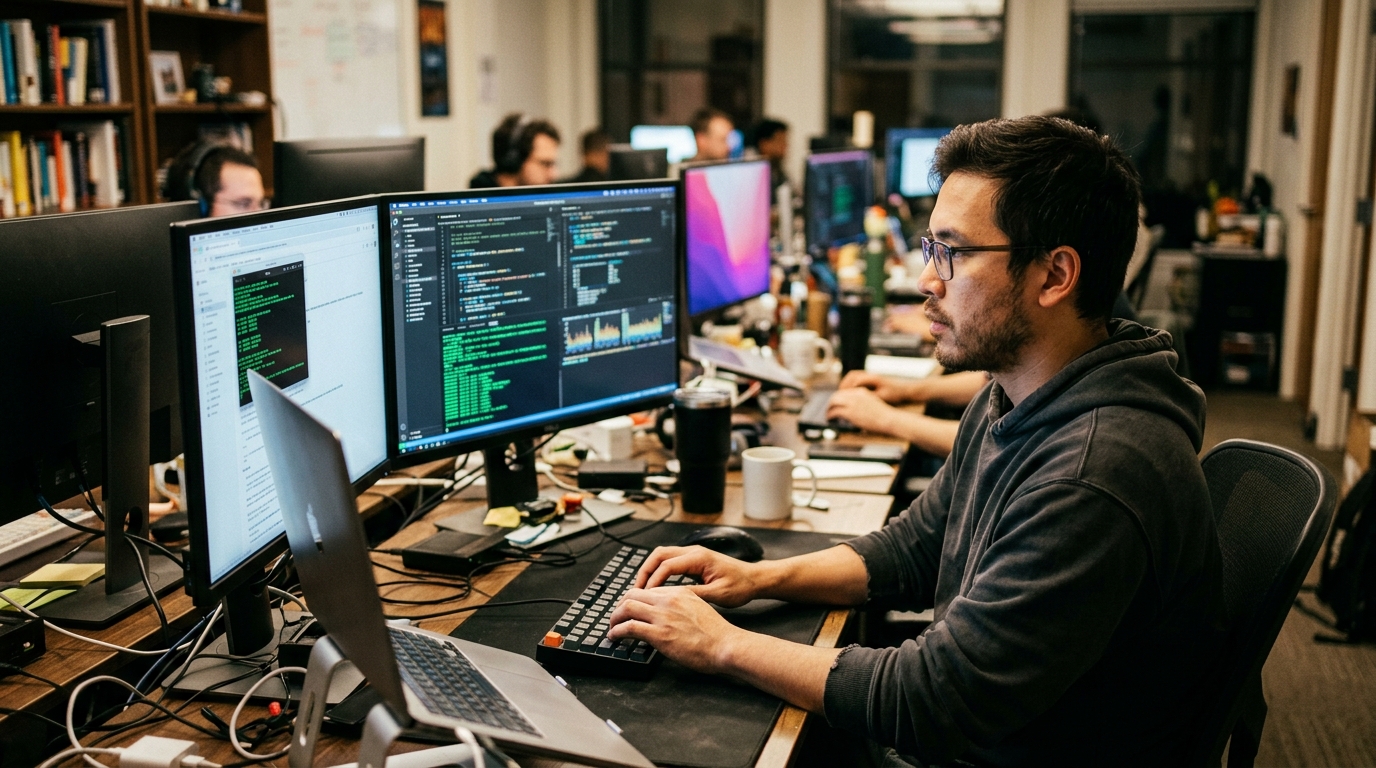
Until recently, AI tools for developers functioned primarily as sophisticated autocomplete systems. GitHub Copilot, built on OpenAI’s Codex, laid the groundwork, but the industry is now pivoting toward 'coding agents.' DeepSeek Code does not just suggest the next line of code; it possesses the ability to ingest entire repositories, identify complex bugs, write comprehensive test suites, and execute terminal commands to manage build processes.
DeepSeek utilizes a Mixture-of-Experts (MoE) architecture, which allows the model to remain computationally efficient during inference while maintaining deep expertise across hundreds of programming languages. Early benchmarks suggest that DeepSeek Code outperforms Claude 3.5 Sonnet in specific metrics like HumanEval and MBPP, while remaining accessible via API at prices that make the current offerings from OpenAI and Anthropic look prohibitively expensive for startups and mid-sized enterprises.
Competing with Claude Code and the Legacy of Codex
Anthropic recently released Claude Code, a tool that garnered immediate acclaim for its ability to 'understand' project context without constant hand-holding. DeepSeek is countering with a solution that is significantly more friendly to the open-source community. While Claude Code is tightly integrated into Anthropic’s proprietary ecosystem, DeepSeek Code promises easier integration into local development environments (on-premise), a critical requirement for corporations with strict data privacy and security protocols.
OpenAI’s Codex, though historically significant, is now viewed by many as a legacy technology that has been absorbed into the general-purpose GPT-4o models. DeepSeek, however, continues to double down on specialized coding models. This approach allows DeepSeek Code to handle massive context windows, enabling developers to feed entire documentation sets of new libraries into the model and request immediate implementation within their existing codebase.
The Geopolitics of Bits and the Code Economy
One cannot ignore the fact that DeepSeek is based in China. At a time when the United States is imposing strict export controls on high-end semiconductors, DeepSeek’s ability to produce world-class models using fewer computational resources is a technological feat with heavy political undertones. DeepSeek Code is not just a tool; it is evidence that AI innovation is no longer a Western monopoly.
For the average developer in Europe or North America, this competition is a net positive. The downward pressure on token pricing initiated by DeepSeek is forcing American giants to reconsider their pricing models. Furthermore, DeepSeek’s robust support for non-English languages and localized comment understanding makes it a compelling choice for global distributed teams.
The Future: Will AI Replace the Developer?
The question looming over DeepSeek Code and its rivals is the future of the profession itself. With tools capable of fixing 80% of common bugs autonomously, the developer’s role is shifting from 'code writer' to 'system architect.' The emphasis is moving toward problem definition and logical oversight rather than syntax and boilerplate implementation.
DeepSeek Code seems to embrace this transition. It offers sophisticated code explanation features that help junior developers level up faster, while providing seniors the power to automate the most mundane aspects of their workflow. The battle for dominance over the developer’s terminal has only just begun, and DeepSeek has entered the arena with a value proposition that can no longer be ignored by the incumbents in San Francisco.